What should you look for when buying?
Start with the temperature when condensation forms. Then check the capacity under the right conditions and decide whether collecting or draining the water is practical in your space.
| What to consider |
What should you check? |
Who is this important for? |
| Performance in a cold conservatory |
Measure the temperature when condensation forms on the glass and compare it with the operating range of the exact model. The Consumers' Association recommends desiccant models for rooms below 15 °C. |
If my conservatory is cold when condensation forms, I want a type that suits that temperature. Around 36% of consumers rank performance in cold conditions as their top priority when buying. |
| Capacity for the room |
Compare the capacity in litres per 24 hours and the test conditions: temperature, humidity and air circulation all play a part. The Consumers' Association measures dehumidification at different combinations of temperature and humidity. |
If I want to know whether a unit is suitable for my conservatory, I look beyond floor area alone. Around 29% of consumers rank suitable capacity as their top priority. |
| Draining the water |
Check the tank capacity, hose option and whether the drainage route is practical. Don’t assume there’s a built-in pump unless this is stated for the model. |
If I want to run the unit for longer, I want to know whether I can drain the water without having to empty the tank often. Around 21% of consumers put water drainage at the top of their list. |
| Noise and power consumption |
Compare the stated noise level and power consumption using the same operating mode and conditions. The Consumers' Association warns that desiccant models use more electricity than compressor models. |
If I also use the conservatory as a place to sit, I want to consider the balance between operating noise and power consumption. Around 14% of consumers rank comfort and energy use as their top priorities when buying. |
Dehumidifiers at Joybuy
These Joybuy products are dehumidifiers for anyone looking to tackle condensation in a conservatory. The Consumers' Association recommends compressor models for rooms above 15 °C, so check the exact model’s operating range and the conditions used to state its capacity before choosing.
 No image available
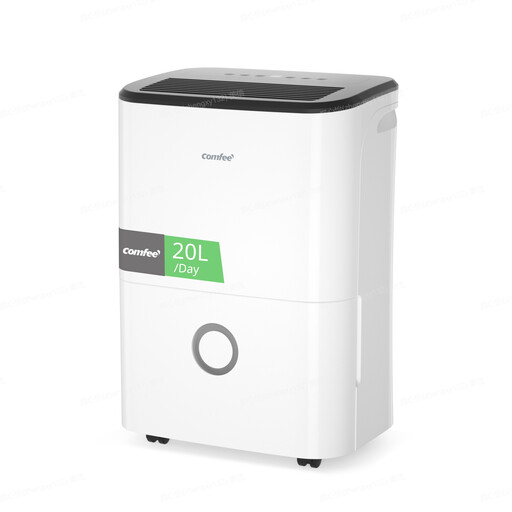
Comfee' MDDF-20DEN7
An option to compare if you’re looking for a dehumidifier with a collection tank and the option of continuous drainage.
Stated capacity: up to 20 l per day; 3 l tank; 24-hour timer and 3 modes. The drain hose isn’t included and must be positioned lower than the unit for continuous drainage.
View at Joybuy
 No image available
CONOPU 16L
A compressor model to compare if your conservatory usually stays above 15 °C when in use.
Stated capacity of up to 16 l per day; 2.5 l tank; continuous drainage and 24-hour timer. The product name also mentions automatic defrosting.
View at Joybuy
 No image available
ELECCI 12L/D
A compressor option to compare for a conservatory that is usually heated; check the temperature at which you expect condensation to form.
Stated capacity of up to 12 l per day; 3.8 l tank; 24-hour timer and continuous drainage via a hose. According to the product information, frost may form below 15 °C and the compressor stops during defrosting before starting again.
View at Joybuy
 No image available
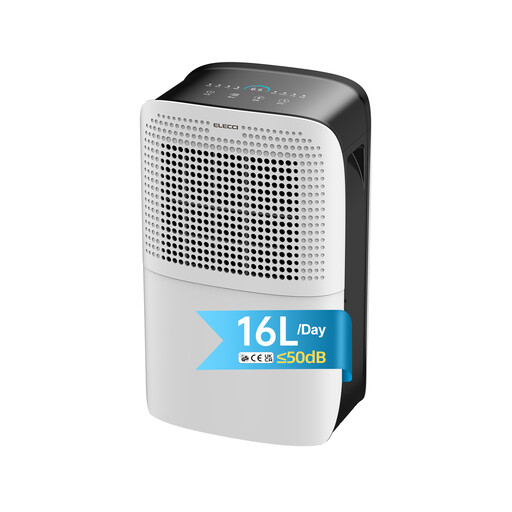
ELECCI 16L/D
A compressor option to compare if your conservatory is usually heated and you also want to consider drainage.
Stated capacity of up to 16 l per day at 95 °F and 90% relative humidity; 3.1 l tank; 4 modes and continuous drainage. The capacity under these test conditions doesn’t guarantee a particular output in a conservatory.
View at Joybuy
 No image available
VINO 12L Smart
A compressor option to compare if you’re looking for adjustable humidity control; check that the stated temperature range suits your conservatory.
Stated operating temperature of 5–35 °C and capacity of 12 l per day at 30 °C and 80% relative humidity; 1.8 l tank, app control and continuous drainage. The drain hose isn’t included.
View at Joybuy
Frequently asked questions
When is a dehumidifier useful for condensation on conservatory glass?
A dehumidifier may help if you’ve checked the sources of moisture and ventilation but the air is still damp. The Consumers' Association says a consistently high relative humidity of over 65% after addressing the causes is one situation where a dehumidifier may help; this doesn’t guarantee that all condensation will disappear.
What should I do before using the unit in my conservatory?
Keep the air inlet and outlet clear and follow the positioning and maintenance instructions for your chosen model. Continue to ventilate too: Milieu Centraal describes ventilation as bringing in fresh air and removing stale air.
How do I compare power consumption?
Compare the power consumption of the exact model based on how many hours you expect to run it and your own electricity tariff. According to the Consumers' Association, desiccant models use more electricity than compressor models.
Who can help if my dehumidifier breaks too soon during normal use?
In the Netherlands, the seller is responsible for the statutory guarantee. ACM ConsuWijzer states that, subject to the applicable conditions, a faulty product may qualify for free repair, replacement or a refund; a manufacturer’s guarantee does not automatically limit your statutory rights.
Is a CE mark a quality mark for dehumidifying performance?
No. The Dutch Government describes CE marking as an indication that a product meets the applicable legal requirements, not as a comparison of how much moisture different units remove from your conservatory.


