
Someone whose windows are constantly misted up
Wants to find out whether humid air is the cause, and whether ventilation, heating or fixing a defect needs attention first. Milieu Centraal and GGD Leefomgeving offer practical points to consider.


Start by addressing ventilation, sources of moisture and any building defects: a dehumidifier does not remove stale air or fix a leak. If humidity remains high afterwards, choose a model based on the measured size of the room, its temperature and the moisture load. In a living room, also consider noise, drainage and energy use, as recommended by the Consumentenbond and Milieu Centraal.
Wants to find out whether humid air is the cause, and whether ventilation, heating or fixing a defect needs attention first. Milieu Centraal and GGD Leefomgeving offer practical points to consider.
Has measured high humidity even after addressing sources of moisture, and is looking for a device suited to the room and its temperature. The Consumentenbond stresses that both affect your choice.
Uses the living room for long periods and wants to weigh up noise, the tank, drainage and energy use. The Consumentenbond and Duux describe the factors to consider.
When: If condensation is accompanied by poor ventilation, mould or a suspected leak.
Consider: A dehumidifier does not replace the supply of fresh air or fix a defect.
When: For a heated living room where humidity remains high after sources of moisture have been addressed.
Consider: Performance can fall at lower temperatures, so compare the capacity at the temperature in your room.
When: If the living room is cold for long periods and you are considering a model suited to that temperature.
Consider: Compare individual models for performance at your usual room temperature and for energy use. Don’t choose based only on a general capacity figure.
First identify the cause and measure the humidity. Then compare room suitability, noise and drainage.
| What to consider | What should you check? | Who is this important for? |
|---|---|---|
| Cause of condensation | Measure the humidity and check ventilation, sources of moisture and possible defects. | If I want to know whether condensation is caused by ventilation or a damp problem, I don’t want to assume a device will solve it by itself. Around 33% of consumers put identifying the cause first. |
| Capacity for the room | Measure the floor area, check the ceiling height and compare capacity at a relevant temperature and humidity level. | For a large living room, I want capacity that suits both the room and the temperature. Around 27% of consumers prioritise finding the right capacity. |
| Noise while in use | Compare the noise level on the setting you plan to use, and check what the night mode actually changes. | If I want to talk or watch television in the living room, noise on the usual setting matters. Around 20% of consumers prioritise a peaceful home. |
| Emptying and everyday use | Compare tank capacity and check whether a hose can be connected conveniently for continuous drainage. | If you use the device for long periods, you’ll want to know how often the tank needs emptying and whether you can drain it without using the tank. Around 20% of consumers prioritise this kind of convenience. |
A device does not remove stale air. Mould or a leak needs to be dealt with at the source; otherwise, the underlying problem will remain.
Check ventilation and sources of moisture before choosing a device. Get any suspected building defect inspected.
The actual amount of water removed depends in part on the temperature and relative humidity. A quoted maximum is not a guarantee of performance in your living room.
Compare the conditions used to calculate the stated capacity with the temperature and humidity in your room.
According to Duux, the night mode on the Duux Bora adjusts the indicator lights and beeps, but not the actual noise level.
Check the noise level for each model on your preferred setting, and find out exactly what its night mode changes.
Litres per day refers to the stated amount of water removed; the tank capacity tells you how much water it collects before it needs emptying.
Compare these figures separately and check whether continuous drainage is possible where you plan to use the device.
The MeacoDry Arete One 20L is worth comparing for larger rooms; the recommended room size and the version you choose are key.
According to Duux, the Bora 20L Smart combines a humidistat and app control with a tank and a connection for continuous drainage.
The Qlima D 720 CUBE is worth comparing if you want to empty the tank less often.
According to De'Longhi, the DDSX220WFA offers app control and several airflow settings.
These Joybuy products are dehumidifiers for living rooms. Compare the stated room size and capacity with your room, and also check the tank capacity and whether continuous drainage is possible.
 No image available
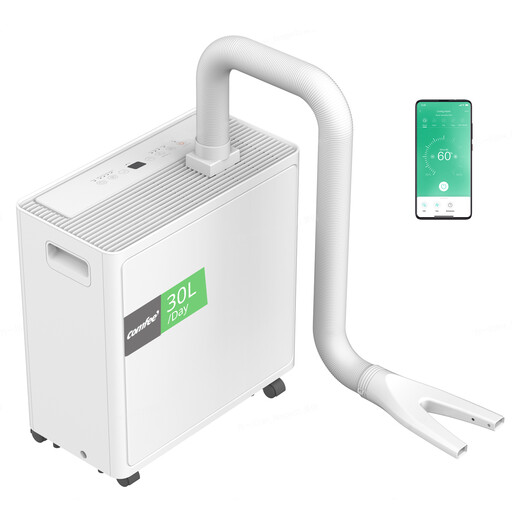
Worth considering if the stated room size suits your living room; actual performance depends on the conditions.
The product information states approximately 130 m³ (73 m²), up to 30 l/24 uur at 30 °C and 80% relative humidity, and a 3,2-litre tank. App control and continuous drainage via a hose are also listed.
 No image available
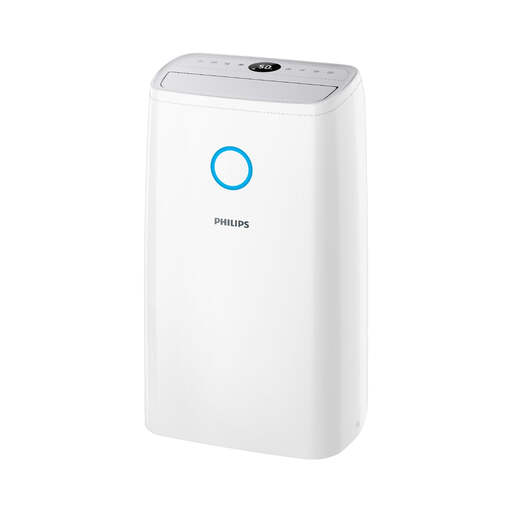
Could be suitable if the stated room size matches your living room; check it against the conditions in which the device will be used.
The product information states that it is suitable for rooms up to 150 m², with a dehumidifying rate of 34,3 litres per day, a 4-litre tank, three fan speeds and an optional hose for continuous drainage. The R290 refrigerant is flammable: keep the device away from sources of ignition and leave work on the refrigerant circuit to a qualified professional.
 No image available
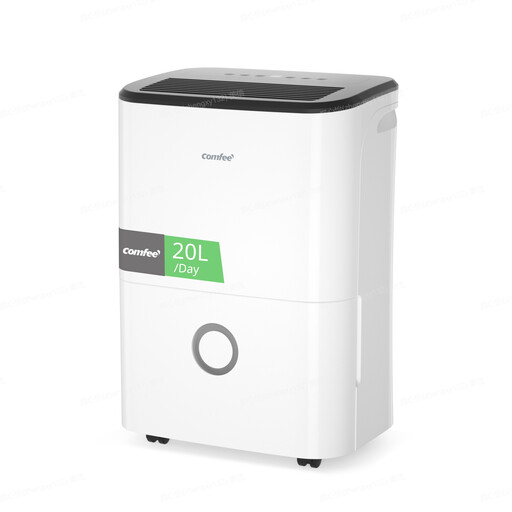
Worth comparing if the stated room size suits your living room and you want automatic humidity control.
The product information states approximately 100 m³ (40 m²), 20 litres per day and a removable 3-litre tank. Drainage via the tank or a hose, and a timer, are also listed.
 No image available
Compare this model if the stated room size is suitable and you want to weigh up continuous drainage against emptying the tank by hand.
The product information states that it is suitable for rooms up to 60 m², with a capacity of up to 16 litres per day and a 2,5-litre tank. Drainage via a hose or tank, and a timer, are listed.
 No image available
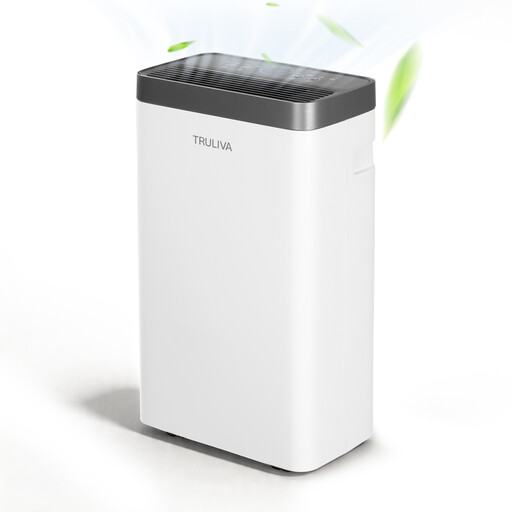
Worth comparing if the stated room size is suitable and humidity control and continuous drainage matter to you.
The product information states approximately 32 m², a maximum of 16 litres per day and a 1,35-litre tank. Automatic humidity control and continuous drainage via a hose are also listed.
If humidity stays above 65% over time after the causes have been addressed, a dehumidifier may help, according to the Consumentenbond’s buying advice. Keep ventilating: a dehumidifier does not replace the flow of air in and out of your home.
Measure the floor area and check the ceiling height. Then compare the stated capacity at a temperature and humidity level that match your room; a maximum number of litres per day does not automatically reflect how much water it will remove at home each day. The Consumentenbond lists room size and temperature as important factors when choosing.
Follow the instructions for positioning and filter maintenance, and check whether the tank is easy to empty or whether you have a suitable route for continuous drainage. Duux recommends replacing the Bora’s filter every 1 to 1,5 years; this advice does not automatically apply to other models.
Not always. According to Duux, the Bora’s night mode dims the indicator lights and switches off beeps, but does not change the actual noise level. So check the noise level for each model on the setting you plan to use.
Report any suspected maintenance issue, such as a leak or damp problem, to your landlord first. The Dutch government advises doing this in writing and keeping a copy; a dehumidifier will not fix the defect.