What should you look for when buying?
The lowest room temperature helps determine which technology is suitable. Capacity, noise and drainage can then help you narrow down the options for your needs.
Desiccant dehumidifier
Suitable when: the conservatory guest room is cold or unheated while in use; check the temperature range for the specific model.
Bear in mind: the Dutch Consumers’ Association says desiccant models generally use more electricity than compressor models.
Compressor or refrigerant dehumidifier
Suitable when: measurements show that the room is usually warmer than 15 °C and you need to dehumidify the whole room.
Bear in mind: dehumidifying performance drops in cooler conditions; Qlima describes defrost breaks on its D-series models.
Small Peltier dehumidifier
Suitable when: the damp is confined to a very small, enclosed space, such as a cupboard.
Bear in mind: the Dutch Consumers’ Association says these models have limited capacity, so they’re not an obvious choice for condensation throughout a guest room.
For a conservatory guest room, the main considerations depend on temperature, dehumidifying the whole room, sleeping comfort and how you’ll drain the water.
| Consideration |
What to look for |
Who should pay extra attention? |
| Dehumidifying on cold nights |
Compare the temperature range stated for the specific model with the lowest temperature in the room. |
If my conservatory guest room gets cold overnight, I want the appliance to stay within its stated temperature range. Around 33% of consumers put cold conditions first. |
| Capacity for a warmer room |
Compare litres per 24 hours as well as the operating conditions; don’t assume the manufacturer’s figure reflects performance at home. |
For a room that’s usually warmer, I want enough capacity to dehumidify the whole space, not just a high daily figure. Around 27% of consumers prioritise whole-room capacity. |
| Sleeping comfort and noise |
Compare noise levels at each fan setting and check whether you can run the appliance outside sleeping hours. |
If guests are sleeping in the room, I want to know in advance whether the noise is acceptable during use. Around 20% of consumers put sleeping comfort first. |
| Drainage and running costs |
Check the tank capacity and automatic shut-off, and whether you can use a suitable drain hose and route it to a drain. |
If I’ll be using the appliance for longer or more often, I don’t want to keep emptying the tank, and I’ll also take electricity use into account. Around 20% of consumers prioritise running costs and drainage. |
Dehumidifiers at Joybuy
This selection of Joybuy products is intended for dehumidifying rooms. If you’re using one in an unheated conservatory guest room, compare the minimum temperature stated for the specific model with the conditions in your room.
 No image available
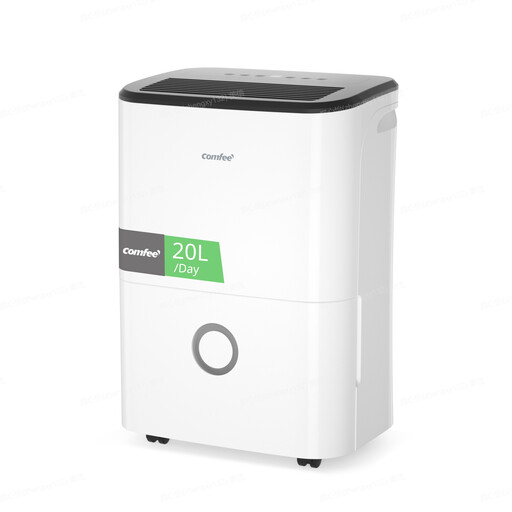
Comfee MDDF-20DEN7
An option to compare if you need capacity for a larger room and the option of continuous drainage.
Stated capacity: up to 20 litres per 24 hours; product information lists rooms up to around 40 m². Tank: 3 litres. A timer and drying mode are listed. The daily capacity doesn’t predict performance in your room.
Continuous drainage requires a suitable hose and drainage route; according to the product description, the hose isn’t included.
View at Joybuy
 No image available
CONOPU 16L dehumidifier
An option to compare if you want to dehumidify a room and features for occasional use matter to you.
Stated capacity: up to 16 litres per day; product information lists a coverage area of up to 60 m². Tank: 2.5 litres. A timer and sleep mode are listed. The daily capacity doesn’t indicate the expected performance in your room.
Continuous drainage is also listed; check which hose and drainage route you’ll need.
View at Joybuy
 No image available
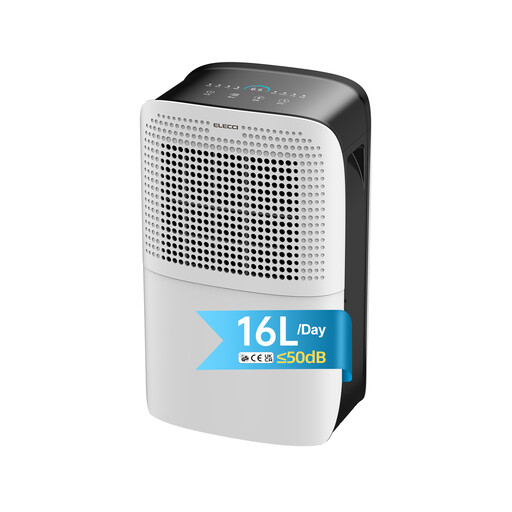
ELECCI 16L/D dehumidifier
An option to compare if you want to dehumidify a medium-sized room and weigh up using the tank or a drainage hose.
Stated capacity: up to 16 litres per day; product information lists rooms up to 32 m². Tank: 3.1 litres, with automatic shut-off. Four settings, including sleep mode, are listed. The stated capacity isn’t a measurement of performance in your room.
Continuous drainage is listed; check which hose and drainage route you’ll need for your set-up.
View at Joybuy
 No image available
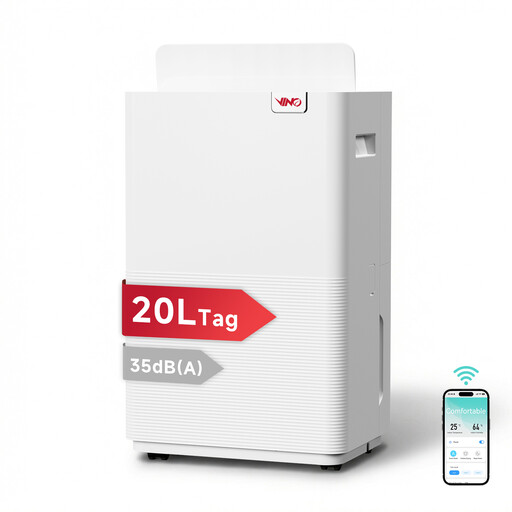
VINO 20L smart dehumidifier
An option to compare if you want to tailor controls and scheduling to your changing usage patterns.
Stated capacity: up to 20 litres per day at 30 °C and 80% relative humidity; product information lists rooms up to 40 m². Tank: 2.5 litres. The stated capacity applies under the specified conditions and doesn’t predict performance in your room.
Stated operating temperature: 5–32 °C. App control, a 24-hour schedule and two drainage options are listed.
View at Joybuy
 No image available
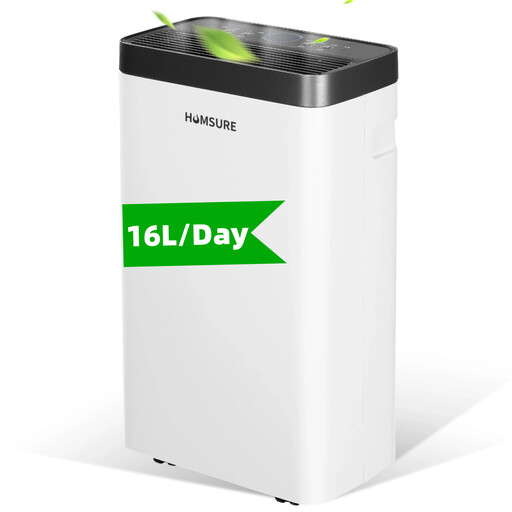
HUMSURE 16L/Day dehumidifier
An option to compare if you want to dehumidify a room and weigh up continuous drainage against emptying the tank by hand.
Stated capacity: up to 16 litres per day; product information lists rooms up to 25 m². Tank: 1.4 litres. A timer and sleep mode are listed. The daily capacity doesn’t predict performance in your room.
Continuous drainage with an included hose is listed; without the hose, you’ll need to empty the tank during extended use.
View at Joybuy
Frequently asked questions about dehumidifiers in a conservatory
Should I do anything else before buying a dehumidifier?
Yes. First check the ventilation, look for leaks and consider possible building-related causes. Milieu Centraal describes ventilation as bringing in fresh air and removing stale air; a dehumidifier isn’t a substitute for this.
Which dehumidifier is suitable for cold nights?
For a cold or unheated conservatory guest room, a desiccant model is one option to compare. Check the temperature range stated for the specific model. According to the Dutch Consumers’ Association, dehumidifiers work best above 15 °C, while desiccant models generally use more electricity than compressor models.
How should I position and maintain the appliance?
Keep the air inlet and outlet clear and follow the model’s instructions. The Dutch Consumers’ Association advises against placing the appliance behind furniture and recommends cleaning the filter every two months as a general guideline, or more often with heavy use.
What humidity level should I set?
The Dutch Consumers’ Association recommends 40–60% relative humidity as comfortable at a room temperature of 18–24 °C. Don’t apply this guideline automatically to an unheated conservatory: measure the temperature and follow the appliance’s stated range and instructions.
What product safety should I check before buying?
Electrical appliances placed on the market in the Netherlands must meet the applicable European product safety requirements. According to the Dutch government’s business information portal, manufacturers must apply the CE marking and draw up an EU declaration of conformity where required. Check the product information for the specific model; a CE marking isn’t a performance test.


