
Clothes in a damp room
You keep clothes in a wardrobe, but the small heated room around it still feels damp. First look for the cause, then decide whether a room dehumidifier is right for you.


A dehumidifier can help if you’ve dealt with the source of the damp and the room still feels humid. It won’t replace ventilation or fix a leak. For a heated room, a suitably sized compressor dehumidifier is a better choice than a small wardrobe unit, while a cold storage room needs a type that works at low temperatures. Measure the temperature and humidity, and also check where you’ll place the appliance, how noisy it is and how you’ll drain the water.
You keep clothes in a wardrobe, but the small heated room around it still feels damp. First look for the cause, then decide whether a room dehumidifier is right for you.
You’re mainly noticing damp in a small wardrobe and want something that takes up little space. The Consumentenbond describes Peltier models as small and quiet, but with limited capacity.
You keep clothes in an unheated room. The temperature there matters when choosing a dehumidifying technology; the Consumentenbond recommends condensation above 15 °C and says desiccant models are an option in colder conditions.
Start by working out whether the damp is confined to the wardrobe or affects the room too. Check for possible causes such as leaks or poor ventilation. Then you can match the capacity and technology to the space and temperature.
| What to consider | What should you look for? | Who is this most relevant to? |
|---|---|---|
| Damp in the room | Measure the relative humidity at different times and check ventilation, leaks and mould. | If I keep clothes in a damp room, I want to know that the source of the damp has been dealt with before choosing an appliance. Around 40% of consumers prioritise controlling damp around clothes. |
| Space in the wardrobe | Work out whether the damp is in the wardrobe alone or in the room too; check what the appliance is designed for and leave enough space around the air inlet and outlet. | If a small wardrobe is the main problem, I don’t want to choose an appliance that won’t fit or treat the whole room as the problem. Around 20% of consumers prioritise a solution for the wardrobe space. |
| Temperature | Measure the temperature where you plan to put the appliance and compare it with the model’s operating range. The Consumentenbond recommends condensation above 15 °C and desiccant models in colder conditions. | For clothes in an unheated storage room, I want a technology that suits the temperature in that space. Around 20% of consumers make performance in a cold storage room their top priority. |
| Noise and maintenance | Compare the noise level at the same fan setting, and check the tank capacity, automatic shut-off and whether continuous drainage is possible. | If the appliance is near my living room or bedroom, I want to know in advance whether the noise and emptying the tank will be practical. Around 20% of consumers prioritise quiet operation and easy maintenance. |
An appliance can dehumidify the air, but it won’t fix a structural problem or replace ventilation. Recurring mould may be linked to a leak or inadequate ventilation.
Find and deal with the source of the damp before using a dehumidifier as an additional measure. If you think there’s a maintenance issue in your rented home, report it to your landlord.
The stated capacity depends on the test conditions. For example, the De’Longhi DEX210SF has a stated capacity of 10 l/24 uur at 30 °C and 80% relative humidity. This doesn’t predict how much moisture it will remove in your flat.
Compare capacity alongside the stated conditions and the temperature and size of your own space.
The Consumentenbond says Peltier models have limited capacity. A unit designed for a small wardrobe won’t necessarily be suitable for the room around it.
First work out whether the damp is confined to the wardrobe. If it isn’t, you may need a room dehumidifier instead.
The Consumentenbond says most appliances run continuously in laundry-drying mode. This isn’t the same as a setting designed to keep clothes dry during long-term storage.
Check separately how the timer and laundry-drying mode work, and use the chosen model’s appropriate humidity control for storage.
A mode that runs continuously can add unnecessary hours of use.
Trotec describes the TTK 26 E as a compact compressor model for heated rooms of 4 to 15 m².
Duux positions the Bora 12L for smaller rooms and also lists a mode for drying wet washing.
The Tasciugo AriaDry DEX210SF is a compressor model for which De’Longhi gives a capacity under specific test conditions.
According to eeese, the Emil 10L is designed for smaller living spaces, among other uses, and has automatic humidity control.
These Joybuy models are designed to dehumidify room air. Compare the stated room coverage and check the available space, tank and drainage options before choosing a model.
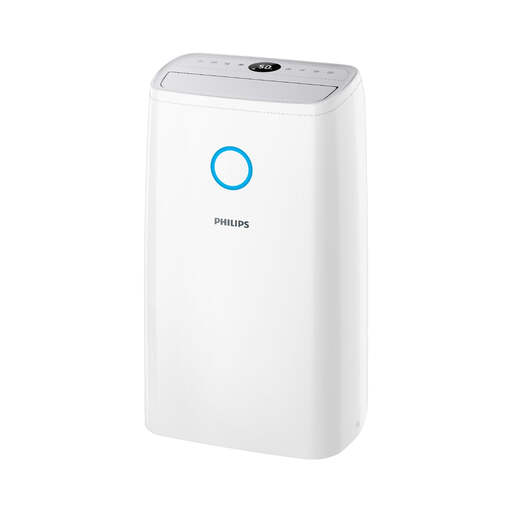 No image available
A model for anyone looking to dehumidify room air, provided the room is within the stated coverage.
Stated room coverage: up to 150 m². The product information lists automatic humidity control, three speeds and a 4 l tank. Leave 30 cm of clearance all around and 50 cm in front of the air outlet.
 No image available
An option to consider if you’re looking for automatic humidity control and a clothes-drying mode.
The product information lists a 2,5 l tank, a 24-hour timer, continuous drainage, automatic defrosting and a sleep mode. The stated room coverage is up to 60 m².
 No image available
This model may suit you if you’re looking for a dehumidifier for a smaller home and the stated room coverage matches your room.
Stated room coverage: approximately 32 m². The product information lists a 1,35 l tank, a timer and continuous drainage. Without continuous drainage, the appliance stops when the tank is full.
 No image available
A model to consider if you want an adjustable humidity level and a clothes-drying mode for a room within the stated coverage.
Stated room coverage: up to 25 m². The product information lists a 3,8 l tank, a 24-hour timer, continuous drainage and automatic defrosting. Leave at least 10 inch of clearance all around; after transporting or tilting the appliance, leave it upright for 2 hours before switching it on.
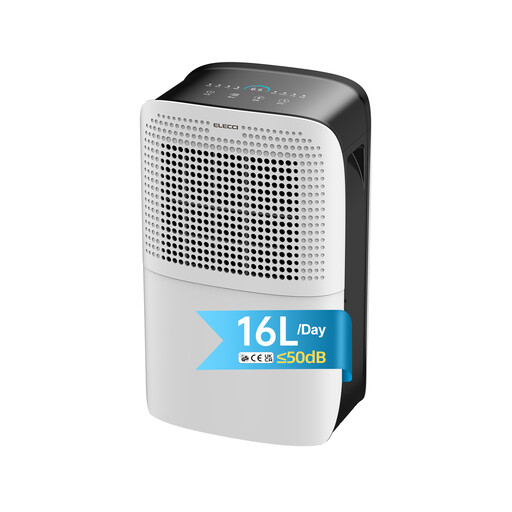 No image available
An option if the stated room coverage suits your space and you want to compare automatic humidity control with a drying mode.
Stated room coverage: up to 32 m². The product information lists a 3,1 l tank, four modes, automatic shut-off and continuous drainage. Leave 25 cm of clearance all around; after transporting or tilting the appliance, leave it to stand for at least an hour before plugging it in.
First look for the source of the damp and check the ventilation; a dehumidifier may then help as an additional measure. The Consumentenbond says consistently high relative humidity above 65% is a reason to consider dehumidification. This is buying advice, not a legal limit.
Keep the air inlet and outlet clear and follow the model’s placement instructions. The Consumentenbond advises against placing a dehumidifier in a corner or behind furniture.
Yes. Keep ventilating your home in line with the Dutch Government’s guidance. For effective dehumidification in a room, the Consumentenbond advises keeping windows and doors closed while the appliance is running. This doesn’t replace ongoing ventilation throughout your home.
Compare energy use for the conditions that matter to you, and check whether you’ll need a drain hose or a replaceable filter. In the Netherlands, you have statutory rights in addition to any manufacturer’s warranty. ACM ConsuWijzer says the seller is responsible for providing an appropriate solution if a product is faulty.
First report any suspected maintenance issue to your landlord in writing. The Dutch Government sets out the next steps if the problem isn’t fixed; the right course of action depends on the nature of the issue and your tenancy.