
Storing clothes in a damp bedroom
You want to keep clothes dry while the humidity throughout the bedroom remains high for a prolonged period. Also check for sources of moisture and consider ventilation.


Start by tackling sources of moisture and improving ventilation. A dehumidifier is most useful if the bedroom remains damp for a prolonged period afterwards. According to the Consumentenbond, compressor dehumidifiers work best above 15 °C, while desiccant models are an option for cold rooms but use more electricity than condensation models. Keep ventilating the bedroom: GGD Leefomgeving stresses that dehumidifying is no substitute for ventilation.
You want to keep clothes dry while the humidity throughout the bedroom remains high for a prolonged period. Also check for sources of moisture and consider ventilation.
You’re looking for active dehumidification, but noise while you sleep may influence which appliance or time of use is right for you.
You store clothes in a cool or unheated room, so you’ll need to consider how well the dehumidifying technology works at that temperature.
First, measure the humidity and find out where the moisture is coming from. Then choose an appliance based on room temperature, noise and how you plan to drain the water.
| Your concern | What to look for | Who is this important for? |
|---|---|---|
| Dehumidifying the whole bedroom | Measure the relative humidity and compare the capacity with the room size, temperature and conditions of use. The Consumentenbond notes that a dehumidifier may help if humidity stays above 65% for a prolonged period after the causes have been addressed. | If the whole room stays damp, I need enough dehumidifying capacity for the space, not just the wardrobe. Around 31% of consumers have this as their main need. |
| Noise while you sleep | Compare the noise level on the setting you plan to use, and check whether the appliance has a timer or night mode, or can be used outside sleeping hours. | I want to tackle the damp without an appliance beside my bed disturbing my sleep. Around 25% of consumers mainly prioritise being able to sleep in a quiet room. |
| Performance in a cold bedroom | Measure the usual room temperature and check the operating range of the specific model. Compare compressor and desiccant technology if the room stays cold. | In a cold or unheated room, I want technology that suits the temperature, even if that means weighing up a different level of electricity use. Around 19% of consumers have this as their main need. |
| Just a small wardrobe | Also measure the humidity outside the wardrobe, then compare the stated daily water extraction and the tank capacity. | If only a small storage area is damp, I don’t want to choose an appliance as though the whole bedroom has the same problem. Around 13% of consumers are mainly looking to dehumidify a small wardrobe. |
| Use and maintenance | Compare the tank and continuous drainage options, and check that the filter and energy use suit how you plan to use the appliance. | I want to know in advance how often I’ll need to empty the water and what maintenance is required. Around 12% of consumers mainly focus on ease of use and maintenance. |
The amount of water an appliance collects depends on the temperature and humidity. The Consumentenbond measures dehumidifying capacity under different combinations of these conditions.
Compare the stated capacity with the conditions under which it was measured, as well as the temperature and moisture levels in your bedroom.
According to the Consumentenbond, small Peltier dehumidifiers have limited uses. The Pro Breeze model it tested is rated to extract up to 0.3 litres of water per day; that doesn’t automatically make it suitable for a damp room.
Measure the humidity in both the bedroom and the wardrobe. Choose a mini appliance only if the problem is genuinely limited to a small, slightly damp area.
A dehumidifier doesn’t remove polluted indoor air or fix the source of moisture. Damp and mould may keep returning if the underlying cause isn’t addressed.
Look for possible sources of moisture and keep ventilation levels up. GGD Leefomgeving recommends ventilating continuously; use dehumidifying as an extra measure if needed.
The DryBest 10 is a compressor model worth comparing if the bedroom as a whole stays damp.
The D 812 Smart is a model worth comparing if you’re weighing up humidity control and different ways to drain the water.
The range shows the difference between a compressor dehumidifier for a room and a small Peltier model for a limited area.
The MeacoDry Arete One 20L is worth comparing if you need a larger appliance for a bigger room or heavier moisture load.
These dehumidifiers are options to compare for controlling moisture in the bedroom. Compare the stated capacity and the conditions it is based on, as well as noise, drainage and the intended room size. Before buying, check the applicable CE marking and product information for the specific electrical appliance.
 No image available
An option to consider if you want to control moisture in the bedroom and drain water continuously.
The product name lists a 2.5 L tank, continuous drainage and a 24-hour timer. The stated capacity doesn’t guarantee the amount it will collect each day in your bedroom; that depends on the temperature and humidity.
 No image available
An option to compare if you’re looking for a bedroom dehumidifier and continuous drainage is important to you.
The product name lists a 3.8 L tank, continuous drainage, a timer and suitability for 25 m². The stated capacity of 12 L/day applies at 86°F and 90% relative humidity; this isn’t a guaranteed output in a bedroom.
 No image available
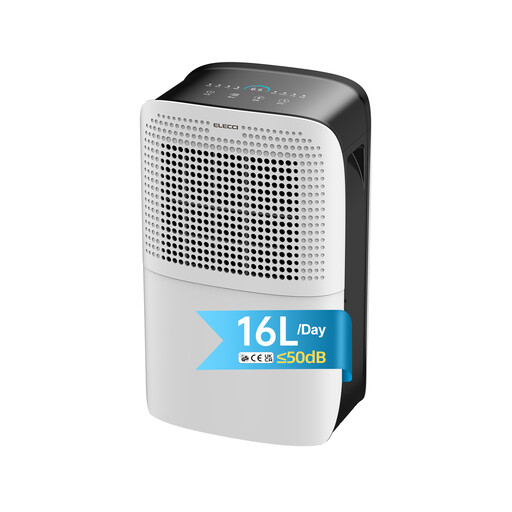
An option to consider if you want to compare humidity control and a timer for the bedroom.
The product name lists a 3.1 L tank, four modes and suitability for 32 m². According to the product information, humidity and airflow adjustments are only available in Standard mode. The stated capacity of 16 L/day applies at 95°F and 90% relative humidity; it isn’t a guaranteed output in a bedroom.
 No image available
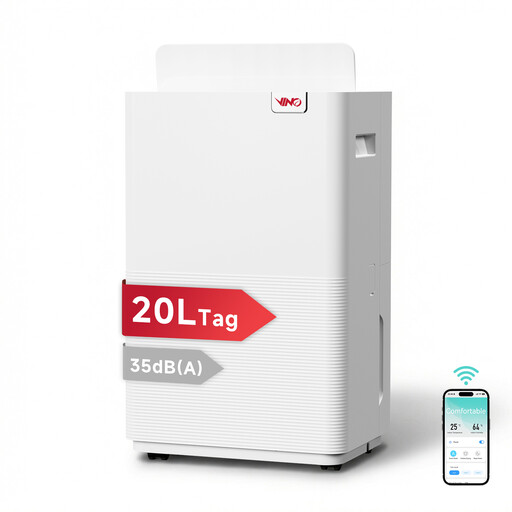
An option to compare if you’re looking for humidity control and a sleep mode in one appliance.
The product name lists Wi-Fi control, three modes (Auto/Dry/Sleep), a 2.5 L tank, 35 dB and suitability for 40 m². The stated capacity of 20 L/day applies at 30 °C and 80% relative humidity; this isn’t a guaranteed output in a bedroom.
 No image available
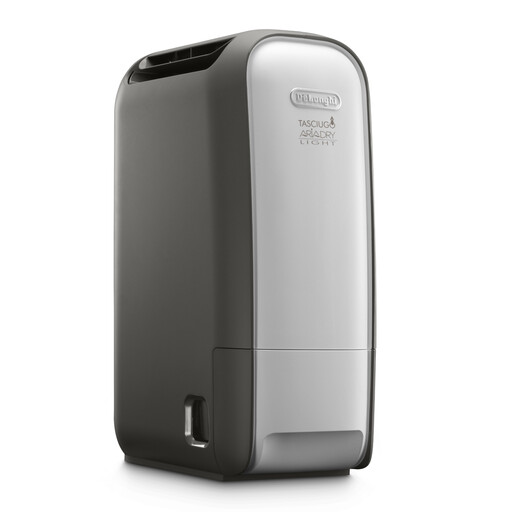
An option to consider if you’re looking for a bedroom dehumidifier that can also help dry clothes.
The product name lists 8 L per day. The stated daily capacity doesn’t guarantee the amount it will collect in your bedroom; that depends on the temperature and humidity.
First, tackle causes such as leaks and poor ventilation. According to the Consumentenbond, a dehumidifier may help if the relative humidity stays above 65% for a prolonged period afterwards. Keep ventilating the bedroom: GGD Leefomgeving recommends continuous ventilation, as dehumidifying doesn’t replace a supply of fresh air.
Don’t put the appliance in a corner or behind furniture, and keep the airflow unobstructed. The Consumentenbond gives 40–60% relative humidity at 18–24 °C as a comfortable range. Follow the instructions and also consider air circulation inside a wardrobe if its contents stay damp.
Check how to empty the tank and whether the model switches off when it’s full. Clean the dust filter as instructed in the manual; the Consumentenbond gives once every two months as a general guideline, or more often with heavy use. Only connect a drain hose as instructed for the specific model.
You’re entitled to a product that works as it should, but the Netherlands doesn’t have one fixed statutory warranty period for all products. According to the Rijksoverheid, the retailer is responsible for putting things right if a product is faulty. A manufacturer’s warranty or extended warranty is in addition to your statutory rights.
That depends on the product rules that apply. The Nederlandse Voedsel- en Warenautoriteit states that electrical products requiring CE marking must carry it; electrical equipment with a rated AC voltage of 50–1000 V falls under the Low Voltage Directive. Separate radio equipment rules may also apply to wireless functions. Check the applicable marking and product information for the specific appliance.