
Vandaag of morgen in huis

Kwaliteit gegarandeerd

Welkomstaanbiedingen ontgrendelen: GRATIS bezorging | Tot 80% korting | Gratis 30 dagen JoyPlus-proefperiode
Download de app
Condensation on windows, a damp bedroom or laundry that takes ages to dry: a dehumidifier can be useful in a range of situations. However, it is not wise to focus solely on a high litre capacity or an appealing Wi-Fi function. The right choice depends on the room, how you plan to use it and how you want to drain the collected water.
As Joybuy Product Recommendation Officer, I filter the most important product specifications and considerations, helping you compare marketing claims with verifiable information.
A claim such as 20 litres per day sounds clear, but the actual output depends on the temperature and relative humidity. For example, the VINO 20L states 20 litres per day at 30 °C and 80% relative humidity. In a cool Dutch cellar, the output may be lower.
Use the capacity as a point of comparison, rather than a fixed expectation for every room.
A quiet dehumidifier is particularly important in a bedroom or home office. However, pay attention to how the noise level is reported. A manufacturer may quote a figure for sleep mode, while the technical specifications list a different level.
For the VINO, the product description states a sleep-mode level from 35 dB, while the specifications list 40 dB(A). For the AUX portable air conditioner, the description quotes 52 dB(A), whereas the specifications state 62/64 dB. Always check which mode and measurement are being referred to.
A compact tank is convenient, but it needs emptying regularly when there is a lot of moisture. Choose a model with continuous drainage if the appliance will run for extended periods in a cellar, utility room or other damp space. Check in advance whether a drain hose can reach a suitable outlet and whether the appliance can stand securely.
For a small bedroom or study, a 16-litre dehumidifier may be sufficient. According to the product information, the CONOPU 16L is suitable for rooms of up to 60 m². The VINO 20L states a capacity for rooms of up to 40 m².
These room sizes are manufacturer guidelines. Ceiling height, insulation, ventilation, outdoor temperature and sources of moisture all affect the results. An open-plan living room with a kitchen, for example, requires a different approach from an enclosed bedroom.
For a dehumidifier for the bedroom, a sleep mode, dimmed lighting and a timer are useful features. CONOPU states a sleep-mode level from 30 dB and includes a button for switching off the indicator lights. According to its specifications, the VINO has a noise level of 40 dB(A) and a separate sleep mode.
A compressor will always make some noise when starting and running. On some models, the fan may continue running after the appliance is switched off to dry the internal components. This is not a fault, but a maintenance function that you should be able to find in the instruction manual.
A removable filter should be cleaned regularly in accordance with the instructions. A full tank should be detected automatically so that the appliance stops before water can overflow. Also check:
According to information provided by the manufacturers concerned, R290 has a lower global warming potential than some traditional refrigerants. Treat this as a product characteristic stated in the manufacturer’s documentation, not as a guarantee of lower energy consumption in your home.

Why it suits this profile: This model combines a 16-litre capacity with a 24-hour timer, wheels and a 2.5-litre water tank. That makes it easy to manage for everyday use in a flat or smaller home.
The product information mentions both a tank and continuous drainage, so you are not solely dependent on emptying it by hand.
16 litres per day according to the product listing, R290, adjustable humidity and a laundry-drying function.

Why it suits this profile: Wi-Fi control, 24-hour scheduling and automatic internal drying make this a good choice for households that want to manage humidity from their smartphone.
Alongside the 2.5-litre tank, the specifications mention two drainage options. The stated noise levels vary by mode, so check them for your intended bedroom use.
20 litres per day under the stated test conditions, Wi-Fi app, child lock, automatic shut-off and R290.
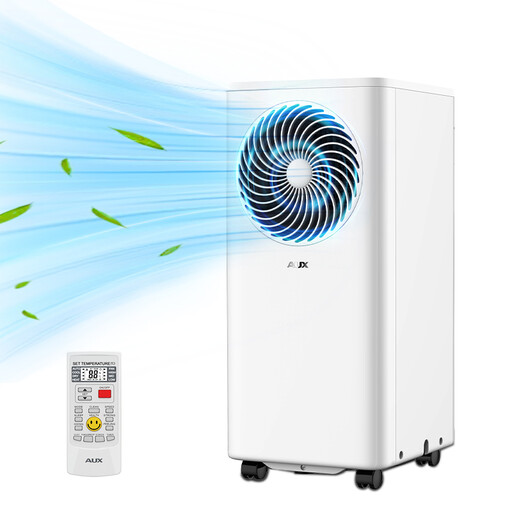
Why it suits this profile: This is not a standalone dehumidifier, but a mobile air conditioner with cooling, fan and dehumidifying modes. It is therefore suitable for anyone looking for summer cooling in the same appliance.
The product listing makes it clear that dehumidifying is one function of a 3-in-1 appliance. Bear in mind that it weighs 23.5 kg, requires a window kit and has higher noise levels in the technical specifications.
Wi-Fi and remote control, 24-hour timer, 330 m³/h airflow, washable filter and R290 according to the product details.
A dehumidifier reduces moisture in the air, but it does not replace ventilation or a structural solution. Reduce sources of moisture by ventilating while and after cooking, extracting bathroom air and drying laundry in a well-ventilated room wherever possible.
Place the appliance on a level surface with plenty of space around the air inlet and outlet. Do not position it directly against a wall or next to a heat source. If you have persistent leaks, rising damp or stubborn mould, it is sensible to have the cause assessed; simply drying the air will not resolve a structural problem.
A hygrometer can help you compare rooms. Different meters may show varying readings because of their position and sensor, so preferably always use the same measuring point.
We have put together a complete, up-to-date list of products that fully meet these strict selection criteria and the applicable European safety regulations.
That depends on its power consumption and your electricity tariff. A 365-watt model theoretically uses 0.365 kWh per hour when running continuously. In practice, consumption may be lower if the compressor switches off once the set humidity level has been reached. Therefore, check the rated power, timer and automatic humidity control.
Yes, many models have a dedicated laundry-drying function. Close windows and doors while using it, leave space around the laundry and do not place the appliance too close to wet textiles. A model with continuous drainage is useful when you want to dry clothes for longer without having to empty the tank in between.
Its lifespan depends on usage, maintenance, dust levels and correct positioning. Clean the filter according to the manual, keep the air vents clear and allow any automatic drying programme to complete its cycle. With compressor appliances, a short start-up delay of around three minutes may be normal; this prevents the appliance from switching on and off repeatedly in quick succession.
