
Vandaag of morgen in huis

Kwaliteit gegarandeerd

Welkomstaanbiedingen ontgrendelen: GRATIS bezorging | Tot 80% korting | Gratis 30 dagen JoyPlus-proefperiode
Download de app
You may notice high humidity through condensation on windows, a musty smell, laundry that takes a long time to dry or damp patches. A dehumidifier can help in these situations, but not every model is right for every room. Using a small appliance in a cellar or choosing based only on the number of litres per day can lead to disappointing results.
As a Joybuy Product Recommendation Officer, I focus on verifiable specifications and practical use. Read on to find out which pitfalls to avoid and which models suit different households in the Netherlands.
A capacity of, for example, 12 or 20 litres per day sounds straightforward, but it’s measured under specific conditions, at a particular temperature and relative humidity. In a cool Dutch bedroom, the actual amount extracted will usually be lower.
So use capacity as a basis for comparison, not as a guaranteed daily amount. Also check the recommended room size, airflow and operating temperature range.
A quiet dehumidifier is useful in a bedroom, but noise levels often depend on the fan speed you choose. Sleep mode may be quieter, but it may also remove moisture more slowly. Check whether the stated decibel level applies to sleep mode or normal use.
A small water tank needs to be emptied regularly. That can be inconvenient in a cellar, utility room or holiday home. A dehumidifier with a drain hose can discharge water continuously into a suitable drain, provided the hose slopes down properly. Check whether the hose is included, as this varies by product.
A moisture absorber works without electricity and is handy for cupboards, caravans or cars. However, its capacity is limited compared with an electric dehumidifier. For a damp living room or bathroom, an electric model is usually more practical.
Choose the capacity to suit the room and moisture levels:
A dehumidifier marketed for mould doesn’t automatically tackle the cause. Poor ventilation, leaks and cold bridges need to be dealt with separately. So treat “for mould” as a use case for reducing moisture, not as a guarantee that mould will disappear.
A larger tank means less frequent emptying, but it also makes the appliance heavier. A model that switches off automatically when the tank is full helps prevent the reservoir from overflowing. For extended use, a dehumidifier with a drain hose is worth considering.
Check which accessories are included. According to the product information, the VINO 12L doesn’t come with a drain hose, while some other models do.
Compare the stated power consumption and noise level together. Energy efficiency isn’t just about wattage: a timer, humidistat and automatic shut-off can prevent the appliance from running for longer than necessary.
Useful features include:
Always place an electric model on a level surface, away from water spray, with enough space around the air inlet and outlet. If your appliance uses R290 refrigerant, follow the safety instructions and never open the refrigerant circuit yourself.
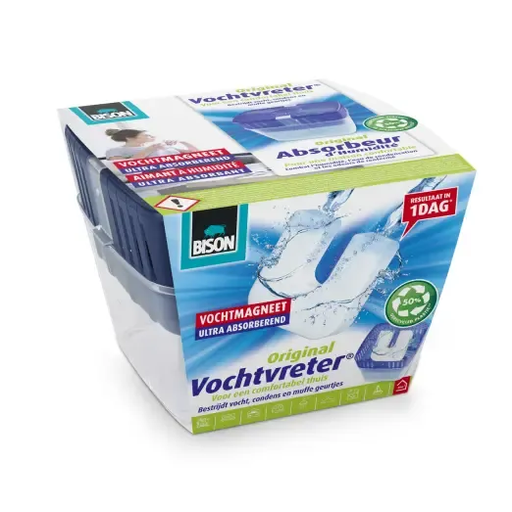
Why it suits this type of user: This moisture absorber works without electricity and is designed for smaller, enclosed spaces such as a cupboard, garage, caravan, boat or storage room.
You avoid electricity use and the risk of using an electric appliance that’s too small for the space. The reservoir still needs to be emptied in good time.
Works without electricity and can be refilled with suitable moisture-absorbing tabs or refills.
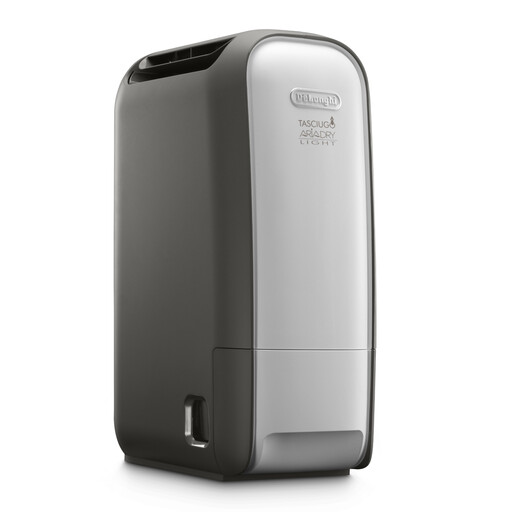
Why it suits this type of user: According to the product information, this compact model is suitable for rooms up to 34 m². It has a timer, three speeds and a laundry-drying function.
The stated specifications include both the noise level of 34 dB and the tank capacity of 2,8 litres, so you don’t have to rely on marketing claims alone.
Stated capacity of 7,5 litres per 24 hours, air filter, timer and separate laundry-drying function.
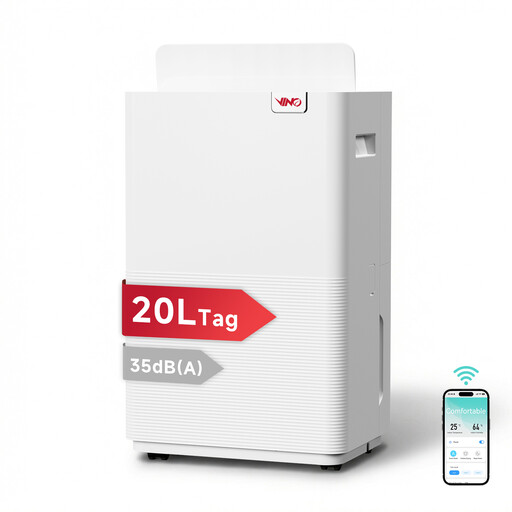
Why it suits this type of user: With a stated capacity of 20 litres per day, app control, sleep mode and a laundry-drying function, this model is suited to larger or frequently used spaces.
The dual drainage option means less manual emptying. Before buying, check whether the stated coverage of 40 m² suits your space and moisture levels.
Wi-Fi control, 24-hour scheduling, 2,5-litre tank, continuous drainage and a stated sleep mode noise level of 35 dB.
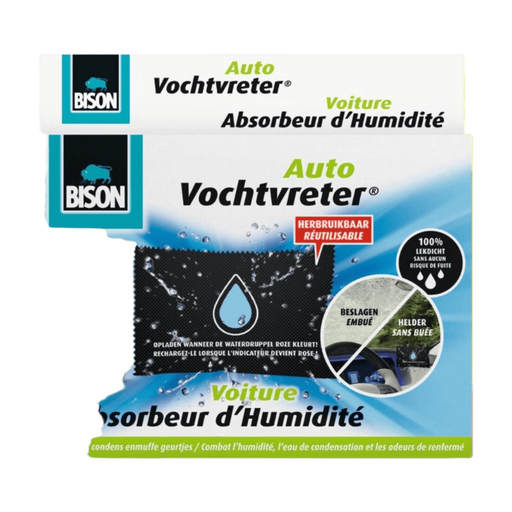
Why it suits this type of user: According to the product description, the two compact bags are designed for cars, caravans, motorhomes and boats.
You avoid using a large electric appliance in a small vehicle cabin. Place the bag securely and regenerate it only as directed in the supplied instructions.
Reusable, leak-proof bags according to the product information, plus a visual saturation indicator.
We’ve put together a complete, up-to-date list of products that meet these strict selection criteria and comply with the applicable European safety regulations.
Place your dehumidifier on a level surface with plenty of space around it. Close doors and windows while it’s running, unless ventilation is needed in your situation. Empty the tank before moving the appliance, and unplug it before carrying out maintenance.
Clean the filter regularly as instructed in the manual. A blocked filter can restrict airflow and increase energy consumption. After being transported or tilted, a compressor model should be left upright to settle first; check the manual for the exact waiting time.
Yes, as long as the model has a suitable capacity and a sleep mode. Check the stated noise level and don’t place the appliance right next to your bed. A setting of around 40 to 60% relative humidity is often used as a practical guide, but the right setting depends on the room and its ventilation.
That depends on its power consumption and how many hours it runs. A 200-watt appliance running for five hours uses 1 kWh in theory. In practice, a humidistat can switch off the compressor automatically once the set humidity level has been reached. So consider power consumption, the timer and automatic controls together.
Its lifespan depends on how it’s used, how well it’s maintained, whether the filter is cleaned and whether it’s positioned correctly. Empty the tank in good time, keep the air vents clear and don’t use the appliance where it could be splashed with water. If you notice unusual smells, smoke, leaks or a damaged cable, switch the appliance off and unplug it. Have any repairs to the refrigerant circuit carried out by a qualified professional.
