
For people waking up to wet windows
You want to reduce recurring condensation, but first check whether an appliance would help alongside ventilation and tackling the cause.


First check whether condensation is caused by poor ventilation, a source of moisture or a problem with the property: a dehumidifier is no substitute for a supply of fresh air. If you still need extra dehumidification, choose a type that suits the room temperature. According to the Consumentenbond, refrigerant dehumidifiers are generally suited to rooms above 15 °C, while desiccant models are suited to rooms below 15 °C. If you plan to use it around bedtime, also consider how much noise it makes and how much electricity it uses.
You want to reduce recurring condensation, but first check whether an appliance would help alongside ventilation and tackling the cause.
You need extra dehumidification, but noise while you sleep matters more to you than a high maximum capacity.
Your room often stays below 15 °C. In that case, choosing between a refrigerant and a desiccant model matters more than a general list of bedroom appliances.
Start by considering the cause of the moisture and the bedroom temperature. Then compare the capacity, noise level and day-to-day use of suitable models.
| What to consider | What to look for when buying | Who is this important for? |
|---|---|---|
| Capacity and cause | Check ventilation, sources of moisture and any defects. Compare the capacity in l/24 hours with the floor area and the stated conditions. | If I want to tackle recurring condensation, I first need to know whether ventilation or another source of moisture is the cause, and what capacity is right for my room. Around 33% of consumers prioritise effective performance for their room and the cause of the problem. |
| Noise around bedtime | Check the noise level and the fan setting you plan to use. Also listen out for humming and vibration. | If noise keeps me awake, I want to know what the appliance sounds like in the setting I would use. Around 27% of consumers give sleep noise top priority. |
| A cool room | Measure the temperature when dehumidification is needed. If it stays below 15 °C for a long time, the Consumentenbond recommends a desiccant model rather than a refrigerant one. | If my bedroom stays cold for a long time, I want to choose a type that suits that temperature. Around 20% of consumers prioritise suitability for a cool room. |
| Electricity and emptying | Compare energy use for similar usage, and check the tank capacity, whether the appliance switches off when the tank is full, and whether continuous drainage is possible. | If the appliance is on regularly, I want to take its energy use and emptying into account for everyday use. Around 20% of consumers focus mainly on running costs and ease of use. |
Damp problems can be linked to poor ventilation, a leak or a structural issue. A dehumidifier does not remove stale air or fix a defect like this.
Check vents, sources of moisture and possible defects. If needed, treat an appliance as an additional measure, not a replacement for ventilation or repairs.
The water tank capacity does not tell you how much moisture an appliance can extract per day. For example, Pro Breeze lists a 1.5-litre tank and a maximum moisture extraction of 0.5 litres per day for the Premium Mini.
Compare the capacity in litres per 24 hours and check the conditions on which that figure is based. Assess the tank capacity separately.
A stated dB(A) rating does not fully show how disruptive an appliance will sound in a quiet bedroom. The Consumentenbond also considers how listeners perceive the noise when testing.
Check the measured value and fan setting, and consider humming or vibration as well as how sensitive you are to these sounds.
The DryBest 10 is a refrigerant model worth comparing for a bedroom that suits its intended use.
Qlima offers models for two different needs here: the D 812 Smart is a refrigerant model, while the DD 808 is a desiccant model for cooler spaces.
The Tasciugo AriaDry DEX210SF is a refrigerant model worth comparing if bedroom noise is a consideration.
The TTR 57 E is a desiccant model worth comparing for a cool bedroom.
The 1500 ml Premium Mini is a Peltier model to consider for a small, limited-use application, rather than as an obvious solution for persistent condensation throughout a bedroom.
This selection features compressor or refrigerant dehumidifiers for bedrooms that are generally warmer than 15 °C. For a bedroom that stays cooler for a long time, the Consumentenbond recommends a desiccant model.
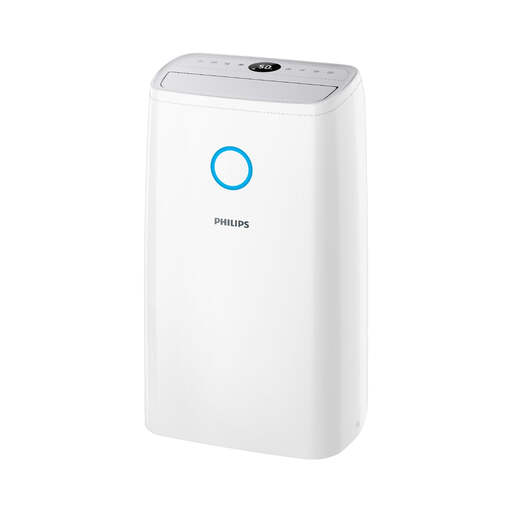 No image available
The product listing mentions humidity control and a timer, for those who want to tailor operation accordingly.
Stated capacity: 34.3 litres per day; the title says it is suitable for rooms up to 150 m². The description mentions a 4-litre tank, three fan speeds and an optional drainage hose. It warns that the R290 refrigerant is flammable, so keep the appliance away from naked flames and sources of ignition.
 No image available
The listing mentions use in bedrooms and automatic humidity-based control.
The maximum stated capacity is 16 litres per day at 95 °F and 90% relative humidity. The tank holds 2.5 litres; the listing also mentions a sleep mode, timer and connection for continuous drainage.
 No image available
The product information mentions bedrooms and the option of a drainage hose for continuous drainage.
The listing states a maximum moisture extraction of 16 litres per day and operation at 5–35 °C. Below 15 °C, frost may form, causing the compressor to stop temporarily while the appliance defrosts. Other features listed include a timer, automatic defrost and a full-tank indicator.
 No image available
The listing says it is suitable for bedrooms and spaces up to around 25 m².
The maximum stated capacity of 12 litres per day applies at 86 °F and 90% relative humidity. The tank holds 3.8 litres; listed features include automatic shut-off when the tank is full, automatic defrost and a drainage hose.
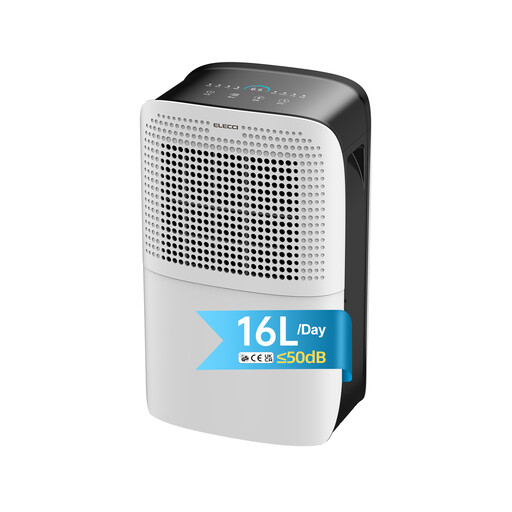 No image available
The product information mentions rooms up to 32 m², a sleep mode and automatic shut-off when the tank is full.
The maximum stated capacity of 16 litres per day applies at 86 °F and 90% relative humidity. The tank holds 3.1 litres; continuous drainage and four modes are also listed.
No. Ventilation removes stale indoor air and brings in fresh air; a dehumidifier does not. The Dutch government recommends ensuring sufficient ventilation through vents or tilt windows, day and night.
Measure the floor area and take the temperature and moisture load into account. As a rule of thumb, the Consumentenbond suggests up to 10 l/24 hours for 15–20 m² and 12–16 l/24 hours for 20–30 m². This is not a guarantee for a specific room or model.
Follow the instructions for your chosen model. The Eurom DryBest 10 and 20 manuals specify, among other things, placing the appliance on a flat, stable surface, keeping the air inlet and outlet clear, and switching it off and emptying it before moving or cleaning it. Check the instructions for other models separately.
If a product develops a fault during normal use and does not meet what you could reasonably expect, the seller may be responsible for resolving the problem under Dutch rules. Online purchases generally come with a statutory 14-day cooling-off period after delivery, although exceptions may apply. The right to change your mind is separate from your rights if a product is faulty.
Look into the cause and report any suspected maintenance issue to your landlord in writing. The Dutch government lists the Rent Tribunal and the local authority as possible next steps for serious defects that have not been fixed; not every complaint about condensation automatically counts as such a defect.