Who is this relevant to?

Student dealing with shower damp in their room

You notice damp in your living or sleeping space after a shower and want to check first whether the bathroom extractor fan or ventilation is doing enough. Milieu Centraal and GGD Leefomgeving recommend increasing ventilation while you shower.

Light sleeper with a damp room

You still need to dehumidify after tackling the source of the damp, but the appliance may be in the same room as your bed or desk. Compare the stated noise level for each setting, and check the instructions for your chosen model.

Student living in a cool room

You want to know which technology is suited to the room’s usual temperature. The Consumentenbond says adsorption is suitable for cold or unheated spaces; compare it with condensation if your room is usually warmer.

What should you look for when choosing?

Remove moisture at source

When: Start here if humidity rises mainly during or after a shower. Use the extractor fan or open a suitable window, then check the room again.

Trade-off: Ventilation removes moist air, but a faulty extractor or a leak also needs to be fixed at source.

Adsorption dehumidifier

When: Compare this technology if you have tackled the source of the damp and a mainly cool room remains damp.

Trade-off: The Consumentenbond says adsorption is suitable for cold spaces, but uses more electricity than condensation. Also check the exact model’s temperature limits, noise and heat output.

Condensation dehumidifier

When: Consider condensation as part of your comparison if the room is usually warmer than 15 °C and you still need to dehumidify after tackling the cause.

Trade-off: According to the Consumentenbond, condensation models work best above 15 °C and are less suitable for cool spaces.

What to consider What should you check? Who should pay extra attention?
Tackling shower damp Use the bathroom extractor fan or a suitable window; check whether the room stays damp afterwards. If I mainly want to avoid an appliance masking a problem with the extractor, I start with ventilation. Around 37% of consumers put tackling the source of the damp first.
Noise and sleep comfort Compare the stated noise level for each setting and consider whether you would use the appliance while sleeping or studying. Sharing a room with an appliance means paying attention to noise and heat. Around 27% of consumers prioritise sleep and study comfort.
Room temperature Check the operating temperature range of the exact model and compare its capacity under the stated test conditions. If my room is usually cool, I want to know whether the chosen technology works within the recommended operating temperature. Around 18% of consumers prioritise suitability for their room temperature.
Electricity use and water collection Compare the power consumption, tank capacity and whether there is a suitable drain for a hose. If you mainly want to keep track of ongoing electricity use and emptying the tank, consider how long you will use the appliance and how the water will drain away. This is the main concern for around 18% of consumers.

Common pitfalls

  • Buying a dehumidifier before checking the bathroom extractor

    An appliance does not carry moist air outside or fix faulty ventilation or a leak. It may therefore keep running while the underlying cause remains.

    Check the extractor first, then see whether the room stays damp for a prolonged period. If you suspect a fault in a rented property, report it to your landlord.

    Without tackling the source of the damp, the appliance may keep using electricity without resolving the underlying problem.

  • Assuming the maximum litres per day is what you’ll get after one shower

    The stated capacity applies under specific conditions. For example, the Wood’s WDD80 manual gives a figure of 8 litres at 20 °C and 60% relative humidity; conditions in your room may be different.

    Compare the test conditions and intended use of the exact models before using capacity to make your choice.

  • Assuming an adsorption model is more energy-efficient or better for a bedroom

    The Consumentenbond says adsorption uses more electricity than condensation. The noise setting and heat output may also matter in a small bedroom.

    Consider room temperature, noise at each setting, heat output and expected running time together.

Brands to compare

Wood’s

The WDD80 is an adsorption model worth comparing for a cool room that stays damp for a long time. Wood’s lists three fan speeds and a connection for continuous drainage.

  • The manual states a capacity of 8 litres, a 2-litre tank, 650 W and 36–50 dB at 20 °C and 60% relative humidity.
  • These are manufacturer figures, not independent measurements in a student room. Wood’s product page states that it can be used down to 0 °C, while the manual consulted gives a lower limit of +1 °C; follow the manual for the exact version.

Trotec

Trotec presents the TTR 57 E as an adsorption model for rooms up to 20 m², with a 5-litre tank and a display showing relative humidity.

  • Trotec states a maximum of 9 litres per 24 hours and says it operates from 1 °C.
  • These are manufacturer figures, not a guarantee of performance in your room. For the exact version, also check the noise level, power consumption and placement instructions.

Qlima

Qlima positions the DD 808 as an adsorption model for cooler spaces and lists a humidistat and timer.

  • Qlima states a capacity of 8 litres per 24 hours and a coverage area of up to 75 m³.
  • The manufacturer’s product specifications and positioning do not prove that the model will resolve a ventilation problem after showering.

Meaco

The DD8L Junior is an adsorption model with humidity-controlled operation and a lower fan speed—features to consider if the appliance will be in your sleeping space.

  • Meaco describes a monitoring cycle after the set humidity level has been reached and says the appliance switches off when the tank is full.
  • The manufacturer’s claims about quiet operation or savings have not been independently verified; compare the stated noise level and power consumption for the exact version.

Dehumidifiers at Joybuy

These models are dehumidifiers for tackling damp in a room. Compare their stated coverage area and water collection capacity with the size and use of your student room.

Comfee MDDO-10DEN7 dehumidifier

Comfee' MDDO-10DEN7, 10 L per day

The product name lists a sleep mode at 36 dB(A) and a 2.5-litre tank; compare these figures with where you plan to use the appliance.

Stated capacity: 10 L per day. Coverage area according to the product name: approximately 40 m³ (16 m²).

View at Joybuy
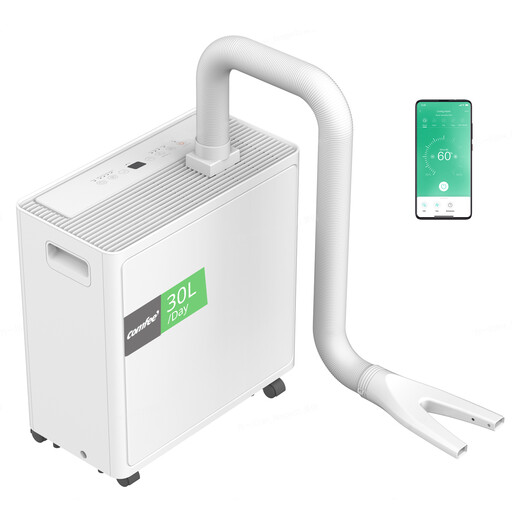
Comfee MDDA-30DEN7-SD dehumidifier

Comfee' MDDA-30DEN7-SD, 30 L per day

The product name mentions continuous drainage, which may be useful if you have a suitable drain and want to empty the tank less often.

Stated capacity: 30 L per day. Coverage area according to the product name: approximately 130 m³ (73 m²).

View at Joybuy
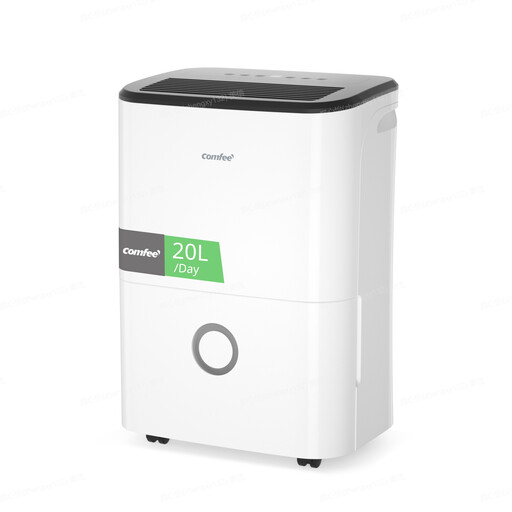
Comfee MDDF-20DEN7 dehumidifier

Comfee' MDDF-20DEN7, 20 L per day

The product name lists a 3-litre tank and continuous drainage; check that the drainage method suits the place where you plan to put the appliance.

Stated capacity: 20 L per day. Coverage area according to the product name: approximately 100 m³ (40 m²).

View at Joybuy

CONOPU 16L dehumidifier

CONOPU 16L

The product name lists a 2.5-litre tank and continuous drainage; compare the drainage option with the space you have available.

Stated capacity: 16 L per day. The product information gives a coverage area of up to 60 m².

View at Joybuy

ELECCI 12L/D dehumidifier

ELECCI 12L/D

The product name mentions a 3.8-litre tank and a drainage hose; check that there is a suitable drain where you plan to put the appliance.

Stated capacity: 12 L per day. The product name gives a coverage area of approximately 25 m².

View at Joybuy

Frequently asked questions

When is a dehumidifier useful if my room gets damp after a shower?

Ventilate first during and after showering, and deal with any leak or faulty extractor. The Consumentenbond suggests a dehumidifier as a possible next step if you have tackled the causes and humidity remains consistently above 65%; this is buying advice, not a legal limit.

Can I put the dehumidifier right next to the shower?

Don’t assume it’s safe: don’t place the appliance anywhere it could come into contact with water. The Wood’s WDD80 manual specifies a safe distance from sources of water; check the instructions for any other model.

How can I keep noise and maintenance to a minimum?

Compare the stated noise level for each setting with the times you plan to use the appliance. Check the tank and clean the filter as instructed; for the Wood’s WDD80, unplug it before cleaning or maintenance. A drainage hose is only practical if there is a suitable drain.

How do I work out the running cost per day?

Multiply the power consumption in kilowatts by the number of hours it runs and your electricity rate per kWh. As a basis for calculation, the Wood’s WDD80 manual states 650 W at 20 °C and 60% relative humidity; actual running time and costs depend on the settings, conditions and your tariff.

Does my landlord need to do anything about recurring damp or mould?

Report damp problems, leaks or mould to your landlord in writing first and ask for them to be fixed. According to the Dutch government, the standard procedure allows a period of six weeks; in the case of serious defects, other steps may be possible under certain conditions, including contacting the Huurcommissie. If it’s urgent, ask for an urgent repair; a dehumidifier is no substitute for reporting the issue.
