Start by tackling the moisture at its source: ventilate the bathroom during and after your shower, and stop damp air from drifting into your home office. If the room remains persistently damp, choose a dehumidifier based on its size and temperature, how noisy it is while you work, and how you’ll drain the water. You’ll still need to ventilate. If you want to use the appliance in the bathroom, check whether the exact model can be placed where you intend to use it, as stated in the manual. The Dutch government and Milieu Centraal recommend ventilating around shower time. The Consumers’ Association highlights room size, temperature, speed and noise as factors to consider when choosing a dehumidifier.
Who is this advice for?
Home worker dealing with damp after a shower
You’ve noticed that damp lingers in your home office after a shower and want to find out whether better ventilation or an additional appliance is needed. The Dutch government and Milieu Centraal recommend ventilating during and after a shower.
Home worker who needs peace and quiet
You want to dehumidify the room while you work, but need to weigh the noise against how quickly the appliance removes moisture. The Consumers’ Association highlights noise and dehumidifying speed as useful points of comparison.
User of a cool home office
You work in a room that isn’t heated much and want to know whether the stated capacity is suitable for its temperature. The Consumers’ Association stresses that the room temperature is one of the factors that determines which dehumidifier you need.
What should you look for when choosing?
Start with ventilation
Choose this option if: the damp is linked to showering and the bathroom extractor or air supply may not be working well enough.
Consider: check the ventilation. A dehumidifier doesn’t extract stale indoor air or replace ventilation.
Dehumidifier in your home office
Choose this option if: your home office remains persistently damp despite tackling the source of the moisture.
Consider: the appliance uses electricity and makes noise. Its stated daily capacity alone won’t tell you how quickly your room will dry out after a shower.
Dehumidifier in the bathroom
Choose this option if: you want to dehumidify the bathroom as well as ventilate it, and the exact model can be used in that location according to its manual.
Consider: splash protection does not mean you can place the appliance next to any shower or power supply.
The Dutch government recommends ventilating after a shower, while Milieu Centraal recommends using the bathroom extractor during and after showering. The Consumers’ Association suggests considering a dehumidifier as an additional measure if humidity remains above 65% after you’ve addressed the causes. This is buying advice, not a general legal limit.
| Point to consider |
What should you check? |
Who is this important for? |
| Damp that lingers after a shower |
Check the bathroom extractor during and after a shower, and see whether your home office remains damp beyond the brief spike in humidity caused by showering. |
If the damp in my home office persists, I want to find out whether ventilation could address the cause before buying an appliance. Around 36% of consumers put lingering damp after a shower first. |
| Noise while working from home |
Where the information is available, compare both noise and dehumidifying speed on the settings you’d use during working hours. |
If I’m on calls or need to concentrate, I want to weigh the noise against how quickly the chosen setting removes moisture. Around 29% of consumers give working noise the highest priority. |
| Performance in a cool room |
Measure the room temperature and compare the capacity or independent test results at a similar temperature and humidity level. |
In a home office that isn’t heated much, I want to avoid basing my choice solely on a daily capacity measured under different conditions. Around 21% of consumers prioritise performance in a cool room. |
| Electricity use and water drainage |
Compare energy use under similar conditions, tank capacity and whether continuous drainage is possible with your intended set-up. |
If I’m going to use it regularly, I want to know how to drain the water and what the electricity use means for my running costs. Around 14% of consumers put running costs and water management first. |
Common buying mistakes
-
Buying a dehumidifier before checking the ventilation
A dehumidifier doesn’t remove damp, stale air. If shower moisture drifts into your home office because the ventilation is poor, the source of the problem will still be there.
First, check the bathroom extractor and airflow. Then see whether your home office is still persistently damp.
-
Assuming the maximum litres per day is what you’ll get in a cool room
Capacity depends partly on temperature and humidity. For example, the De'Longhi Tasciugo AriaDry DEX210SF’s specification of 10 l/24 uur applies at 30 °C and 80% relative humidity.
Compare the test conditions with the temperature in your home office and, where available, look for results measured under similar conditions.
-
Assuming splash protection means you can place it anywhere in the bathroom
The Qlima D 612’s IP24 rating doesn’t confirm that every model or location near a shower, water outlet or power supply is suitable.
Before using the appliance in the bathroom, check the manual for the exact model and the location where you intend to place it.
Brands compared
Qlima
The Qlima D 612 is a model worth comparing if you’re considering using a dehumidifier in a damp room.
- Qlima lists IP24, 12 l/24 uur, a hygrometer and a timer for the D 612. The manufacturer also specifies continuous drainage and a noise level of 34 dB.
- These are manufacturer specifications, not independent test results for your home office. Check the manual for precise placement instructions and fit a drain hose as directed.
De'Longhi
The Tasciugo AriaDry DEX210SF is a compressor dehumidifier worth comparing for use in a home office.
- De'Longhi lists 10 l/24 uur at 30 °C and 80% relative humidity, 36 dB(A), 250 W input power and continuous drainage.
- The stated capacity applies under those warm, humid test conditions. Noise and capacity alone won’t tell you how the appliance will perform in a cooler home office. This information does not confirm that it can be placed in a bathroom.
Eurom
The DryBest 10 is a household model worth comparing if you’re looking for a 2-litre tank, a humidistat and optional continuous drainage.
- Eurom lists a capacity of 10 l/24 uur and a noise level below 42 dB(A) for the DryBest 10.
- The manual for this version specifies a minimum room size of 4 m² for installation, use or storage. This requirement applies to this particular model.
Meaco
The MeacoDry Arete One 20L is an option in the range worth comparing if you need to dehumidify more than one small home office.
- Meaco Netherlands lists a HEPA H13 filter and an optional condensate pump for the 20L version.
- Check that the dimensions, noise information and features suit your room and intended use.
Dehumidifiers for your home office
These Joybuy products are dehumidifiers for anyone looking to tackle damp in a home office. Before choosing, check the stated room size, specifications and any restrictions for each model. A model intended for a home office isn’t automatically suitable for use in a bathroom.
 No image available
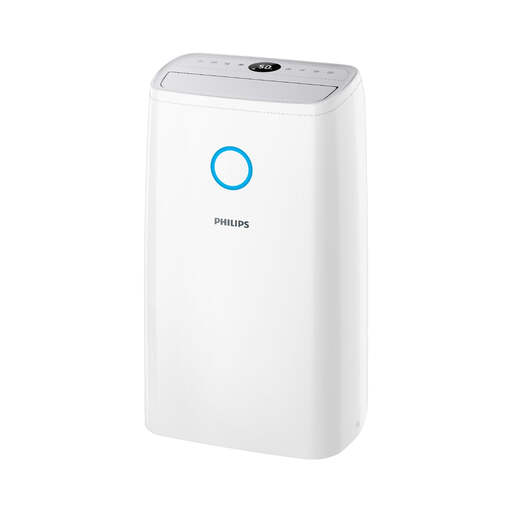
Philips 3000 Series DE3306/11
An option worth comparing if you’re looking for a dehumidifier for a home office within the stated room-size range.
The product name specifies use in rooms up to 150 m². The product information advises against using it near baths, showers and other wet areas.
View at Joybuy
 No image available
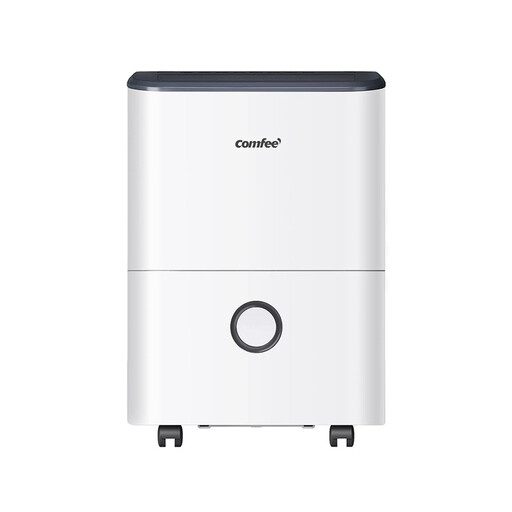
Comfee MDDF-20DEN7
An option worth comparing if you’re looking for a dehumidifier for use in a home office.
The product name specifies 20 L/24h and 290 W.
View at Joybuy
 No image available
CONOPU 16L Dehumidifier
An option worth comparing if you’re looking for a model with a water tank and the option of continuous drainage.
The product name specifies a 2.5-litre tank, continuous drainage and a 24-hour timer.
View at Joybuy
 No image available
TRULIVA AP10-2012EE
An option worth comparing if you’re looking for a dehumidifier for your home office and are considering continuous drainage.
The product name specifies a range of approximately 32 m², a 24-hour timer, automatic defrosting and continuous drainage. The product information advises against using it where water could splash onto the appliance.
View at Joybuy
 No image available
ELECCI 12L/D Dehumidifier
An option worth comparing if you’re looking for a dehumidifier with a stated room-size range and a drain hose.
The product name specifies 12L/D, a 3.8-litre tank, automatic defrosting, a 24-hour timer and continuous drainage. The stated room-size range is up to 25 m².
View at Joybuy
Frequently asked questions
Does a dehumidifier replace ventilation after a shower?
No, a dehumidifier doesn’t replace ventilation. Ventilate the bathroom during and after a shower, and use a dehumidifier only as an additional measure once you’ve tackled the source of the moisture. The Dutch government and Milieu Centraal recommend ventilating around shower time.
How should I compare the electricity use of dehumidifiers?
Where possible, compare measured energy use under similar conditions. You can multiply your own consumption in kWh by the rate in your energy contract. The stated power rating in watts alone won’t determine your running costs.
What should I look for in a dehumidifier with continuous drainage?
Follow the manual for the exact model when maintaining the tank and filter and fitting the drain hose. For the D 612 series mentioned above, Qlima specifies that the hose must slope downwards and have no kinks so water can drain away.
Can any electric dehumidifier be used in a Dutch bathroom?
No, don’t assume that. Qlima specifically lists IP24 and use in damp rooms for the D 612; that doesn’t mean every model can be placed anywhere in a bathroom. Check the manual for the exact model and the electrical installation at the intended location.
What cooling-off period and rights apply when buying online in the Netherlands?
For a typical online consumer purchase, you generally have up to 14 days after delivery to change your mind, subject to statutory exceptions, according to ACM ConsuWijzer. Products must also meet what you could reasonably expect of them. If a product breaks during normal use, contact the seller to discuss a solution.


