
Vandaag of morgen in huis

Kwaliteit gegarandeerd

Welkomstaanbiedingen ontgrendelen: GRATIS bezorging | Tot 80% korting | Gratis 30 dagen JoyPlus-proefperiode
Download de app
A decorative filament bulb can completely transform the atmosphere of a room. However, the wrong choice can be just as disappointing. A bulb that looks stunning online might cast a light that's too cold or overly bright in your living room. The purpose of this article is to provide you with objective criteria to help you select a light source that matches your needs and interior design, without any unpleasant surprises. We will focus on the specifications and practical applications of a decorative light source, specifically for use in an open fixture lamp.
When selecting a decorative filament bulb, several technical parameters determine the final ambiance. Paying attention to these will help you avoid a bad purchase.
Most light fixtures in Europe use an E27 socket, also known as the 'large screw base'. Always check your fixture's socket before making a purchase. All the bulbs discussed below use this standard E27 lamp socket, which makes installation straightforward.
Decorative bulbs come in many shapes. A popular variant is the large globe bulb, often designated by the code G125. The 'G' stands for 'Globe', and '125' represents the diameter in millimetres (12.5 cm). This size is designed to be a showpiece and looks best in a minimalist pendant or an open fixture.
The colour temperature, expressed in Kelvin (K), is crucial for the ambiance. A low Kelvin value (1800-2700K) produces a warm, yellowish light, comparable to candlelight or a traditional incandescent bulb. This is ideal for an ambient light. A dimmable LED bulb offers the flexibility to adjust the light intensity to suit the time of day. Not all LED bulbs are dimmable by default, so pay close attention to this specification.
LED filament bulb technology mimics the look of a classic carbon filament bulb but with the energy efficiency and long lifespan of LED. For those who want more control, a smart bulb is worth considering. These bulbs can be controlled via an app or voice assistant, allowing you to adjust not only the brightness but often the colour temperature (CCT - Correlated Color Temperature) as well.
Below is a selection of decorative filament bulbs, each with unique features. The recommendations are based on product parameters and intended use cases.
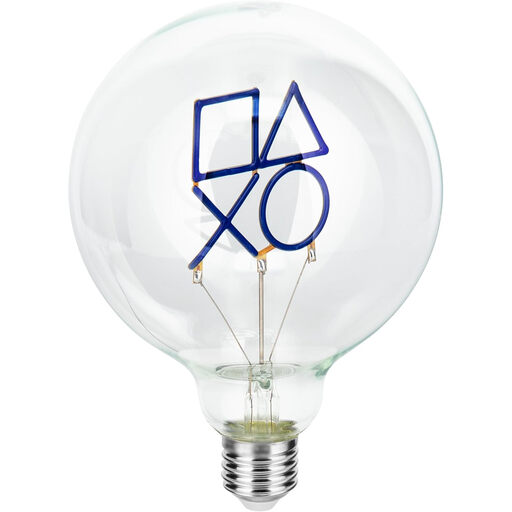
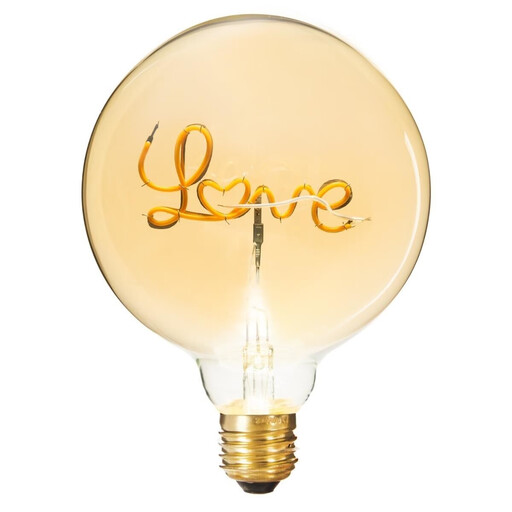
decorative light source.vintage light source with a modern twist.
vintage light source with the functionality of a modern smart bulb. Control via Bluetooth Mesh is efficient and allows for pairing with many other devices.The products above represent specific styles: gaming, text, and smart-vintage. If this isn't exactly what you're looking for, but you are interested in the concept of a decorative LED filament bulb, there is a wide range of shapes, sizes, and styles available.
Explore our full assortment in the LED Filament Bulb category for more alternatives.
1. What is the difference between a standard LED bulb and an LED filament bulb? A standard LED bulb typically contains a cluster of LED chips on a circuit board, covered by a diffuser (a frosted cover) to spread the light. An LED filament bulb has LEDs mounted on thin, rod-shaped structures (filaments). This mimics the appearance of the filament in a traditional incandescent bulb and is primarily intended for aesthetic purposes.
2. Are decorative filament bulbs energy-efficient? Yes, because they use LED technology, they are significantly more energy-efficient than the traditional carbon filament or halogen lamps they imitate. A decorative LED bulb typically consumes between 3 and 8 watts, while its light output is comparable to that of a much higher wattage incandescent bulb.
3. Can I use a decorative bulb in any fixture? Technically, yes, as long as the socket (usually E27) matches. However, a decorative filament bulb is designed to be seen. Its effect is largely lost in an enclosed fixture with a lampshade that completely conceals the light. They look best in an open fixture lamp, such as a glass shade, a wireframe cage, or a simple pendant holder without a shade.
