
Vandaag of morgen in huis

Kwaliteit gegarandeerd

Welkomstaanbiedingen ontgrendelen: GRATIS bezorging | Tot 80% korting | Gratis 30 dagen JoyPlus-proefperiode
Download de app
Do you fancy a coffee in the evening without the caffeine, but still want that familiar coffee taste? You’ll soon find yourself faced with a wide range of options: decaf coffee, coffee capsules, coffee pods, ground coffee and instant varieties. The packaging often boasts words like “rich”, “aromatic” or “barista experience”, but these don’t always tell you whether the product will actually work with your coffee machine.
So the most important decision isn’t just about flavour. You also need to check the brewing method, the portion size and the caffeine information. That way, you can avoid buying a pack that doesn’t fit your machine or doesn’t last as long as you expected.
Not every capsule is universal. Dolce Gusto decaf is designed for Dolce Gusto machines, while Senseo decaf comes in coffee pods. A capsule with a similar shape may still fail to be pierced or sealed properly.
So check before you buy:
The terms decaf, caffeine-free and coffee without caffeine are sometimes used interchangeably in shops. The precise meaning and amount of residual caffeine can vary from product to product and depending on the decaffeination process. So always look at the product information and the label. For example, the Nescafé Lungo Decaffeinato capsules are described as completely caffeine-free; always check the packaging for the most up-to-date information.
If you’re limiting caffeine for personal or medical reasons, it’s wise to read the product details carefully and, if in doubt, seek advice from a doctor or midwife. General product descriptions are no substitute for personal advice.
A 500 g bag may seem good value, but capsules and pods are priced per serving. So don’t just compare the price per pack – also compare:
For a household with several coffee drinkers, a bag of caffeine-free filter coffee can be practical. For a single cup at a quiet moment, capsules or sticks are often easier.
The form of the coffee determines how much effort you’ll have. Capsules are handy if you want a quick single cup. Coffee pods work with a suitable pod machine, while ground coffee offers more flexibility: you can use it in a filter machine, French press, AeroPress, percolator or Chemex, depending on the grind size and the manufacturer’s advice.
With caffeine-free coffee capsules, you mainly need to check the system. With decaf ground coffee, you should also pay attention to the grind size. A filter grind isn’t automatically suitable for espresso.
An intensity scale is a useful guide, but it’s not a universal measure of flavour. A product with an intensity of 05 on a scale of 01 to 09 generally falls in the middle of that scale. The final taste also depends on the amount of coffee, the water temperature and the brewing time.
The Douwe Egberts and Kanis & Gunnink varieties in this selection are described as balanced & round, with an intensity of 05. That makes them a logical choice if you’re looking for a mild, smooth black coffee. If you prefer a milky drink, you could look at cappuccino or café-au-lait sticks.
Pure ground coffee usually contains only roasted coffee beans. Instant cappuccino and café-au-lait often contain milk components, sugar, sweeteners or other ingredients. So always check the allergen information, especially if you have a milk allergy or lactose intolerance.
Store coffee in a cool, dry place, away from direct sunlight and moisture. Seal an opened pack tightly. For filter coffee, Douwe Egberts states that once opened, the coffee is best used within about two weeks when stored properly sealed. The information on the packaging always takes precedence.
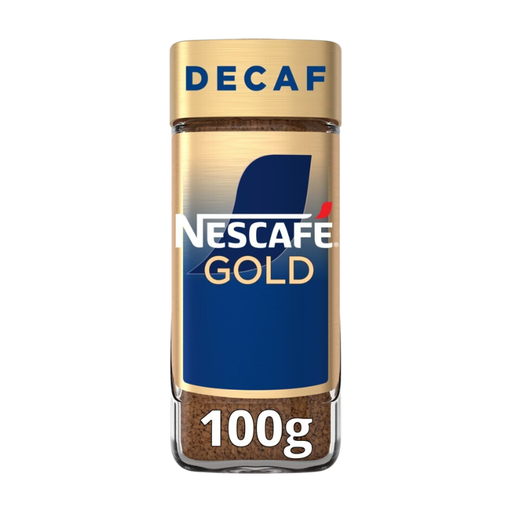
Why this fits the profile: You only need hot water and can adjust the strength with 1 or 2 teaspoons per cup. That makes this caffeine-free instant coffee practical for home, the office or on the go.
No specific machine or capsule holder is needed. The recommended preparation is clearly stated: 1–2 teaspoons in approximately 120 ml of hot water.
100% caffeine-free instant coffee according to the product information; made from mild roast Arabica beans and a 100 g pack.
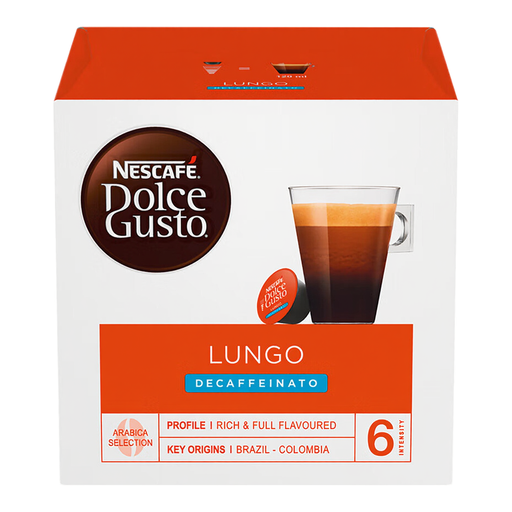
Why this fits the profile: For anyone who wants to brew a lungo from a Dolce Gusto machine with minimal preparation and individually wrapped capsules.
Compatibility is clearly linked to Dolce Gusto. This reduces the chance of ordering the wrong capsule system.
16 individually wrapped capsules; according to the product description, a smooth lungo with crema and no caffeine.
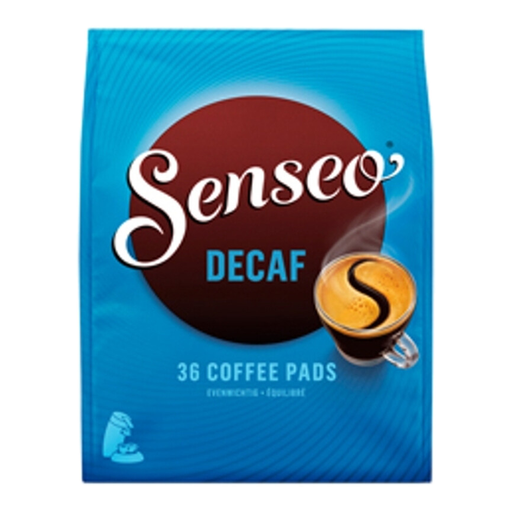
Why this fits the profile: The pack of 36 pads is ideal for people who regularly brew coffee with a SENSEO machine, at home or in the office.
The product is specifically designed for SENSEO coffee machines and comes as individual pods. So you don’t need to adjust the grind or dosage.
36 decaf coffee pods per pack; simple preparation with a compatible SENSEO machine.
We’ve put together a full, up-to-date list of products that fully meet these strict selection criteria and comply with current European safety regulations.
That depends on the product and the formulation. Some products are described as caffeine-free, while “decaf” in a general sense can refer to coffee from which caffeine has been largely removed. So always read the label and the product description. If you have a particular sensitivity to caffeine, it’s wise to check extra carefully.
For a Senseo machine, choose coffee pods, such as SENSEO Base Decaf. For a Dolce Gusto machine, you need compatible capsules, like Nescafé Lungo Decaffeinato. Pods and capsules are not interchangeable.
Store the coffee airtight, cool and dry, and follow the instructions on the packaging. Douwe Egberts states for the 500 g Quick Filter Decaf that, when stored correctly in its original packaging, the coffee tastes best for up to about two weeks after opening. The best-before date and storage advice on the label always take precedence.
