
Vandaag of morgen in huis

Kwaliteit gegarandeerd

Welkomstaanbiedingen ontgrendelen: GRATIS bezorging | Tot 80% korting | Gratis 30 dagen JoyPlus-proefperiode
Download de app
A day cream with SPF combines daily hydration with protection against UV radiation. That sounds simple, but products vary considerably in their level of protection, texture, ingredients and suitability for different skin types. Choosing the wrong product can leave your skin feeling tight, looking shiny or irritated around the eyes.
So don’t focus only on terms such as “anti-ageing”, “brightening” or “intensively hydrating”. Above all, check the SPF, ingredients list, skin type and directions for use. Below, you’ll find the key points to consider, along with some popular options based on verifiable product specifications.
An SPF 30 or SPF 50 day cream provides protection when you use enough product and apply it evenly. A thin layer reduces the level of protection. Even with a high SPF, reapplication remains important during prolonged exposure to the sun, perspiration or contact with water.
A day cream with SPF is also not automatically a complete substitute for facial sunscreen. Check the label to see whether both UVA and UVB protection are mentioned. In strong sunlight, such as at the coast, on holiday or when working outdoors, a separate facial sunscreen is often more practical.
Brands may support their claims with research, but the results will not necessarily apply to everyone. According to NIVEA’s own research, certain formulas can reduce the appearance of pigmentation with regular use; the product information, for example, refers to a clinical study involving 43 women for LUMINOUS630. Treat this as product information, not as a guaranteed result.
When choosing a face cream for pigmentation, UV protection and consistent use are more important than a single prominent ingredient on the front of the packaging. Also check whether the formula is suitable for your skin and whether perfume or alcohol appears high on the ingredients list.
A hydrating day cream may be light and quick to absorb, or rich and nourishing. Oily skin will often benefit more from an oil-free or mattifying texture, while a day cream for dry skin may contain ingredients such as glycerine, hyaluronic acid, shea butter or argan oil.
For sensitive skin, fragrance-free formulas, a short ingredients list and introducing the product gradually are often sensible criteria. A product marketed as suitable for all skin types is not automatically suitable if you react quickly to fragrances.
SPF primarily refers to protection against UVB. So also check whether UVA protection is mentioned. No sunscreen blocks all UV radiation. In addition, avoid prolonged exposure during the afternoon and follow the warnings on the packaging.
Look beyond the product name:
Apply the cream in the morning to clean skin, and don’t forget your neck and ears when indicated on the packaging. Don’t use just a tiny dot on your face. During prolonged exposure to the sun, applying a generous amount, reapplying regularly and using additional protection such as a hat or sunglasses are important.
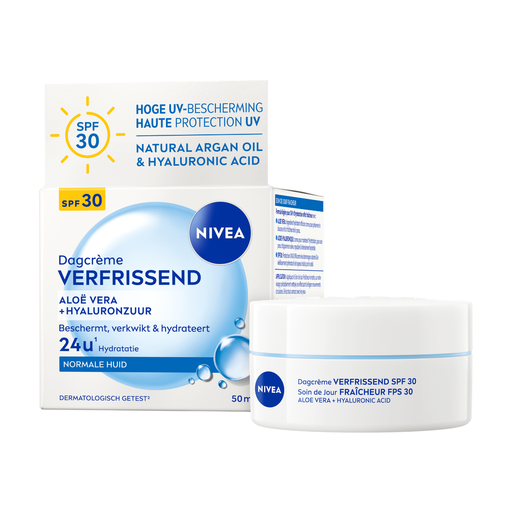
Why it suits this profile: The lightweight formula with SPF 30, glycerine, aloe vera and sodium hyaluronate is designed to provide daily hydration for normal skin.
The SPF and skin-focused features are clearly stated, so you don’t have to rely solely on a vague claim such as “caring”.
SPF 30, lightweight texture and 24-hour hydration according to the product description.
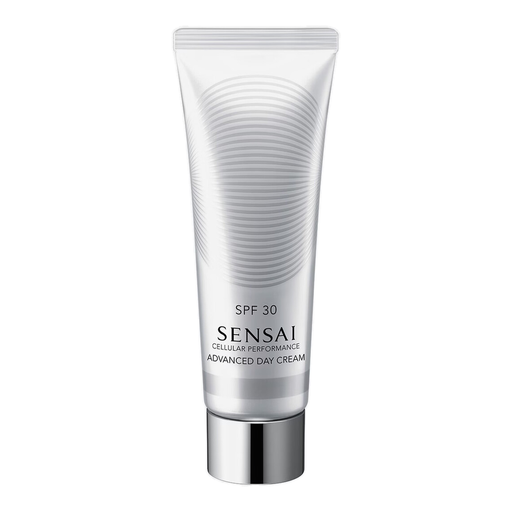
Why it suits this profile: According to the product specifications, this face cream with SPF 30 is suitable for all skin types and has a lightweight cream consistency.
The product data states SPF 30, the face as the application area and suitability for all skin types, rather than relying solely on a general anti-ageing claim.
SPF 30, quick-absorbing texture and anti-ageing listed as a product feature.
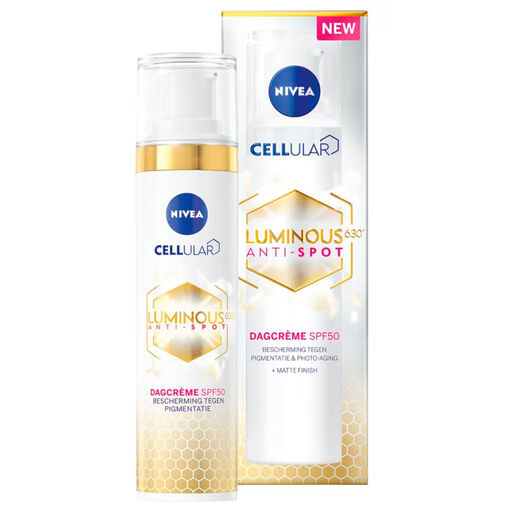
Why it suits this profile: SPF 50 and the mention of UVA/UVB filters make this suitable for users who pay extra attention to sun protection and an uneven complexion.
The formula lists SPF 50 and the ingredients Thiamidol, vitamin E and hyaluronic acid. Claims about pigmentation remain brand claims and are not a guarantee.
SPF 50, a matte finish according to the product information, and ingredients aimed at hydration and complexion care.
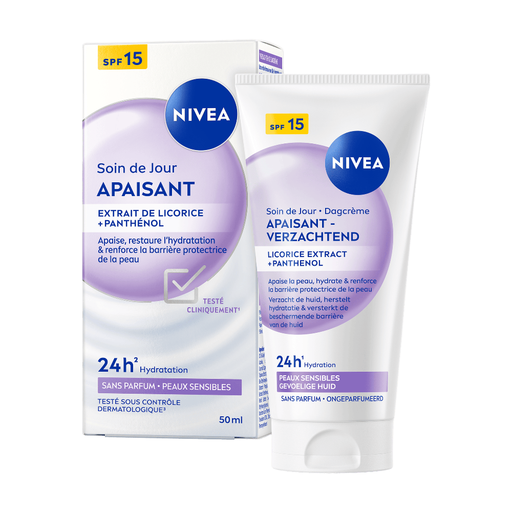
Why it suits this profile: According to the product information, this day cream for sensitive skin is fragrance-free, pH-neutral and intended for sensitive, dry and combination skin.
The fragrance-free formula makes the choice clearer for anyone who wants to avoid fragrances. SPF 15 requires additional protection in strong sunlight.
Fragrance-free, pH-neutral and containing panthenol and liquorice root extract according to the ingredients list.
We’ve put together a complete, up-to-date list of products that fully meet these strict selection criteria and the applicable European safety regulations.
Not always. Protection decreases as a result of perspiration, touching your face, drying yourself and prolonged exposure to the sun. Reapply according to the instructions on the packaging. In strong sunlight, a separate facial sunscreen is usually more suitable.
Yes, provided the texture absorbs well. Apply the cream to clean skin and give it a little time to sink in. A tinted moisturiser, such as a product with SPF 25, can combine hydration, light complexion correction and UV protection. Do make sure that the amount applied remains sufficient.
Check the expiry date and the open-jar symbol showing the period after opening on the packaging. Store the cream in a cool place away from direct sunlight. A change in smell, colour or texture may be a reason to stop using the product. If irritation occurs, stop applying it and rinse your eyes with water if the product comes into contact with them.
