Choosing a dashcam can seem complex. The market offers a wide range of models with varying specifications, from resolution to parking features. The wrong choice can result in unusable footage at the moment you need it most. This guide will help you understand the key features and find a model that fits your needs and budget, without the unnecessary marketing jargon.
What to Look for When Buying a Dashcam
An effective dashcam is more than just a camera. Its true value is determined by the details in its specifications. Below are the most important parameters to base your choice on.
1. Resolution and Frame Rate (FPS)
Image quality is crucial for identifying license plates and other details.
- Full HD (1080p): This is the baseline standard for clear footage. It is sufficient for most situations. A higher frame rate, such as 60 frames per second (FPS), ensures smoother video and reduces motion blur at high speeds.
- Higher Resolution (1944p or 4K): A 4K dashcam offers superior sharpness, which can make all the difference when zooming in on details. This is particularly useful on motorways or in complex traffic situations.
2. Night Vision Technology
Driving in the dark or in poor weather places high demands on the camera sensor. Features like HDR (High Dynamic Range) balance the contrast between light and dark areas of the image, for instance, when facing oncoming traffic with bright headlights or when exiting a tunnel. Brand-specific technologies, such as 70mai Night Owl Vision, are engineered to further optimise image quality in low-light conditions.
3. Field of View (FOV)
The viewing angle, expressed in degrees, determines how much of the road and its surroundings the camera captures. A wider angle (e.g., 150°-170°) covers multiple lanes and minimises blind spots, providing a more complete overview of the situation.
4. GPS and ADAS
- Built-in GPS: A dashcam with GPS not only records your route but also your speed and exact coordinates. This data is synchronised with the video recordings and can serve as objective evidence.
- Advanced Driver Assistance Systems (ADAS): This system acts as an extra pair of eyes, providing voice alerts for unintentional lane departures, potential forward collisions, or the presence of pedestrians.
5. Parking Mode and Storage
- Dashcam with Parking Mode: This feature secures your vehicle while it is parked. A built-in G-sensor detects vibrations or a collision and automatically starts an emergency recording. More advanced systems use AI motion detection to identify suspicious activity around the car. For continuous operation of the parking mode, a separate hardwire kit is required to power the dashcam without draining the car's battery.
- Storage: Most dashcams use a microSD card. However, some models are equipped with built-in eMMC storage, which is more stable and durable than removable memory cards.
6. Single or Dual Channel (Front and Rear)
A standard dashcam only records the road ahead. A front and rear dashcam (dual-channel) provides comprehensive coverage by also capturing traffic behind the vehicle. This is particularly valuable in the event of rear-end collisions.
Our Recommendations for 2026
Below is a selection of models with different specifications, suitable for a variety of users.
1. 70mai Dash Cam A200
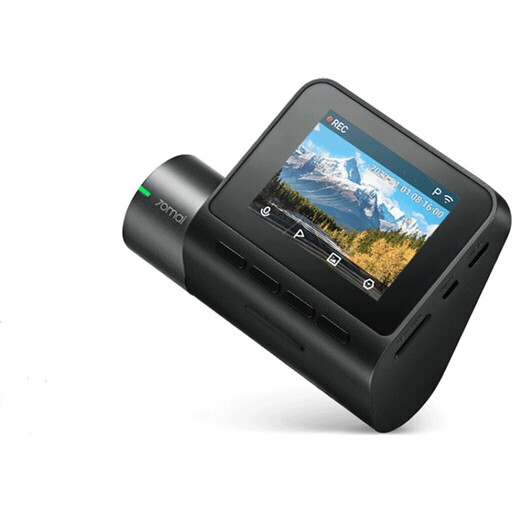
- Why this product: The A200 stands out with its 1080p recording at a frame rate of 60 FPS. This is double the standard 30 FPS, resulting in noticeably smoother footage and sharper details at higher speeds.
- Advantages:
- Smooth Recordings: 1080p resolution at 60 FPS.
- HDR and Night Vision: Equipped with HDR and 70mai Night Owl Vision for clear images in challenging light conditions.
- App Control: Manage settings and download footage via the 70mai app using the built-in Wi-Fi.
- Who is it for: The daily driver looking for a reliable and cost-effective dashcam that excels at capturing smooth, clear footage without the need for 4K resolution.
2. 70mai Dash Cam M500
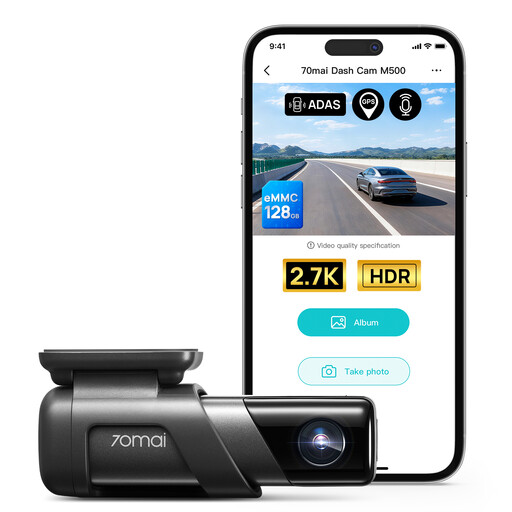
- Why this product: The M500 combines a high 1944p Ultra HD resolution with the convenience of built-in 64GB eMMC storage. This eliminates the need to purchase a separate SD card and provides a more stable and durable storage solution.
- Advantages:
- High Resolution and Wide FOV: 1944p Ultra HD (2.5 times sharper than 1080p) with an extra-wide 170° field of view.
- Built-in Storage: No hassle with SD cards thanks to the integrated 64GB eMMC storage.
- Built-in GPS & ADAS: Records trip data and provides active safety alerts.
- Who is it for: The user who values convenience, higher image quality, and a wider field of view, and prefers an all-in-one solution without removable memory cards.
3. 70mai 4K Dash Cam Front and Rear A810-2
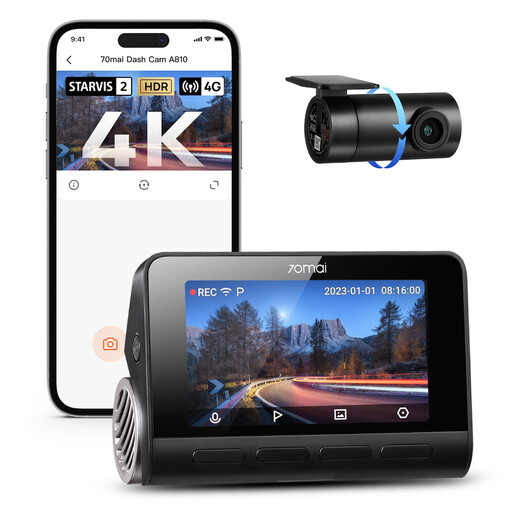
- Why this product: This dual-channel system offers a complete security solution with a True 4K front camera and a 1080p rear camera. Both are equipped with Sony STARVIS 2 sensors, renowned for their excellent low-light performance. According to the manufacturer, this model received a "Technology Innovation Award" in 2024 and a "Good" rating from German testing authorities Autobild.de and Computerbild.de.
- Advantages:
- Dual Camera with 4K: 4K UHD front recording and 1080p rear recording for complete coverage.
- Superior Night Vision: Dual Sony STARVIS 2 sensors and Dual-HDR technology deliver exceptionally clear images in the dark.
- Advanced Parking Mode: AI Motion Detection identifies suspicious individuals around the car and automatically initiates a recording (requires Hardwire Kit UP04).
- 4G Support: Enables remote monitoring via the app (with the optional UP04 kit).
- Who is it for: The demanding user, professional, or car enthusiast seeking the highest possible image quality and the most comprehensive security features, both while driving and parked.
Other Recording Devices
A dashcam is specifically designed for in-vehicle use. If you are looking for equipment to record video from other sources, such as a gaming console or an old video camera, onto your computer, you will need a different type of device. For such applications, you can browse our selection of capture cards.
Frequently Asked Questions (FAQ)
1. Is it legal to use a dashcam in the Netherlands? Yes, using a dashcam is legal in the Netherlands. You are permitted to use the footage as evidence. However, you must comply with privacy laws (GDPR): do not continuously film in a public space (like a car park) and ensure that faces and license plates are blurred or obscured if you share the footage publicly.
2. How exactly does parking mode work? Parking mode is activated when your car is parked. A built-in G-sensor detects a jolt or collision (such as a parking incident) and triggers the camera to make a protected recording. Advanced models also use AI to detect motion around the vehicle. For proper functionality, a hardwire kit is almost always necessary. This kit provides continuous power to the dashcam while also preventing your car's battery from being drained.
3. Do I need a special SD card for a dashcam? Yes, it is highly recommended to use a "High Endurance" microSD card. Dashcams continuously write data, which places a heavy strain on a standard SD card. High Endurance cards are specifically designed for these constant write cycles, making them more reliable and longer-lasting. Models with built-in eMMC storage, like the 70mai M500, do not have this issue.
Written by: Joybuy Product Recommendation Officer Publication Date: 2026-06-06