Who might be interested in these sprinkles?

If you’re looking for a higher minimum cocoa content

You want to compare sprinkles with a verifiably higher minimum cocoa content for your study snack. The product listings we looked at from Albert Heijn and PLUS show a difference between at least 40% for De Ruijter Royaal Extra Puur and at least 32% for some regular dark varieties. Taste is still a matter of personal preference.

If you want to plan how much you use

You use sprinkles as a topping and want to look beyond the nutritional values per 100 g to work out how much to add to a portion. The serving size shown on the pack is a point of comparison, not a personal recommendation.

If you need to check allergens

You need the ingredients and allergen information for the exact pack you’re buying. The dark varieties we looked at differ in their statements about soya, milk and lactose, including warnings that they may contain milk.

What should you look for when choosing?

First, decide which feature matters most for your study snack. Then check the other details on the pack: a higher minimum cocoa content doesn’t replace the need to check allergens or nutritional information.

What to consider What to check Who it matters to
Cocoa solids Read the minimum percentage listed for the exact variety. For example, compare the 40% listed for De Ruijter Royaal Extra Puur with the 32% listed for the regular dark sprinkles we looked at. I want to make a considered choice for my study session and pick a variety with a higher stated minimum cocoa content, rather than relying on the word ‘dark’ alone. This is the top priority for around 36% of consumers.
Ingredients and allergens Check both ‘contains’ and ‘may contain’ on the pack, especially for soya, milk and lactose. If I need to avoid an ingredient, I want to know what the pack for this exact variety says. This check comes first for around 29% of consumers.
Portion size and nutritional information Compare sugars, energy and saturated fat per 100 g, then work out how much you’ll actually use. If I sprinkle these over a snack, I want to measure out the amount rather than keep taking more from the pack without noticing. Around 21% of consumers prioritise portion size.
Packaging and availability Check the pack weight and whether your preferred variety is available from your chosen retailer. I only use sprinkles occasionally, so I want to choose a pack that suits me. I also want to know whether my chosen variety is available to order. This is the first consideration for around 14% of consumers.

Common mistakes

  • Assuming ‘dark’ always means the same cocoa percentage

    The dark chocolate sprinkles we looked at list either at least 32% or at least 40% cocoa solids. Choca Sprinkles are described as cocoa fantasy sprinkles and list 7.5% low-fat cocoa. A dark-coloured pack or the word ‘sprinkles’ doesn’t make these products alike.

    If the percentage matters to your choice, read the product description and check the minimum cocoa content for the exact variety.

  • Skipping the nutritional information because the product is labelled ‘dark’

    The regular dark varieties we looked at list around 63–65 g of sugars per 100 g. The Netherlands Nutrition Centre also points out that chocolate contains a lot of saturated fat and calories.

    Check the sugars, energy and saturated fat per 100 g, and consider how much you’ll use as a topping.

  • Treating an online ingredients list as definitive

    Allergen information varies by variety and may change if the recipe is updated. This is especially important if milk, lactose or soya affects your choice.

    Before eating, check the ingredients and allergens on the pack you actually receive.

  • Choosing a variety without checking its availability

    Albert Heijn’s listing for De Ruijter Royaal Extra Puur said that the variety was no longer in its range. So an interesting cocoa percentage doesn’t automatically make a product available to buy.

    Check availability at your chosen retailer and, if needed, compare the labels of varieties that are available to order there.

Brands compared

De Ruijter

The range we looked at includes both regular dark chocolate sprinkles and a Royaal Extra Puur variety with a higher stated minimum cocoa content.

  • Albert Heijn’s product listings state at least 32% cocoa solids for Puur and at least 40% for Royaal Extra Puur.
  • Check each variety for soya and possible milk warnings, and make sure your chosen variety is available.

AH

The own-brand dark chocolate sprinkles we looked at come in a 300 g pack and list at least 32% cocoa solids.

  • Albert Heijn’s product information lists a 20 g portion and 65 g of sugars per 100 g, so you can compare both the pack and the nutritional information.
  • This variety contains milk and lactose, so don’t assume it has the same allergen information as other dark sprinkles.

PLUS

The 300 g PLUS Chocoladevlokken Puur we looked at lists at least 32% cocoa solids.

  • The PLUS product page mentions Fairtrade cocoa and lists 63.8 g of sugars per 100 g.
  • PLUS states that this product may contain milk and lactose. Check the current allergen information separately from the vegan label on the product page.

Choca

Choca Sprinkles are a different type of sprinkle for anyone who isn’t specifically looking for dark chocolate sprinkles with a stated minimum cocoa content.

  • The ingredients listed by Albert Heijn include 7.5% low-fat cocoa, which helps distinguish this product from dark chocolate sprinkles.
  • The variety we looked at contains wheat and soya and may contain milk. Don’t treat it as an interchangeable alternative when checking allergens.

Products on Joybuy

These two De Ruijter varieties may be worth considering if you’re looking at chocolate sprinkles or chocolate chunks for a study snack. To decide which is right for you, compare the cocoa content, ingredients and amount you’ll use on the exact pack.
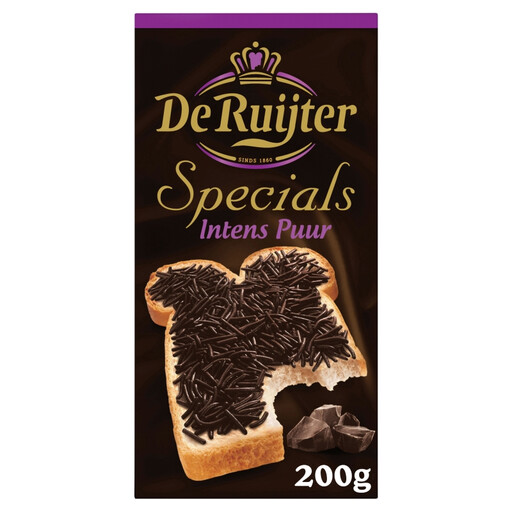
De Ruijter Intense dark chocolate sprinkles, 200 g

De Ruijter Intense dark chocolate sprinkles, 200 g

For anyone considering dark chocolate sprinkles as a topping for a study snack. The pack contains 200 g; check the cocoa content, nutritional information and allergens on the label before choosing this variety.

View on Joybuy
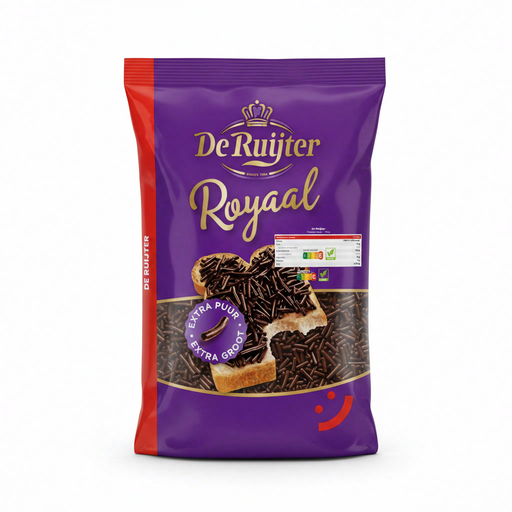
De Ruijter Chocolate Chunks, 390 g

De Ruijter Chocolate Chunks, 390 g

For anyone comparing chocolate chunks as a topping for a study snack with finer sprinkles. This pack contains 390 g; check the label to see whether the ingredients and allergen information suit your needs.

View on Joybuy

Frequently asked questions

Are dark chocolate sprinkles automatically a suitable snack for long study sessions?

No. The word ‘dark’ alone doesn’t tell you enough about the nutritional value or how much you’ll use. The Netherlands Nutrition Centre points out that chocolate contains a lot of saturated fat and calories, so compare the nutritional information for the exact variety and decide on your portion size.

How can I find sprinkles with a higher stated cocoa content?

Read the minimum cocoa content on the pack rather than relying on the product name alone. The Albert Heijn listing we looked at for De Ruijter Royaal Extra Puur states at least 40%, compared with at least 32% for the regular dark varieties from De Ruijter, AH and PLUS that we looked at. Also check whether the exact variety is available.

Can I use dark sprinkles as a topping for yoghurt or porridge?

Yes. The product pages we looked at suggest using them with yoghurt and porridge. Decide how much to add and consider the nutritional information in relation to that amount.

Which allergens should I check in dark chocolate sprinkles?

Check the ingredients list and any ‘may contain’ warning on the pack you’re buying. The varieties we looked at differ in their statements about soya, milk and lactose, among other things, so don’t rely on the ‘dark’ category alone.

How should I store chocolate sprinkles after opening?

Follow the storage instructions on the pack for your variety. The dark sprinkles we looked at say to store in a cool, dry place. Reseal the pack carefully after use.
