
Player of dark tactical scenes
You want to assess blacks and shadow detail, and weigh contrast against visibility during movement. RTINGS.com describes deep blacks as a characteristic of OLED screens.


For dark tactical games, the right choice depends on what matters most to you: OLED for deep blacks and fast pixel transitions, mini-LED with VA for contrast without OLED-specific burn-in risk, or IPS and TN when motion and a high refresh rate come first. Also compare tests of dark transitions and VRR flicker, check the Hz limit of the connection you’ll use, and factor in fixed HUD elements if you’re considering OLED. These choices do not guarantee better gaming performance.
You want to assess blacks and shadow detail, and weigh contrast against visibility during movement. RTINGS.com describes deep blacks as a characteristic of OLED screens.
You want to track fast movement and match your monitor to your PC’s frame rate and the capabilities of the video output you’re using.
You often keep the same map, bars or menus on screen and want to know what that means for your screen choice and its care. ASUS warns that prolonged static, high-contrast images can cause burn-in on OLED screens.
Choose this when: deep blacks and fast pixel transitions matter to you.
The trade-off: the risk of OLED burn-in remains relevant during long sessions with fixed, high-contrast HUD elements. Check the protection features and terms for the exact model.
Choose this when: contrast matters and you’d rather avoid the burn-in risk specific to OLED.
The trade-off: in its AOC Q27G3XMN test, RTINGS.com reported deep blacks, but also some black smearing and VRR flicker at variable frame rates.
Choose this when: you’re looking for a fast gaming monitor and the deepest blacks aren’t your top priority.
The trade-off: ASUS gives the VG27AQ3A a typical contrast ratio of 1000:1 and specifies a maximum of 180 Hz via DisplayPort and 144 Hz via HDMI.
Choose this when: competitive gaming at a high frame rate takes priority over the best possible picture quality in dark scenes.
The trade-off: BenQ says the XL2566X+ has a Fast TN panel, 400 Hz and DyAc 2. BenQ’s claims about motion clarity are not an independent comparison with other screen types.
| What to consider | What should you check? | Who should pay particular attention? |
|---|---|---|
| Contrast in dark scenes | Compare tests of black levels, local dimming and dark scenes; also consider how your game responds to shadow settings. | If I want to assess dark scenes and shadow detail, contrast matters more to me than a high Hz figure alone. Around 29% of consumers prioritise contrast in dark scenes. |
| Motion clarity and response | Look at independent tests of pixel transitions and overshoot at relevant refresh rates; check whether your PC can reach the frame rate you want. | When the camera moves quickly, I want to track targets rather than rely solely on an advertised GtG figure. Around 29% of consumers prioritise motion clarity and response. |
| Fixed HUDs and long sessions | For the exact OLED model, check the screen protection, usage instructions and commercial warranty terms; you could also compare it with a tested LCD option. | If the same map or status bar stays on screen for a long time, I want to understand the possible implications for my screen choice. Around 24% of consumers prioritise prolonged static images. |
| System compatibility and connections | Check the resolution and Hz for each input, your PC’s performance and the terms of the specific offer. | I want the resolution, port and frame rate I’m aiming for to suit my own setup. Around 18% of consumers prioritise system compatibility and connections. |
A quoted response time or refresh rate alone doesn’t tell you how a monitor displays moving targets in your game. In its AOC Q27G3XMN test, RTINGS.com noted some black smearing and VRR flicker at variable frame rates. The maximum Hz can also vary between inputs.
Compare independent motion tests and check the resolution and Hz limits of the port you plan to use.
According to ASUS, prolonged high-contrast images can cause burn-in on OLED screens. Protection features don’t automatically remove that trade-off.
Check the protection features, usage instructions and commercial warranty terms for the exact model, especially if you often play with a fixed HUD.
Specifications can vary between models and variants. So check that information such as audio features really applies to the full model number.
Before ordering, compare the full model number and key features with the manufacturer’s information.
The European Commission describes the energy label for electronic displays as information about energy efficiency. An HDR claim is no substitute for testing black levels, motion or flicker.
Use the energy label to compare energy efficiency and separate model tests to assess picture characteristics.
The Q27G3XMN/BK is a mini-LED monitor with a VA panel for anyone who considers contrast in dark scenes important.
The UltraGear 27GX704A-B is an OLED example with QHD and a stated refresh rate of 240 Hz.
The XL2566X+ represents a Fast TN option for competitive gaming, with a high stated refresh rate.
The VG27AQ3A is a QHD IPS example; the PG32UCDM Gen3 is a separate 4K/240 Hz QD-OLED model.
The AW2725DF is an example of a 27-inch QHD/360 Hz QD-OLED option.
This selection at Joybuy includes VA and IPS gaming monitors with a range of resolutions and refresh rates. Check each model to see which combination suits your PC, connection and preferences for dark scenes.
 No image available
Could be a good fit if you’re looking for a QHD monitor with a VA panel and want to match the maximum refresh rate to your PC and connection.
2560 × 1440; 180 Hz; 1 ms GtG; FreeSync Premium; HDR10; 2× HDMI 2.0 and 1× DisplayPort 1.4.
 No image available
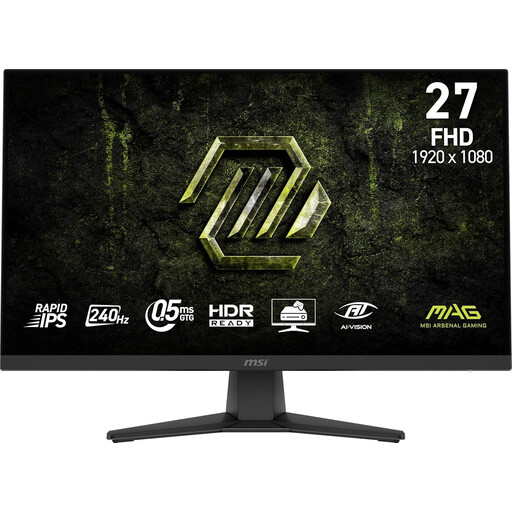
Could be a good fit if you’re looking for an IPS screen with FHD and a stated refresh rate of 240 Hz; check that this combination suits your PC and games.
1920 × 1080; 240 Hz; 0,5 ms; AMD Adaptive Sync; AI Vision listed as a feature.
 No image available
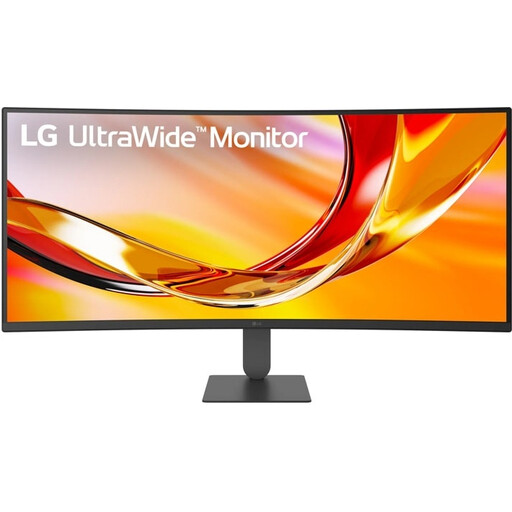
Could be a good fit if you want a curved ultra-wide VA screen; check that the aspect ratio suits your games and setup.
3440 × 1440; 144 Hz; VA panel; curved screen.
 No image available
Could be a good fit if you’re looking for WQHD, a Rapid VA panel and a high stated refresh rate; check the performance your PC can deliver at that resolution.
2560 × 1440; 240 Hz; 0,5 ms; FreeSync Premium; Night Vision and AI Vision listed as features.
 No image available
Could be a good fit if you’re looking for a curved ultra-wide Fast VA screen; bear in mind that the stated limits vary by connection.
3440 × 1440; 180 Hz via DisplayPort and 100 Hz via HDMI; 0,5 ms; FreeSync Premium.
Check both the port and your PC’s video output for the resolution you’ve chosen. ASUS specifies a maximum of 180 Hz via DisplayPort and 144 Hz via HDMI for the VG27AQ3A; those limits don’t automatically apply to other models.
Follow the protection and care instructions for the exact model. ASUS describes pixel shifting on certain OLED monitors and warns that prolonged static, high-contrast images can cause burn-in; check whether the feature mentioned is available on the model you’re considering.
For LCD and OLED panels, ASUS recommends switching the monitor off first, gently using a microfibre cloth and not spraying liquid directly onto the screen. If your screen has a special coating, follow the instructions for your model from the manufacturer.
No. ACM ConsuWijzer explains that your statutory guarantee exists alongside a manufacturer’s or seller’s guarantee and depends on what you could reasonably expect from the product under normal use. There is no fixed statutory guarantee period that applies to every monitor.
For a standard online consumer purchase, you generally have a 14-day cooling-off period after delivery, according to ACM ConsuWijzer. The rules have conditions and exceptions; check the details of your specific order against ACM ConsuWijzer’s guidance.