
Walkers looking for a pronounced dark chocolate flavour
If flavour comes first, a stated cocoa percentage gives you a better basis for comparing varieties than the word ‘dark’ on its own.


If you’re after a pronounced dark chocolate flavour on your rusks, look for a variety that states its cocoa percentage clearly: Albert Heijn lists at least 52% cocoa solids for De Ruijter Specials Intens Puur, but also 43 g of sugars per 100 g. For regular dark chocolate or lower-sugar varieties, other factors matter too, such as nutritional information, allergens and any polyols. Albert Heijn warns that excessive consumption of Céréal may have a laxative effect.
If flavour comes first, a stated cocoa percentage gives you a better basis for comparing varieties than the word ‘dark’ on its own.
You’ll want to know in advance how many carbohydrates and sugars the chocolate sprinkles contain, and how much you’ll actually put on a rusk. Compare the nutritional information per 100 g and, where provided, per serving.
The varieties mentioned contain milk and soya, and some may carry ‘may contain’ warnings. Lower-sugar chocolate sprinkles may also contain polyols, and the usage warning could affect your choice.
When choosing dark chocolate sprinkles for rusks on a walk, first decide what matters most to you: the chocolate flavour, nutritional information or ingredients. Then check the exact products against that priority.
| What to consider | What to check when buying | Who it matters to |
|---|---|---|
| Dark chocolate flavour and cocoa | Look for a clearly stated minimum percentage of cocoa solids. Albert Heijn lists at least 52% for De Ruijter Specials Intens Puur; Jumbo lists at least 32% for Venz Puur. | I’m looking for a pronounced chocolate flavour on my rusks, rather than relying on the word ‘dark’ in the name. For around 36% of consumers, flavour comes first. |
| Carbohydrates and sugars | Compare both figures per 100 g and consider how much chocolate sprinkles you put on a rusk. Jumbo lists 68 g of carbohydrates and 65 g of sugars per 100 g for Venz Puur. | For a longer walk, I want to know what’s in my sweet snack. Around 29% of consumers give this nutritional information top priority. |
| Lower sugar and polyols | As well as the sugar content, check the amount of polyols and the warning on the label. Albert Heijn lists 7.7 g of sugars and 40 g of polyols per 100 g for Céréal Puur Minder Suikers. | A lower sugar content is the deciding factor for me, but I don’t want to try a variety containing polyols for the first time while I’m out walking. This is the biggest consideration for around 21% of consumers. |
| Allergens and ingredients | Check the allergen information and any ‘may contain’ warning for the exact variety; milk and soya appear in different ways in the products mentioned. | Before I pack anything, I need to know whether the ingredients in that product are suitable for me. For around 14% of consumers, this check comes first. |
The name doesn’t tell you how much sugar a variety contains. Albert Heijn lists 64 g of added sugars per 100 g for AH Hagelslag puur; Jumbo lists 65 g of sugars per 100 g for Venz Puur. Note that these figures refer to different nutritional values.
Read the nutritional information on the product you’re buying and compare figures with the same description, such as sugars per 100 g.
Albert Heijn lists 40 g of polyols per 100 g for Céréal Puur Minder Suikers and warns that excessive consumption may have a laxative effect.
Read the warning, and don’t choose an unfamiliar variety for a walk based solely on its lower sugar figure.
‘Dark’ describes the type of chocolate, not the allergens. Allergen information also varies by brand and variety.
If you have an allergy, check the ingredients, allergen information and any ‘may contain’ warning on the current packaging.
Information about iodised baker’s salt in bakery products doesn’t show that chocolate sprinkles contain iodine. The Netherlands Nutrition Centre also says that bakers aren’t required to use baker’s salt.
Check the labels on your rusks and chocolate sprinkles separately; don’t assume the sprinkles have the same ingredients as the rusks.
The differences below apply to the varieties mentioned, not to a brand’s entire range.
Alongside regular dark chocolate sprinkles, there’s an Intens Puur variety with a clearly stated cocoa claim.
Venz Puur is a regular dark chocolate sprinkle topping for anyone who likes this flavour on rusks.
AH Hagelslag puur is a regular dark chocolate variety in a 600 g pack.
Céréal Puur Minder Suikers is an alternative if sugar content matters more to you than a traditional recipe.
Kiekeboe is a dark chocolate sprinkle variety from ALDI, sold in a 600 g pack.
These products give you a choice between an explicitly intense dark variety and regular dark chocolate sprinkles for rusks. Use the label to decide which flavour, nutritional profile and ingredients suit your walking break.
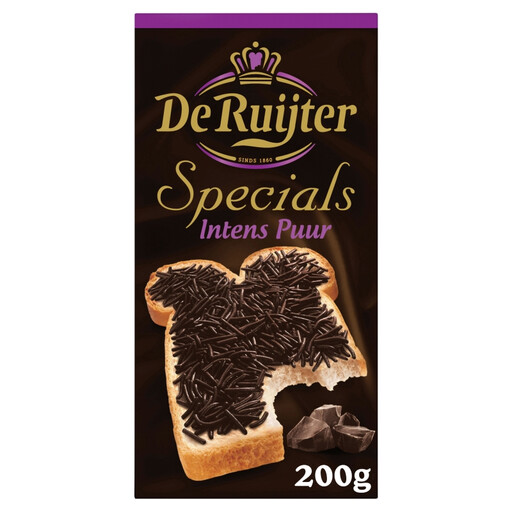 Image unavailable
An option if you’re looking for a clearly stated cocoa claim for your rusks. Joybuy lists at least 52% cocoa solids for this variety; also check the sugars and allergens on the packaging.
 Image unavailable
A regular dark chocolate topping to pack with your rusks. If you’re comparing this variety with an intensely dark chocolate sprinkle topping, check the cocoa percentage and sugars on the exact packaging.
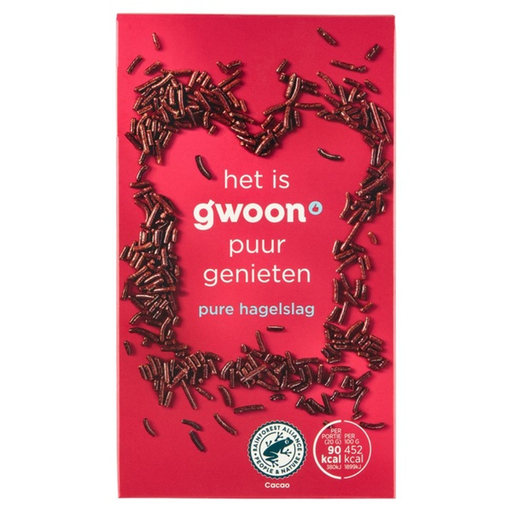 Image unavailable
A regular dark chocolate variety for rusks. Check the nutritional information, allergens and storage instructions on the exact packaging before taking the sprinkles with you.
No, the name alone doesn’t tell you how the varieties compare. Jumbo lists at least 32% cocoa solids and 65 g of sugars per 100 g for Venz Puur; Albert Heijn lists at least 52% cocoa solids and 43 g of sugars per 100 g for De Ruijter Specials Intens Puur. So compare both the cocoa claim and the nutritional information.
That also depends on the sweeteners used and the warning on the packaging. Albert Heijn lists 40 g of polyols per 100 g for Céréal Puur Minder Suikers and warns that excessive consumption may have a laxative effect. It’s best not to try an unfamiliar variety for the first time on a long walk.
Follow the storage instructions on the exact packaging; the chocolate sprinkle varieties mentioned should be stored in a cool, dry place. Keep your rusks protected from pressure and moisture, and seal opened chocolate sprinkles securely.
You can’t tell from the name ‘chocolate sprinkles’. Baker’s salt relates to how bakery products are made, and the Netherlands Nutrition Centre says that bakers aren’t required to use it. Check the labels on rusks and chocolate sprinkles separately.
At the very least, check the information about milk and soya, including any ‘may contain’ warnings, for the exact variety. For De Ruijter Specials Intens Puur, Albert Heijn lists milk and soya, and possible milk proteins and lactose; for Venz Puur, Jumbo lists milk and soya, and possible lactose. Allergen declarations vary by product.