
Buyers looking for a dark variety
You want to offer sprinkles with bread, yoghurt or porridge, so you compare the stated cocoa content of the exact varieties rather than assuming it tells you everything about the taste.


If you’re looking for an extra-dark option for the office, choose chocolate sprinkles with a higher stated cocoa content. A standard dark variety may be suitable if you mainly want them as a spread or topping. Compare the nutritional information for your planned portion, and check the allergens on the pack you receive if the sprinkles will be shared: the word ‘dark’ alone doesn’t tell you what allergens they contain.
You want to offer sprinkles with bread, yoghurt or porridge, so you compare the stated cocoa content of the exact varieties rather than assuming it tells you everything about the taste.
You’re buying for several colleagues and want to weigh up pack size and planned portions, while also checking the ingredients and allergens for each product.
You want colleagues to be able to check the allergen information and for the pack to be stored according to the instructions after use.
First decide whether you’re choosing the sprinkles mainly for their dark variety, to top up your supplies or for shared use. Then check the information on the pack that matters for your choice.
| What to consider | What to check when buying | Who it matters to |
|---|---|---|
| Dark variety and cocoa content | Compare the minimum percentage of cocoa solids on the exact pack, and read the ingredients list too. | If I specifically want an extra-dark variety for colleagues, the word ‘dark’ alone isn’t enough. Around 31% of consumers put this choice first. |
| Pack size and supplies | Check the pack weight, planned portion size and whether the same variety will be available next time you buy it. | When buying supplies for several colleagues, I want to know how many servings a pack will provide. Around 31% of consumers give this the highest priority. |
| Allergens and nutritional information | Read the ‘contains’ and ‘may contain’ statements, and compare sugars and fat per intended portion. | When everyone uses the same supplies, I need to check who the sprinkles are suitable for and how much topping to put out. This matters most to around 38% of consumers. |
A higher cocoa content doesn’t tell you how much sugar a portion contains. The name of the variety is no substitute for the nutritional information.
Compare the nutritional values per 100 g and work out what they mean for the portion you plan to offer at the office.
Dark varieties can contain different ingredients and allergen warnings. For example, Albert Heijn lists milk and lactose for AH Pure chocolate sprinkles; Jumbo’s listing for De Ruijter Vlokken Puur mentions soya and the possible presence of milk.
Check the ingredients list and the ‘contains’ and ‘may contain’ statements on every pack you receive. Keep the label accessible alongside shared supplies.
Pack size and availability matter if you want to buy the same sprinkles again. Check that the variety is still the same when you reorder.
Before topping up your supplies, check the product name, weight and current availability.
Chocolate sprinkles are intended as a spread or topping. If colleagues don’t know why they’re in the supplies, the right portion size won’t be clear either.
Pair the pack with a specific occasion, such as a bread-based lunch or yoghurt at breakfast, and say what portion you plan to offer.
De Ruijter offers dark and extra-dark chocolate sprinkles with different stated cocoa contents.
AH Pure chocolate sprinkles are an own-brand option to compare with other dark sprinkles.
Jumbo Chocolade Vlokken Puur is an own-brand option in a 300 g pack.
Lidl lists 300 g packs of dark chocolate sprinkles as an in-store product.
These products are suitable for using chocolate sprinkles or chocolate pieces as a spread or topping at an office breakfast or lunch. Bear in mind that Chocolate Chunks come in pieces; if you’re specifically looking for extra-dark sprinkles, compare the cocoa content on the pack.
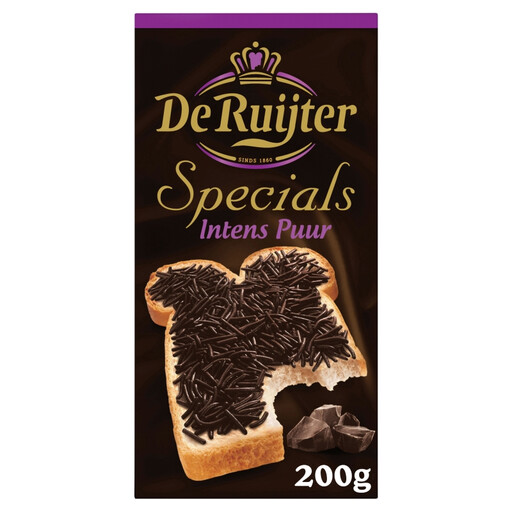 No image available
An option if you want to offer dark chocolate sprinkles with bread, yoghurt or porridge. If you’re choosing by cocoa content, check the pack you receive. For shared use, also check the milk and soya information.
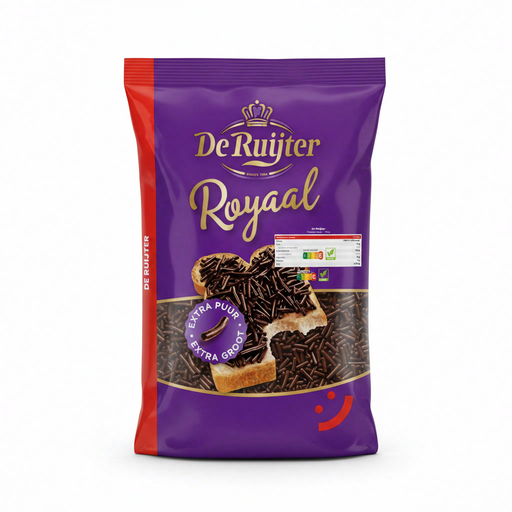 No image available
Worth considering if chocolate pieces suit your planned spread or topping. The name says chunks rather than sprinkles, so check the shape and allergens on the pack before adding them to shared supplies.
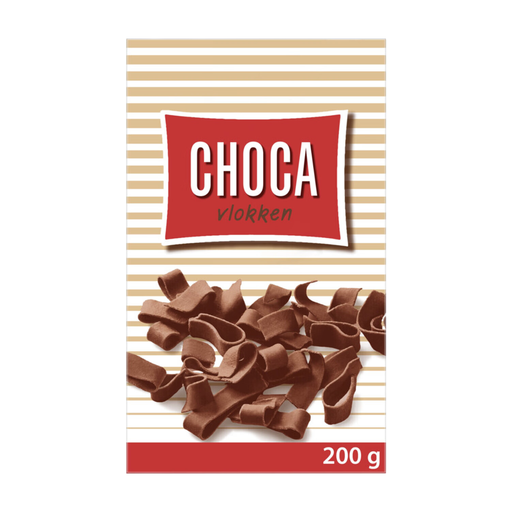 No image available
An option for topping bread or yoghurt. If a high cocoa content is important, check the minimum percentage on the pack. For shared use, check the allergen information too.
Use chocolate sprinkles mainly as a spread or topping with foods such as bread, yoghurt or porridge. The word ‘dark’ doesn’t tell you how much sugar or fat a portion contains, so compare the nutritional information for the variety you choose.
Don’t assume so just because the product is described as ‘dark’. Albert Heijn lists milk for AH Pure chocolate sprinkles, and Jumbo’s listing for De Ruijter Vlokken Puur warns of the possible presence of milk. Always check the allergen information on the pack you’re actually offering.
Follow the storage instructions and date on the pack you receive. Seal the pack carefully after use and keep the label available so colleagues can check the product and allergen information.
Check the ingredients list and any ‘may contain’ statements on the exact pack. According to the Netherlands Food and Consumer Product Safety Authority, allergens from the legally defined group of 14 allergens must be clearly listed on the label of prepacked foods. Check the information again whenever you receive a new pack.
No, you can’t tell from the cocoa percentage alone. Albert Heijn states that De Ruijter Royaal Extra Dark contains at least 40% cocoa solids, while Jumbo states that Jumbo Chocolade Vlokken Puur contains at least 35%. To compare sugar content, check the nutritional values separately per 100 g and per planned portion.