
Runners looking for a dark cocoa flavour
You choose chocolate sprinkles for rusks for their flavour, and want to be able to check the cocoa content of the variety on the packaging. A name such as ‘intensely dark’ isn’t the only thing to go by.


Choose dark chocolate sprinkles for rusks based on the flavour you’re looking for and the nutritional information for the specific variety, rather than as a substitute for a plan for eating and drinking during a long run. A higher cocoa content doesn’t, on its own, tell you how much sugar or saturated fat a product contains. If you want to take on carbohydrates while running, also consider whether your chosen food is practical to carry and whether you’ve tried it beforehand.
You choose chocolate sprinkles for rusks for their flavour, and want to be able to check the cocoa content of the variety on the packaging. A name such as ‘intensely dark’ isn’t the only thing to go by.
You want to know when rusks with a topping fit into your usual mealtime, without confusing breakfast with everything you might want to eat and drink during a long run. The Netherlands Nutrition Centre covers meal timing and fuelling during prolonged exercise separately.
You’re considering a dark variety with less sugar, so you compare the latest nutritional information per 100 g and per serving with that of regular dark chocolate sprinkles.
First decide whether you’re choosing chocolate sprinkles for a mealtime around your training or looking for something to eat while running. Then compare the flavour, your portion size and the ingredients in the variety you want to use.
| What to consider | What should you check? | Who is this most relevant to? |
|---|---|---|
| Mealtime and carbohydrates | Check the carbohydrates per planned serving and decide whether you want to eat the topping before or after training. Make a separate plan for food and drink during a long run. | If I’m going for a long run, I want to know in advance what I can eat and drink on the way, without having to rely on rusks. For around 40% of consumers, having a practical plan would be the top priority. |
| Dark flavour | Check the stated cocoa content, and compare sugar and saturated fat per 100 g and per serving too. | For breakfast, I’m mainly looking for a strong dark chocolate flavour; I want to be able to identify a higher cocoa content on the label. For around 30% of consumers, this flavour preference would come first. |
| Less sugar | Compare a reduced-sugar variety with regular dark chocolate sprinkles on the same basis, including carbohydrates, sugars and serving size. | Anyone who eats chocolate sprinkles regularly may mainly want to know how much sugar their chosen serving contains. For around 20% of consumers, that would be the key question when choosing. |
| Ingredients and labelling | Read the allergen information for the chocolate sprinkles. If iodine in bread matters to you, check the ingredients list on packaged bread or ask the baker. | I want to be able to check which allergens are in my chocolate sprinkles and what salt was used in my bread before eating it. For around 10% of consumers, checking the label would be the top priority. |
The name doesn’t indicate a set amount of sugar or saturated fat. Albert Heijn states that De Ruijter Specials Intens Puur contains at least 52% cocoa solids, but also 43 g of sugars and 12 g of saturated fat per 100 g.
Use the cocoa content to assess the flavour, and check the nutritional information per 100 g and per serving as well.
Having a topped rusk for breakfast doesn’t automatically answer the question of what you can practically eat and drink during a long run.
Decide when you’ll eat and try out your chosen fuelling approach during training, rather than relying on it for the first time on race day.
That description alone doesn’t tell you how much carbohydrate, sugar or fat a serving contains, or which ingredients have been used.
Compare the latest nutritional information and ingredients lists for each variety side by side, using the same quantities.
According to the Netherlands Nutrition Centre, baker’s salt is iodised, but bakers aren’t required to use it. So the name of a loaf won’t tell you which salt it contains.
Check the ingredients list on packaged bread or ask which salt was used when buying unwrapped bread. Don’t assume the same applies to rusks without checking the label.
Worth considering if you’re looking for dark chocolate sprinkles with a stated cocoa content.
A useful point of comparison if you want to compare regular dark chocolate sprinkles.
A supermarket own-brand option to consider if you want to compare regular dark chocolate sprinkles with a reduced-sugar variety.
A supermarket own-brand range to explore if you’re looking for dark chocolate sprinkles in different pack sizes.
A brand to consider if you specifically want to compare dark chocolate sprinkles that claim to contain less sugar.
These Joybuy products are dark chocolate sprinkle varieties for enjoying with rusks or bread around your training. If you prefer a strong, dark flavour, check the cocoa content on the packaging you choose. None of these product names makes chocolate sprinkles a fuelling plan for your run.
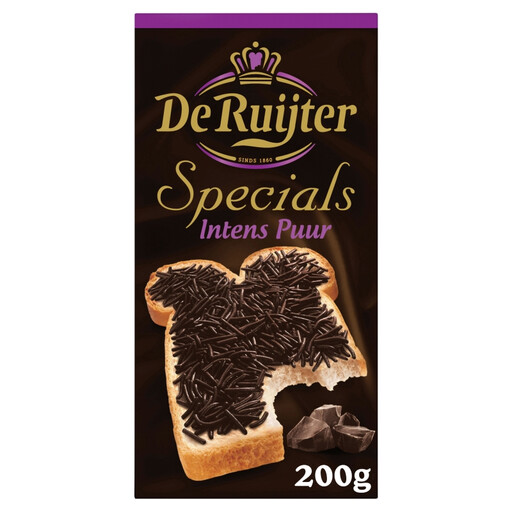 Image unavailable
Worth considering if you’re looking for intensely dark chocolate sprinkles for rusks. Check the cocoa content, nutritional information for your serving size and allergens on the packaging.
Pack size: 200 g.
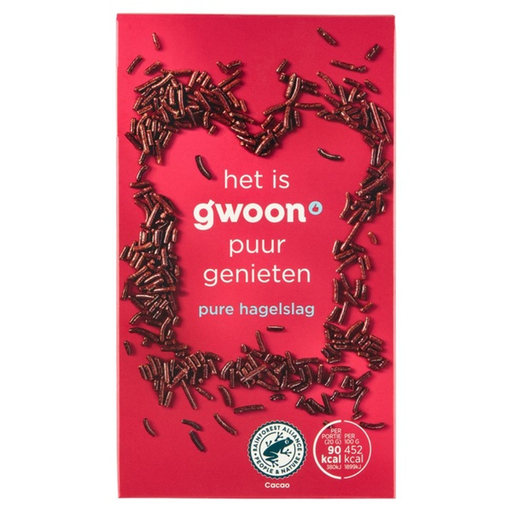 Image unavailable
A regular dark chocolate sprinkle variety to compare for a mealtime with rusks. Check the label for the cocoa content, and compare sugars and saturated fat using the same serving size as for your other options.
Pack size: 400 g.
 Image unavailable
A dark chocolate sprinkle variety to compare with other flavours for topping rusks. If a higher cocoa content is your main priority, check the percentage on this pack and compare the nutritional information per serving too.
Pack size: 390 g.
Not as a substitute for a tried-and-tested plan for eating and drinking on the way. For prolonged exercise, the Netherlands Nutrition Centre discusses taking on carbohydrates during exercise. Choose something you can actually carry and eat while running. You can consider rusks with chocolate sprinkles separately as a meal before or after your run.
Think of them as part of your pre-training meal, and try out the portion and timing beforehand. The Netherlands Nutrition Centre suggests having a meal with a drink around two to three hours before exercise; see how your chosen breakfast fits into that schedule.
No, the name doesn’t tell you how much sugar the variety contains. Albert Heijn states that De Ruijter Specials Intens Puur contains at least 52% cocoa solids and 43 g of sugars per 100 g. Compare the nutritional information for the specific varieties per 100 g and per serving.
Yes, read the allergen information for the variety you’re buying; don’t infer it from the word ‘dark’. Albert Heijn lists milk and soya for De Ruijter Specials Intens Puur. The packaging of the product you choose is what matters for the ingredients and warnings you need to take into account.
No, you can’t tell from the product name. According to the Netherlands Nutrition Centre, baker’s salt is iodised, but bakers don’t have to use it. Check the ingredients list on packaged bread or ask which salt was used when buying unwrapped bread; check the packaging for rusks separately.