
If you choose by cocoa content
You’re looking for dark chocolate sprinkles with a clearly stated cocoa percentage, rather than relying on the word ‘dark’ alone.


When choosing dark chocolate sprinkles for rusks or Dutch doughnuts, start with what matters most to you: a stated cocoa content, sugar per 100 g or the ingredients. Albert Heijn states that De Ruijter Intens Puur contains at least 52% cocoa solids. Jumbo states that Céréal Puur contains 7.7 g of sugar per 100 g, but also contains maltitol and carries a warning about excessive consumption. Use the sprinkles as a topping after baking, and check the latest label for allergens and storage instructions before buying.
You’re looking for dark chocolate sprinkles with a clearly stated cocoa percentage, rather than relying on the word ‘dark’ alone.
You compare sugar per 100 g and want to know whether a product contains sweeteners before using it as a topping.
You check the specific packaging to see whether it contains ingredients such as milk or soya, and which possible traces are listed.
When choosing dark chocolate sprinkles for rusks or as a topping for baked Dutch doughnuts, your main purchasing priority will determine which part of the label to check first.
| What to consider | What to check before buying | Who it matters to |
|---|---|---|
| Cocoa content | Compare the stated minimum cocoa solids content. Albert Heijn lists at least 52% for De Ruijter Intens Puur. | If a deep cocoa flavour is my top priority, I want to see a specific percentage rather than just ‘dark’ on the packaging. For around 36% of consumers, cocoa content comes first. |
| Sugars and sweeteners | Compare sugar per 100 g and read the ingredients list. Jumbo lists maltitol in Céréal Puur and includes a warning about excessive consumption. | If you mainly want to compare sugar, you’ll also want to know what a product contains instead. Sugars and sweeteners come first for around 29% of consumers. |
| Ingredients and allergens | Check both ‘contains’ and ‘may contain’ on the current packaging; information varies by product. | If I need to avoid certain ingredients or possible traces, checking these takes priority over my preference for cocoa or sugar. This is the most important purchasing consideration for around 21% of consumers. |
| Quantity and storage | Check the net weight, best-before date and storage instructions for the pack you choose. | I may want a different quantity for one evening of Dutch doughnuts than if I also plan to use the sprinkles on rusks later. A suitable pack size comes first for around 14% of consumers. |
‘Dark’ doesn’t indicate one fixed cocoa content: Jumbo lists at least 32% for Venz Puur, while Albert Heijn lists at least 52% for De Ruijter Intens Puur.
If cocoa content is your main selection criterion, compare the minimum percentage on the packaging.
Jumbo lists maltitol as a sweetener in Céréal Hagelslag Puur and warns that excessive consumption may have a laxative effect.
As well as the sugar per 100 g, read the ingredients and warnings on the packaging.
Product information varies: Albert Heijn lists milk and soya for De Ruijter Intens Puur; for Jumbo Hagelslag Puur, Jumbo lists milk and possible traces of gluten and wheat.
Check the label on the pack you’re actually buying before using it.
Albert Heijn lists at least 52% cocoa solids for Intens Puur and at least 43% for Royaal Extra Puur.
Jumbo lists Venz Puur Chocolade Hagelslag in a 400 g pack, with at least 32% cocoa solids.
Jumbo lists its 200 g Chocolade Hagelslag Puur as containing at least 50% cocoa solids.
For its 200 g Céréal Hagelslag Puur, Jumbo lists 7.7 g of sugar per 100 g and maltitol as a sweetener.
ALDI describes Kiekeboe Hagelslag Puur as dark chocolate sprinkles in a 600 g pack.
These Joybuy products are dark chocolate sprinkles and dark chocolate flakes in different pack sizes. Compare the product type and check the label before using them on rusks or as a topping after baking.
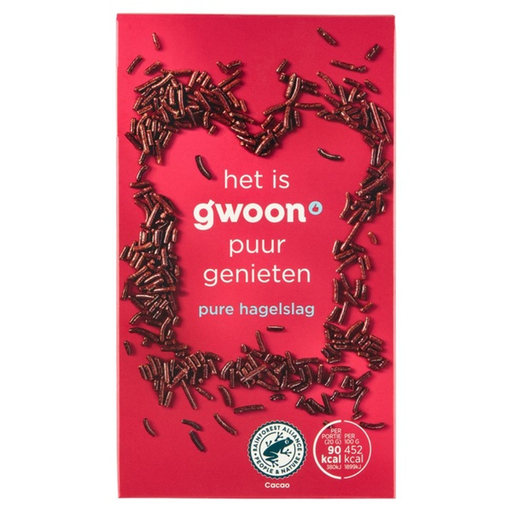 Image unavailable
Dark chocolate sprinkles for a topping after baking. Check the ingredients and allergens on the packaging before use.
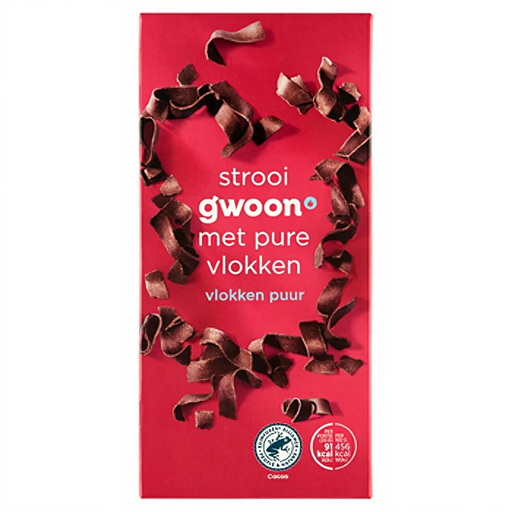 Image unavailable
Dark chocolate flakes for anyone comparing flakes with sprinkles. Check the label before using them on rusks or with Dutch doughnuts.
No, the stated minimum varies by product. Jumbo lists at least 32% cocoa solids for Venz Puur, while Albert Heijn lists at least 52% for De Ruijter Intens Puur. So check the percentage on the specific pack.
Check the current packaging for the ingredients and statements such as ‘contains’ and ‘may contain’. The products described include ingredients such as milk and soya, while some varieties may contain traces of wheat, gluten or milk. This varies by product.
Follow the storage advice and best-before date on the packaging. The products described should be stored in a cool, dry place; also check how to seal your chosen pack after opening.
Don’t make baker’s salt a requirement when choosing sprinkles for Dutch doughnuts. The Netherlands Nutrition Centre says in its information about bread and bread substitutes that bakers are not required to use baker’s salt. This information does not set any requirements for the sprinkles you choose as a topping.