Choose extra dark chocolate sprinkles if you’re specifically looking for a higher stated minimum cocoa content: Albert Heijn lists at least 40% cocoa solids for De Ruijter Royaal Extra Puur, while Jumbo lists at least 32% for regular De Ruijter Puur. That difference alone won’t tell you which flavour you’ll prefer or how the nutritional values compare. For a snack, also compare the values per 100 g and check the allergens on the pack you’re buying.
Who might be interested in dark chocolate sprinkles?
Fans of a pronounced cocoa flavour
If you want to add dark chocolate sprinkles to bread, yoghurt or porridge, the stated minimum cocoa solids content can help you compare options for a snack. The percentage won’t predict exactly how the flavour will taste to you.
Regular sprinkles buyers
If you use chocolate sprinkles often, consider which pack size suits your needs. Compare like-for-like products and check how to store the pack once opened.
Careful label readers
If sugars, saturated fat or allergens are important to your choice, the word ‘dark’ won’t tell you enough. Read the nutrition information and the ingredients and allergen details on the specific pack.
What should you look for when choosing?
First decide whether you’re mainly looking for a pronounced dark chocolate option. Then use the packaging to check the nutritional values, allergens and pack size that best suits your needs.
| What to consider |
What to check |
Who might find it important? |
| Cocoa flavour |
Compare the stated minimum cocoa solids percentage of dark and extra dark chocolate sprinkles. |
If I want a distinctly dark flavour on my yoghurt or porridge, I start by checking the cocoa content, without treating it as a guarantee of flavour. Around 36% of consumers prioritise this flavour preference. |
| Pack size |
Check the pack size and storage instructions. |
If you regularly use a small amount of sprinkles, choose a pack that suits the way you use them. Around 29% of consumers prioritise this practical consideration. |
| Nutritional values |
Compare sugars, saturated fat, energy and fibre per 100 g; also consider how much you use. |
I want to know what my usual amount adds to my snack, not just what’s listed for a serving size chosen by the manufacturer. Nutritional values are the main consideration for around 21% of consumers. |
| Allergens |
Read the ingredients, allergen information and any ‘may contain’ warnings on the pack. |
If I need to avoid certain ingredients or possible traces, the information on the packaging needs to suit my situation. This check is the top priority for around 14% of consumers. |
Common mistakes
-
Taking ‘extra dark’ to mean a particular nutritional profile
A higher minimum cocoa content doesn’t automatically tell you how much sugar or saturated fat the sprinkles contain. Albert Heijn lists at least 40% cocoa solids for De Ruijter Royaal Extra Puur; you’ll need to check the nutrition table separately.
If nutritional values guide your choice, compare similar chocolate sprinkles per 100 g.
-
Assuming ‘dark’ means dairy-free or soya-free
The De Ruijter Puur option listed by Jumbo includes soya, and may contain milk. The product name alone isn’t enough to assess allergens.
Check the ingredients and warnings on the pack you’re actually buying.
-
Relying on an old product listing
A product’s ingredients and information can change. An online listing you viewed previously may not match the pack in your hands.
Check the current label before buying, especially if certain ingredients or allergens are a deciding factor.
Brands to compare
De Ruijter
A brand to consider if you want to compare regular dark and extra dark chocolate sprinkles.
- Jumbo lists at least 32% cocoa solids for De Ruijter Puur; Albert Heijn lists at least 40% for Royaal Extra Puur.
- The De Ruijter options reviewed list soya and state that they may contain milk. Check the specific pack you choose.
Jumbo
A supermarket own-label brand with a dark chocolate sprinkles option in a 300 g pack.
- Jumbo lists at least 35% cocoa solids for this option.
- The product information states that the sprinkles may contain milk.
PLUS
A supermarket own-label brand with dark chocolate sprinkles in a 300 g pack.
- PLUS lists at least 32% cocoa solids for this option.
- The product information states that it may contain milk and lactose; check the current label before buying.
Kiekeboe
A range listed by ALDI, with 300 g packs of milk and dark chocolate sprinkles.
- ALDI lists a dark option separately from the milk chocolate option.
- Before comparing the dark option with other sprinkles, check its ingredients, allergens and nutritional information on the pack.
Dark chocolate sprinkles on Joybuy
These are dark chocolate sprinkles for adding to bread, yoghurt or porridge, for example. Compare the pack sizes, and check the current label if cocoa content, nutritional values or allergens will influence your choice.
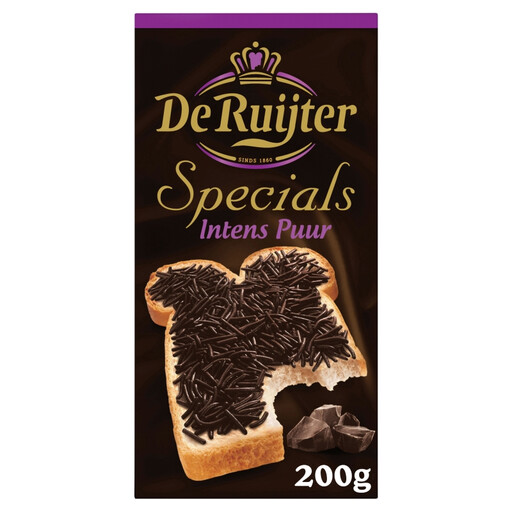 Image unavailable
De Ruijter Intense Dark Chocolate Sprinkles, 200 g
An option if you’re looking for a pronounced dark chocolate flavour to add to yoghurt or porridge, for example. Check the pack for cocoa content, nutritional values and information about milk and soya.
View on Joybuy
 Image unavailable
De Ruijter Dark Chocolate Sprinkles, 390 g
A dark chocolate sprinkles option for bread, yoghurt or porridge, for example. Check the pack for cocoa content, the basis for the nutritional values and allergen information if these details are important to your choice.
View on Joybuy
Frequently asked questions
Does extra dark mean chocolate sprinkles contain less sugar?
No, the term alone doesn’t tell you how much sugar they contain. Albert Heijn lists at least 40% cocoa solids for De Ruijter Royaal Extra Puur; also check the nutritional values per 100 g to compare products.
How do I compare sprinkles when the stated serving sizes differ?
Compare the nutritional values of similar products per 100 g. The Netherlands Nutrition Centre points out that manufacturers choose their own serving sizes; then consider how much you usually use.
Are dark chocolate sprinkles always free from milk or soya?
No. The De Ruijter options reviewed list soya and state that they may contain milk; the Jumbo and PLUS options reviewed also state that they may contain milk. Check the ingredients and allergen warnings on the specific pack.
How should I store chocolate sprinkles once opened?
Follow the storage instructions on the pack and seal it properly after use. The product listings reviewed recommend storing the sprinkles in a cool, dry place.


