If you’re after a pronounced dark chocolate flavour on your rusk, compare the cocoa solids percentage listed for the exact variety of sprinkles. According to Albert Heijn, De Ruijter Specials Intens Puur contains at least 52% cocoa solids, compared with at least 32% for the regular dark varieties from AH and Venz included in our research. Don’t let the word ‘dark’ make the decision for you: sugars per 100 g, ingredients, allergens and pack size can all affect what’s right for a gaming session.
Which option suits which player?
Fans of a pronounced dark chocolate flavour
If chocolate flavour is the priority on your rusk, the listed cocoa solids percentage is a useful point of comparison. Albert Heijn lists at least 52% cocoa solids for De Ruijter Specials Intens Puur; also check the packaging and ingredients of the variety you choose.
Shoppers keeping an eye on sugars
If you want to compare sugars per 100 g, the nutritional information is more useful than the word ‘dark’. For a variety containing sweeteners or polyols, check the ingredients and usage warning too.
Shopping for a group gaming session
If you’re buying for several people or snack breaks, the pack’s net weight may matter more. Compare it alongside the group’s flavour preferences and any relevant allergens.
What should you look for when choosing?
First decide whether dark chocolate flavour, sugar content, pack size or ingredients matter most to you. Then check the details for the exact variety: regular and intense dark chocolate sprinkles can differ considerably.
| What to consider |
What should you check? |
Who is this most important for? |
| Dark chocolate flavour |
Compare the cocoa solids percentage listed for the exact variety, not just the word ‘dark’ in its name. |
If you want a pronounced chocolate flavour on your rusk, you’ll want to prioritise the cocoa solids content. Around 38% of consumers would put dark chocolate flavour first when choosing. |
| Sugars |
Check the amount of sugars per 100 g. If you’re considering an alternative with sweeteners, check the polyols and warnings too. |
If sugar content determines your choice, you’ll want to know what a different recipe uses instead. Around 31% of consumers would make lower sugar content their first priority. |
| Pack size |
Compare the net weight and consider how much chocolate sprinkles you’ll need for a group or for future snack breaks. |
For a gaming session with several people, you’ll want a pack that suits how you plan to use it. Around 23% of consumers would take pack size into account as their main reason for choosing. |
| Ingredients |
Read the current allergen information and check whether the variety contains sweeteners or polyols. |
If you need to avoid certain ingredients or are concerned about how well you tolerate polyols, start with the label. For around 8% of consumers, checking the ingredients would be the main factor in their choice. |
Common mistakes
-
Assuming ‘dark’ means ‘lower in sugars’
According to Albert Heijn and Jumbo, the regular dark varieties from AH and Venz included in our research list 64 g and 65 g of sugars per 100 g respectively. A separate lower-sugar variety has a different recipe.
Compare the nutritional information per 100 g on the pack you actually plan to buy, including any sweeteners.
-
Overlooking the warning about polyols
Albert Heijn lists maltitol and 40 g of polyols per 100 g for Céréal Puur. The product information warns that excessive consumption may have a laxative effect.
Read the ingredients and usage warning before choosing this variety for a snack break.
-
Assuming dark chocolate sprinkles are allergen-free
The dark varieties included in our research differ in their ingredients. Product information from Albert Heijn and Jumbo lists milk or soya for several varieties, or states that they may contain milk.
Check the allergen information on the exact pack every time you buy.
-
Taking it for granted that rusks contain iodine
You can’t judge every rusk product by its type alone. The Netherlands Nutrition Centre says that bakers are not required to use baker’s salt.
If this ingredient matters to your choice, read the label on the specific rusks or ask the manufacturer.
Brands and varieties compared
De Ruijter
The Specials Intens Puur variety included in our research is worth comparing if the listed cocoa solids content is your priority.
- Albert Heijn lists at least 52% cocoa solids and 43 g of sugars per 100 g for this 200 g variety.
- The variety included in our research contains milk and soya and may contain lactose; its higher cocoa solids content does not automatically make it a lower-sugar option.
Céréal
The Céréal Puur variety included in our research is worth considering if you specifically want to compare sugars per 100 g.
- Albert Heijn lists 7.7 g of sugars per 100 g for this variety.
- The variety contains maltitol and 40 g of polyols per 100 g, with a warning that excessive consumption may have a laxative effect. It contains soya and may contain milk.
Albert Heijn
AH Hagelslag Puur is a regular dark own-brand variety, included in our research in a 600 g pack.
- Albert Heijn lists at least 32% cocoa solids for this variety.
- The product information lists 64 g of sugars per 100 g and milk or lactose. The large pack size alone says nothing about the intensity of the flavour.
Venz
The Venz Puur variety included in our research is a regular branded dark chocolate variety in a 400 g pack.
- Jumbo lists at least 32% cocoa solids for this variety.
- The product information lists 65 g of sugars per 100 g, milk and soya; the variety may also contain lactose.
Fairtrade Original
The dark chocolate sprinkles included in our research carry a Fairtrade label, which may be relevant if this matters to you when choosing a product.
- Albert Heijn lists at least 32% cocoa solids for this variety.
- The product information lists 66 g of sugars per 100 g and says that the chocolate sprinkles may contain milk. The Fairtrade label does not mean the product has a lower sugar content.
Chocolate sprinkles for rusks at Joybuy
These three packs of dark chocolate sprinkles are worth comparing as a topping for rusks. Don’t choose based on the word ‘dark’ alone: check whether the flavour, ingredients and quantity of each variety suit your gaming session.
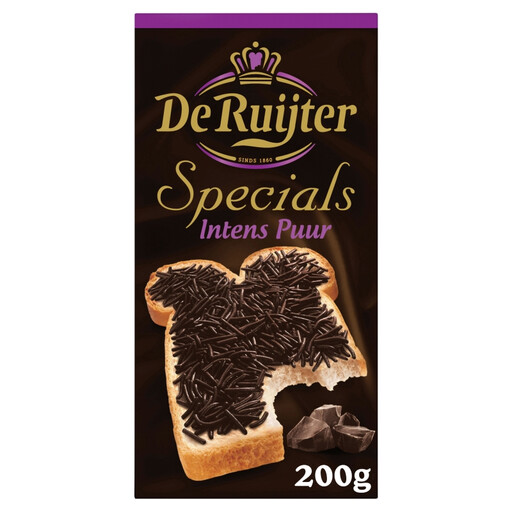 Image unavailable
De Ruijter Intense Pure Chocolate Sprinkles 200 g
A 200 g pack to consider if you’re looking for dark chocolate sprinkles for rusks. If you’re choosing for a deep chocolate flavour, check the cocoa solids content on the current pack, as well as the nutritional and allergen information.
View at Joybuy
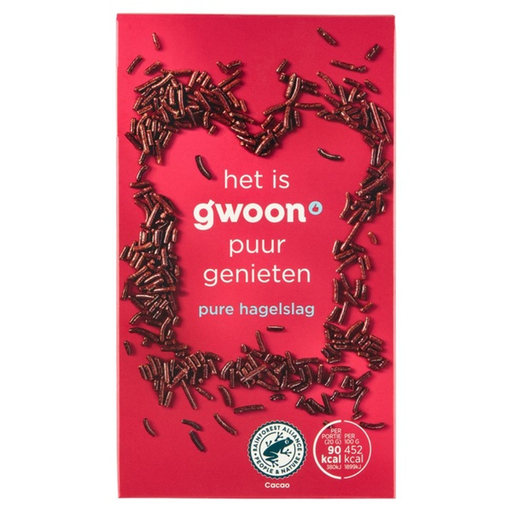 Image unavailable
g'woon Pure Chocolate Sprinkles 400 g
The 400 g pack may suit you if you’re planning several snack breaks. Before choosing this dark variety, check the cocoa solids content, sugars per 100 g and allergen information on the current pack.
View at Joybuy
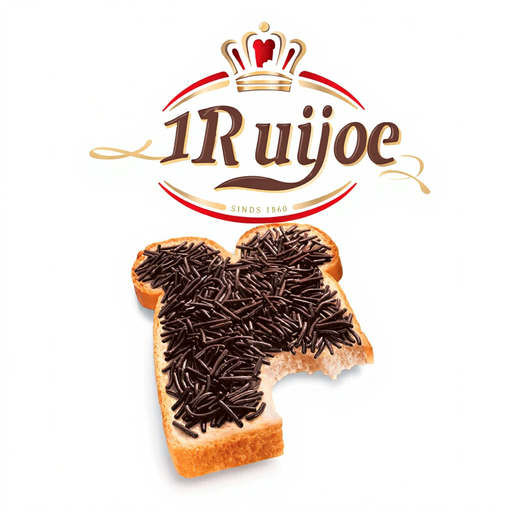 Image unavailable
De Ruijter Hail Chocolate Pure 390 g
A 390 g pack of dark chocolate sprinkles to compare for sharing at snack breaks. If a pronounced dark chocolate flavour matters to you, check the cocoa solids content for this exact variety, along with the nutritional and allergen information.
View at Joybuy
Frequently asked questions
Does dark chocolate sprinkles automatically mean fewer sugars?
No. ‘Dark’ doesn’t tell you how much sugar the chocolate sprinkles contain. Albert Heijn lists 64 g of sugars per 100 g for AH Hagelslag Puur, while Jumbo lists 65 g per 100 g for Venz Puur. Compare the nutritional information on the exact pack; a variety with fewer sugars may also contain sweeteners or polyols.
Are dark chocolate sprinkles free from milk?
Not necessarily. According to the product information at Albert Heijn, the De Ruijter Specials Intens Puur variety included in our research contains milk and soya, while Céréal Puur contains soya and may contain milk. Always check the current allergen information for the variety you’re buying.
How should you store chocolate sprinkles between gaming sessions?
Follow the storage advice and best-before date on the pack. The product information for the De Ruijter, AH and Venz varieties included in our research recommends storing them in a cool, dry place.
Do rusks always contain iodine from baker’s salt?
No, you can’t assume this for every rusk product. The Netherlands Nutrition Centre says that bakers are not required to use baker’s salt. Check the ingredients on the specific rusks or ask the manufacturer for information if this matters to your choice.


