What should you look for when choosing?
Start with the factor that matters most to you: an organic label, cocoa content, nutritional information or how the sprinkles fit with your choice of bread. A higher stated cocoa content doesn’t replace checking the ingredients, allergens and serving size.
| What to consider |
What to check when buying |
Who is this important to? |
| Organic label |
For pre-packaged chocolate sprinkles, check the organic product label and the EU organic logo. A certification mark for the origin of the cocoa isn’t the same thing. |
I want organic chocolate sprinkles on my Dutch rusks and want to be able to identify them on the packaging. This check would be the most important buying consideration for around 33% of consumers. |
| Cocoa content |
Compare the stated minimum cocoa solids percentage for the exact variety: ‘dark’ doesn’t mean the same percentage in every product. |
I’m looking for a variety with a higher stated cocoa content, even if that means comparing several dark products side by side. Around 27% of consumers would put cocoa content first. |
| Nutritional information and serving size |
Compare sugars and saturated fat per 100 g, and consider how many sprinkles you use on a Dutch rusk. |
If I eat chocolate sprinkles regularly, I want to know how much sugar and fat are in my usual serving. This would be the first consideration for around 27% of consumers. |
| Bread choice and iodine |
Check whether baking salt has been used in the bread; for Dutch rusks, check the ingredients of that product separately. |
I also eat organic bread and don’t want to assume it contains iodised baking salt. Around 13% of consumers would want to look into this first. |
Dark chocolate sprinkles at Joybuy
This product selection is relevant if you’re looking for dark chocolate sprinkles for Dutch rusks. If organic status or a particular cocoa content is essential to you, check these details on the exact pack before choosing.
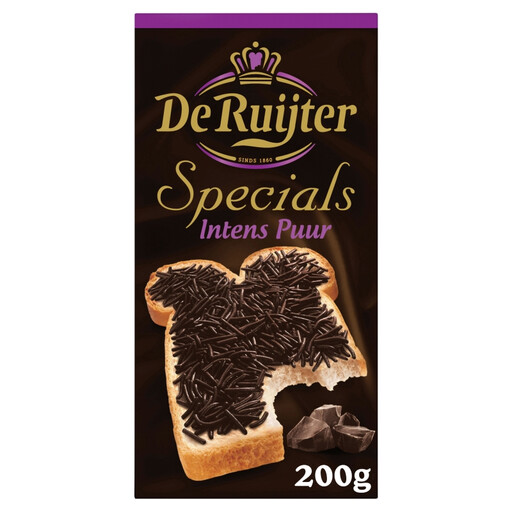 Image unavailable
De Ruijter Intense Dark Chocolate Sprinkles 200 g
Dark chocolate sprinkles to consider if you want to top Dutch rusks with sprinkles. Check the current pack for the organic label, cocoa content, nutritional information and allergens if these are important to your choice.
Pack size: 200 g.
View at Joybuy
Frequently asked questions
How can I identify organic dark chocolate sprinkles?
For pre-packaged chocolate sprinkles, check the organic product label and the EU organic logo. Skal Biocontrole describes the logo as a way to identify pre-packaged organic consumer products; a cocoa certification mark alone doesn’t tell you the same thing about the whole product.
Does ‘dark’ always mean the same cocoa content?
No. Albert Heijn states that AH Biologisch Bio Hagelslag Puur contains at least 32% cocoa solids, while BiologischeToko.nl lists a minimum of 50% for De Nieuwe Band Extra Puur. So check the percentage for the exact variety, rather than relying on the word ‘dark’ alone.
Does organic or extra-dark tell me how much sugar a product contains?
No, not without checking the product’s nutritional information. Compare sugars and saturated fat per 100 g, and bear in mind how many sprinkles you use on a Dutch rusk.
Does organic bread always provide iodine from baking salt?
No. According to the Voedingscentrum, bakers aren’t required to use baking salt, and organic bread is often made without it. Check the ingredients on packaged bread or ask your baker; for Dutch rusks, check the product’s own ingredients list.
Which allergens should I check in dark chocolate sprinkles?
Always check the allergen information on the exact pack. For De Ruijter Specials Intens Puur, Albert Heijn lists milk and soya; according to the product listings, milk may be present or may occur as a trace in the organic extra-dark varieties mentioned here. Don’t assume this information applies to other varieties from the same brand.


