For your coffee break, choose dark chocolate sprinkles by comparing the stated cocoa percentage, rather than relying on the name ‘dark’ alone: the regular varieties reviewed contain at least 32% cocoa solids, while certain other varieties contain at least 50%. A higher percentage doesn’t, by itself, tell you how the sprinkles will taste or what their nutritional value is. So compare sugars per 100 g too, check the labels on both the sprinkles and the rusks, and take your rusks with you dry and protected.
Who is this choice relevant to?
Anyone looking for a cocoa-based option with their coffee
You’re looking for dark chocolate sprinkles for your rusks and want to know what ‘dark’ means for different products. Compare the stated minimum cocoa solids: the varieties reviewed range from at least 32% to at least 52%.
Anyone comparing sugars per portion
You often have rusks with chocolate sprinkles alongside your coffee and want to compare the nutritional information. Check sugars per 100 g as well as how much you use; if you’re considering a variety with polyols, check the ingredients and the warning on the pack too.
Anyone who needs to check both labels
You’re keeping an eye on ingredients or allergens and buy rusks and chocolate sprinkles separately. Check the current packaging for both products: the chocolate sprinkles reviewed include milk or soya, while the rusk examples include cereals containing gluten and egg.
What should you look for when choosing?
First compare the chocolate sprinkles for cocoa content and nutritional information. Then check the ingredients lists for both products and choose rusks that you can take with you to your coffee break safely protected.
| What to consider |
What to check when buying |
Who should pay particular attention? |
| Cocoa percentage |
Compare the minimum percentage of cocoa solids on the packaging; the word ‘dark’ alone doesn’t tell you the percentage. |
I want to make an informed choice about the cocoa content of my chocolate sprinkles for a coffee break, rather than relying on the product name alone. This is the top priority for around 33% of consumers. |
| Sugars |
Check sugars per 100 g and the amount you sprinkle on. For products with polyols, read the usage warning too. |
If I regularly have chocolate sprinkles on rusks, I want to know how much sugar my portion contains. This is the main consideration for around 27% of consumers. |
| Ingredients and allergens |
Read the current labels on both the chocolate sprinkles and the rusks, including any ‘may contain’ statements. |
I need to check that both products are suitable for me based on the ingredients I avoid. Around 27% of consumers prioritise this check. |
| Rusks for on the go |
Compare the type of rusks and the nutritional information, and consider how to take them with you dry and protected. |
I have my coffee break on the go, so I want to take rusks with me without leaving them loose in my bag. This is the main concern for around 13% of consumers. |
Common mistakes
-
Assuming ‘dark’ means one fixed cocoa percentage
For the regular dark chocolate sprinkles reviewed, Albert Heijn and Jumbo state at least 32% cocoa solids; the De Ruijter Intens Puur variety reviewed states at least 52%. The name alone doesn’t make this difference clear.
Check the percentage on the packaging if you’re looking for a particular cocoa content.
-
Focusing only on ‘less sugar’
A sugar claim doesn’t tell you what other ingredients a product contains. The Céréal variety reviewed contains polyols and carries a warning that excessive consumption may have a laxative effect.
Compare the full nutritional information and ingredients list, and read any warnings before choosing a variety with polyols.
-
Checking only the chocolate sprinkles
Rusks have their own ingredients and allergens list. The rusk examples reviewed include cereals containing gluten and egg; sesame may also be listed for multiseed rusks.
Check the current labels on both products before buying.
-
Taking rusks with the topping already on, unprotected
Rusks are brittle. The storage instructions reviewed for Albert Heijn recommend keeping them dry and sealed after opening.
Take your rusks with you protected, and ideally add the chocolate sprinkles when you have your coffee break.
Brands to compare
De Ruijter
The regular dark and Intens Puur varieties reviewed have different stated minimum cocoa percentages.
- Albert Heijn states that De Ruijter Specials Intens Puur contains at least 52% cocoa solids and 43 g sugars per 100 g; Jumbo states that De Ruijter Puur contains at least 32% cocoa solids.
- Check the label for the variety you choose: the products reviewed contain milk, and the Intens Puur variety also contains soya.
Albert Heijn
The AH products reviewed include both regular dark chocolate sprinkles and a reduced-sugar variety, as well as different types of rusks.
- Albert Heijn states that AH Puur contains at least 32% cocoa and AH Puur Minder Suiker contains at least 50% cocoa. The product information compares the sugars in the reduced-sugar variety with AH Chocolade Hagel Puur.
- Choose your chocolate sprinkles and rusks separately, based on their current nutritional information, ingredients and allergens.
Jumbo
The Jumbo Chocoladehagelslag Puur reviewed is a regular dark variety in a 600 g pack.
- Jumbo states that this product contains at least 32% cocoa solids and 65,8 g sugars per 100 g.
- When choosing this pack size, consider how much you use at home and how you’ll store the product after opening; the product information mentions possible milk.
Fairtrade Original
The Chocoladehagelslag Puur reviewed has an explicit Fairtrade positioning.
- For the 380 g pack reviewed, Jumbo states that it contains at least 32% cocoa solids.
- Check which variety is available at each shop; don’t assume one variety has the same ingredients as another just because of its name.
Céréal
The dark chocolate sprinkles reviewed are worth comparing if sugars and the use of polyols are your main concerns.
- Jumbo states that this variety contains 7,7 g sugars and 40 g polyols per 100 g.
- The product contains soya, may contain milk and carries a warning that excessive consumption may have a laxative effect.
Chocolate sprinkles on Joybuy
These products are dark chocolate sprinkles to enjoy with rusks and coffee. Choose your rusks separately and check the current packaging if a specific cocoa percentage, nutritional value or allergen affects your choice.
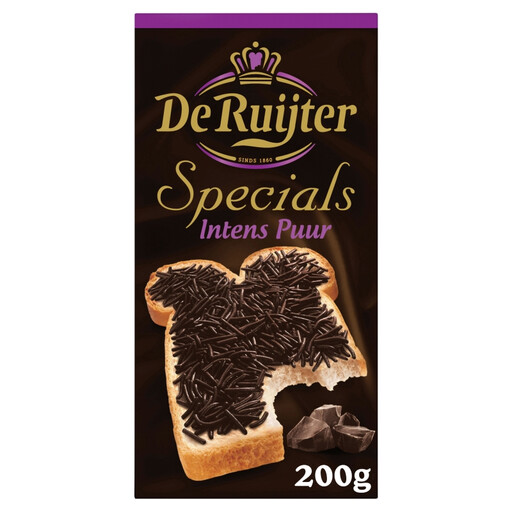 Image unavailable
De Ruijter Intense Pure chocolate sprinkles, 200 g
A variety to consider if you’re looking for distinctly dark chocolate sprinkles for your coffee break. The pack contains 200 g; check the current label for the cocoa percentage, nutritional information and allergens.
View on Joybuy
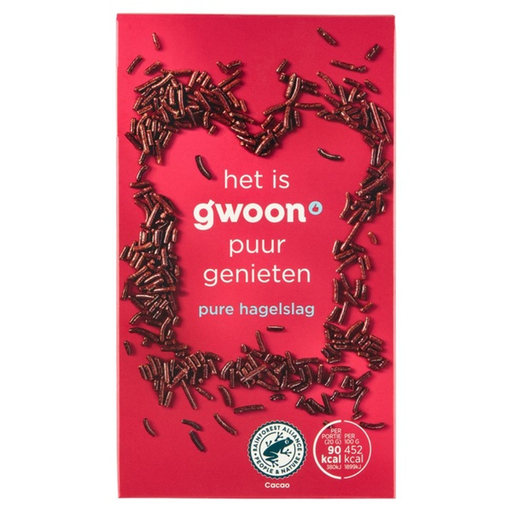 Image unavailable
g'woon dark chocolate sprinkles, 400 g
A dark chocolate sprinkles variety to compare if you’re looking for a 400 g pack. Check the current label for the cocoa percentage, sugars per 100 g and allergen information.
View on Joybuy
 Image unavailable
De Ruijter Pure chocolate sprinkles, 390 g
A dark chocolate sprinkles variety for anyone considering a 390 g pack. Before choosing it for a particular cocoa percentage, check the current label; also look at the nutritional information and allergens.
View on Joybuy
Frequently asked questions
Does ‘dark’ always mean extra-high cocoa content?
No. For the regular dark chocolate sprinkles reviewed, Albert Heijn and Jumbo state at least 32% cocoa solids, while De Ruijter Specials Intens Puur states at least 52%. If cocoa content matters to you, compare the percentage on the label.
How much sugar is in a portion of dark chocolate sprinkles?
Voedingscentrum gives 9,1 g sugars for a 15 g portion of dark chocolate sprinkles. The amount in your portion depends on the product you choose and how much you sprinkle on; check the nutritional information on the packaging.
How can I take rusks and chocolate sprinkles with me without topping the rusks in advance?
Take the rusks with you in a sealed, protective container and add the chocolate sprinkles when you have your coffee break. This follows the storage advice for keeping the rusks reviewed dry and sealed after opening.
Should I check both the rusks and the chocolate sprinkles for allergens?
Yes, check the current allergen information on both packs. According to the Netherlands Food and Consumer Product Safety Authority, prepacked foods must show allergen information on the label; the chocolate sprinkles and rusks reviewed have different ingredients.
Do rusks automatically contain iodised baker’s salt?
Don’t assume so based only on the word ‘salt’ in an ingredients list. If the type of salt used affects your choice, check the packaging of the specific rusks or ask the manufacturer.


