What should you look for when choosing?
When choosing dark chocolate sprinkles for crispbread on King’s Day, first decide which factor matters most to you: cocoa content, sugar, allergens or the quantity you need. Then compare the exact variants, as products with ‘dark’ in the name can differ in these respects.
| What to consider |
What should you check? |
Who will find this most important? |
| Cocoa content |
Compare the percentage in the exact variant. Jumbo states that De Ruijter Puur 390 g contains at least 32% cocoa solids; Albert Heijn states that De Ruijter Specials Intens Puur contains at least 52%. |
I want the sprinkles on my crispbread to have a pronounced cocoa flavour, so I look beyond the word ‘dark’. For around 33% of consumers, cocoa content comes first. |
| Sugars and sweeteners |
Compare sugars per 100 g and check which sweeteners are used. Céréal states that its dark chocolate sprinkles contain maltitols and 40 g of polyols per 100 g. |
If I want less sugar, I also want to know what the product contains instead. Around 27% of consumers consider this the most important factor. |
| Allergens |
Read the ingredients and warnings on the current pack; for the dark variants discussed here, look out in particular for references to milk and soya. |
If I have a food allergy, I want to know exactly what’s in the pack before serving the sprinkles. This check is the top priority for around 20% of consumers. |
| Quantity |
Check the pack weight and think about how many pieces of crispbread you want to top. The packs discussed range from 200 g to 600 g. |
For a breakfast I’m sharing with others, I want a pack that suits the number of people eating. The quantity needed is the deciding factor for around 20% of consumers. |
Brands compared
These brands offer different things to consider when choosing dark chocolate sprinkles for crispbread. Always compare the specific variant; a feature of one product doesn’t necessarily apply to the entire brand.
De Ruijter
Worth considering if you want to compare a standard dark variant with Specials Intens Puur by their stated cocoa content.
- Jumbo states that De Ruijter Puur 390 g contains at least 32% cocoa solids; Albert Heijn states that Specials Intens Puur contains at least 52%.
- Check both variants for references to milk and soya. ‘Dark’ doesn’t automatically mean dairy-free.
Céréal
A dark chocolate sprinkle to consider if reducing sugar is your main priority.
- According to Céréal, the product contains 88% less sugar than a comparable standard product; the manufacturer states that it contains 7.7 g of sugars per 100 g.
- Céréal states that it contains maltitols, 40 g of polyols per 100 g and soya; the product may contain milk. Compare the full ingredients if any of these points matter to you.
Venz
A brand option for anyone looking for dark chocolate sprinkles in a 400 g pack.
- Jumbo lists Venz Puur Chocolade Hagelslag in a 400 g pack.
- If you want to choose based on cocoa content or ingredients, check the pack of this variant before comparing it with other products.
Jumbo
A supermarket own-brand to consider if pack size matters for your King’s Day breakfast.
- Jumbo offers dark chocolate sprinkles in pack sizes including 200 g, 380 g and 600 g.
- Don’t assume that all these variants have the same cocoa content or allergen information; read the label on the pack you choose.
Kiekeboe
A supermarket own-brand option if you’re looking for a larger pack of dark chocolate sprinkles.
- ALDI describes Kiekeboe Puur as a 600 g pack made with Rainforest Alliance cocoa.
- If high cocoa content or a particular allergen profile is essential to your choice, check the details on the exact pack.
Dark chocolate sprinkles for crispbread
These Joybuy products are dark chocolate sprinkles in 200 g, 390 g and 400 g packs. Choose a quantity that suits your breakfast and check the cocoa content and allergens on the pack of each variant.
 Image unavailable
De Ruijter Intense Pure Chocolate Sprinkles 200 g
A 200 g pack for serving dark chocolate sprinkles on crispbread. Compare the cocoa content and check the allergens on the pack of this exact variant.
View at Joybuy
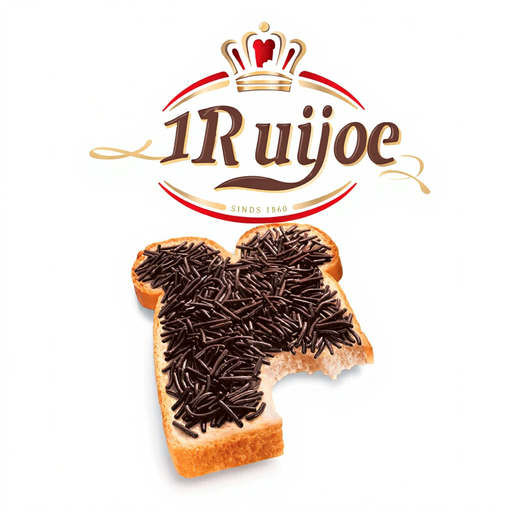 Image unavailable
De Ruijter Hail Chocolate Pure 390 g
A 390 g pack for topping more pieces of crispbread. Jumbo states that the 390 g De Ruijter Puur variant contains at least 32% cocoa solids; check the current pack for allergen information.
View at Joybuy
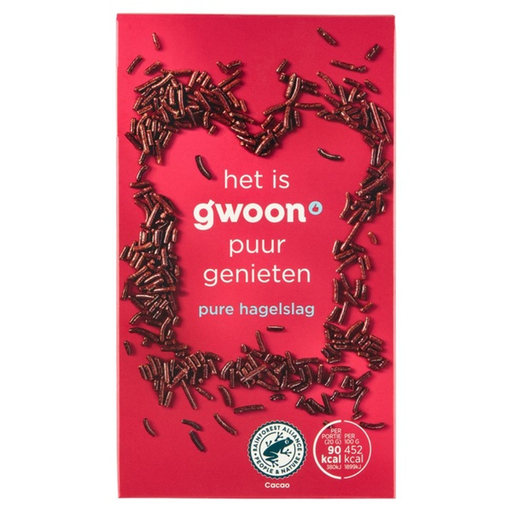 Image unavailable
g'woon Pure Chocolate Sprinkles 400 g
A 400 g pack of dark chocolate sprinkles for crispbread at a breakfast shared with several people. Check the cocoa content, ingredients and allergens for this variant on the pack.
View at Joybuy
Frequently asked questions
Is ‘dark’ enough to identify chocolate sprinkles with a high cocoa content?
No, compare the stated percentage of cocoa solids in the exact variant. Jumbo states that De Ruijter Puur 390 g contains at least 32%, while Albert Heijn states that De Ruijter Specials Intens Puur contains at least 52%; the percentage alone won’t tell you which product you’ll prefer.
Are dark chocolate sprinkles automatically free from milk and soya?
No, the dark variants discussed here list ingredients including soya and milk, or state that they may contain milk. Check the current ingredients list and allergen information on the exact pack before choosing.
Are chocolate sprinkles with less sugar the same as chocolate sprinkles with more cocoa?
No, these are different characteristics. According to Céréal, its dark chocolate sprinkles contain 88% less sugar than a comparable standard product, but this doesn’t tell you how their cocoa content compares with other variants. Céréal also states that they contain maltitols, so compare both the ingredients and the nutritional information per 100 g.
Does iodised baker’s salt affect your choice of chocolate sprinkles?
To understand what’s in your breakfast, check the crispbread and chocolate sprinkles separately. If the presence of iodised baker’s salt matters to you, check the ingredients of the specific crispbread; don’t infer this from the sprinkles you put on it.


