
Fans of a more intense cocoa flavour
If you’re looking for a higher stated cocoa content in a late-night snack, the percentage of cocoa solids is a more useful guide than the word ‘dark’ alone.


Looking for dark chocolate sprinkles for a late-night snack, with a higher stated cocoa content high on your list? Compare the percentage of cocoa solids rather than relying on the word ‘dark’ alone. Albert Heijn and Jumbo product listings state a minimum of 52% for De Ruijter Specials Intens Puur and a minimum of 32% for Venz Puur. If sugar is your main concern, also check the nutritional information, sweeteners and allergens on the packaging you choose.
If you’re looking for a higher stated cocoa content in a late-night snack, the percentage of cocoa solids is a more useful guide than the word ‘dark’ alone.
You want to compare the sugars per 100 g with your usual portion and find out whether a variety contains sweeteners.
You choose a pack size based on how often you use chocolate sprinkles, and check whether your preferred variety is available from the retailer you want to buy from.
Start with what matters most for your late-night snack: a stated cocoa content, the ingredients or a suitable pack size. For every option, check the current label for allergen information too.
| What to consider | What to check before buying | Who it matters to |
|---|---|---|
| Cocoa content | Compare the stated minimum percentage of cocoa solids for the exact varieties you’re considering. | If I’m deliberately looking for a higher stated cocoa content in my late-night snack, I don’t want to rely on the word ‘dark’ alone. Around 42% of consumers prioritise cocoa content. |
| Sugars and sweeteners | Check the sugars per 100 g and the ingredients list; if it contains polyols, look out for any warnings on the packaging. | For a sweet snack, I want to know what a portion adds and whether it contains sweeteners. Around 33% of consumers prioritise the ingredients. |
| Pack size and availability | Choose a net weight that suits how much you use, and check where your preferred variety is available. | If I only use chocolate sprinkles occasionally, I don’t want to buy a bigger pack than I need. A larger pack could be a better fit if I’m sharing it. Pack size and availability are the main concern for around 25% of consumers. |
These considerations are separate from allergens: even if cocoa, sugars or pack size determines your choice, always rely on the label on the specific pack if you have an allergy or intolerance.
According to Jumbo and Albert Heijn product listings, Venz Puur contains a minimum of 32% cocoa solids, while De Ruijter Specials Intens Puur contains a minimum of 52%. So the same category description doesn’t tell you what minimum percentage is stated on the pack.
Check the percentage on the current label for the variety you want to buy, especially if a higher stated cocoa content is your main criterion.
Jumbo lists 7.7 g of sugars and 40 g of polyols per 100 g for Céréal Hagelslag Puur. The product information lists maltitols and warns that excessive consumption may have a laxative effect.
So check the ingredients and warnings as well as the nutritional information, and take into account how much you actually use.
The listings checked, including those for De Ruijter Specials Intens Puur and Venz Puur, mention milk and soya. ‘Dark’ doesn’t mean allergen-free.
If you have an allergy or intolerance, check the ingredients and warnings on the packaging of the exact variety you’re considering.
ALDI lists Kiekeboe Hagelslag Puur in a 600 g pack, while Albert Heijn lists De Ruijter Specials Intens Puur in a 200 g pack. The right quantity for you depends on how often you use chocolate sprinkles.
Choose a pack size you expect to use, and follow the storage advice on the packaging once opened.
Compare specific varieties rather than brands as a whole: cocoa content, nutritional information and allergens can vary from one product to another.
Worth considering if you want to compare regular dark chocolate sprinkles with a variety that states a higher cocoa content.
A regular dark chocolate sprinkle option to compare with varieties that state a higher cocoa content.
The own-brand range includes a dark variety for anyone comparing sugars per 100 g.
An alternative formulation to consider if you want to compare both sugars and sweeteners.
An option to consider if you’re looking for a larger pack for regular use or sharing.
These products offer a choice of dark chocolate sprinkles with a stated higher cocoa content, regular dark chocolate sprinkles and dark chocolate flakes for topping. If you’re specifically looking for sprinkles, check the product format of the flakes.
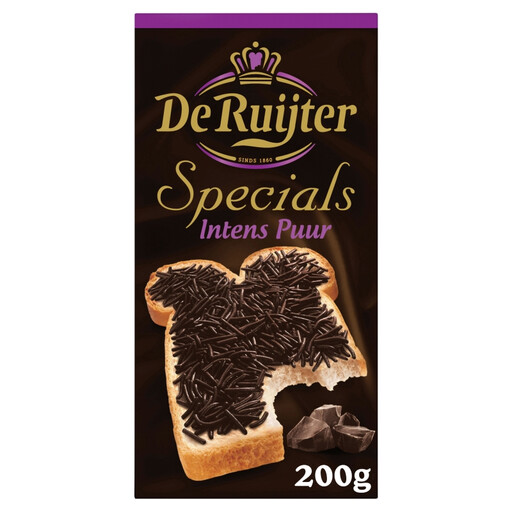 Image unavailable
An option if you’re looking for a higher stated cocoa content in your late-night snack.
The product description states a minimum of 52% cocoa solids and 43 g of sugars per 100 g. It mentions milk and soya, and warns that milk proteins and lactose may be present. Check the current label if this is relevant to you.
 Image unavailable
A regular dark chocolate sprinkle option if a specifically high cocoa percentage isn’t your first selection criterion.
The nutritional information lists 64 g of sugars per 100 g, and the product information mentions milk and soya. Check the label for the cocoa content if that will determine your choice.
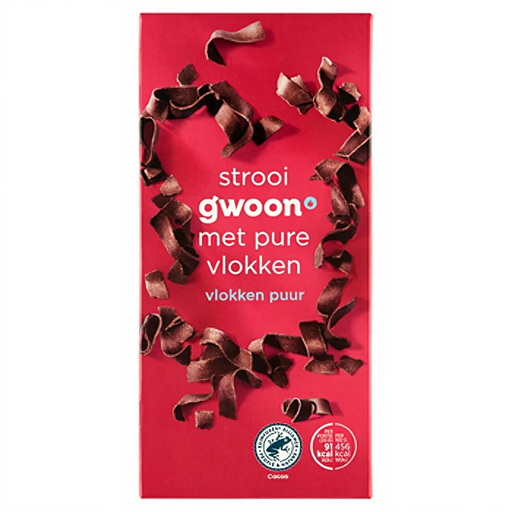 Image unavailable
A dark chocolate topping to consider if flakes, rather than sprinkles, suit the snack you want to make.
The product information states a minimum of 32% cocoa solids and 63.8 g of sugars per 100 g. It mentions milk and possible traces of wheat; check the product format and current label before buying.
No. The description doesn’t tell you the minimum percentage of cocoa solids stated for a variety. Jumbo lists a minimum of 32% for Venz Puur, while Albert Heijn lists a minimum of 52% for De Ruijter Specials Intens Puur. So compare the labels of the products you’re considering.
No. The product listings for both De Ruijter Specials Intens Puur and Venz Puur mention milk and soya. If you have an allergy or intolerance, always check the ingredients and any warnings on the packaging of the specific variety.
Compare sugars per 100 g, and read the ingredients list and warnings. Albert Heijn lists 43 g of sugars per 100 g for AH Hagelslag Puur Minder Suiker. Jumbo lists 7.7 g of sugars and 40 g of polyols per 100 g for Céréal Hagelslag Puur, with a warning about excessive consumption.
Follow the storage advice on the packaging of the chocolate sprinkles you buy. The product information checked recommends storing them in a cool, dry place. After opening, also check for any instructions on resealing the pack.