
Christmas bakers choosing by cocoa content
Are you making cupcakes, cake or desserts and want to look beyond the word ‘dark’? Compare the stated minimum cocoa solids for the exact variant instead.


If you want a demonstrably higher cocoa content for your Christmas baking, compare the minimum stated on the packaging: Albert Heijn lists at least 40% cocoa solids for De Ruijter Royaal Extra Puur, compared with 35% for Jumbo Chocolade Vlokken Puur and 32% for PLUS Chocoladevlokken puur, according to their product information. The shape and pack size also matter when you want to decorate several bakes. If you have allergies, always check the latest label: ‘dark’ does not mean the sprinkles are free from milk or soya.
Are you making cupcakes, cake or desserts and want to look beyond the word ‘dark’? Compare the stated minimum cocoa solids for the exact variant instead.
If you’re using chocolate sprinkles as decoration, their shape and how much you can scatter over your bakes matter more than the cocoa percentage alone.
For several cakes, cupcakes or desserts, the pack size in grams helps you work out how many packs you’ll need. Also read the allergen information for each variant you choose.
First decide whether cocoa content, appearance, quantity or allergen information matters most for your Christmas baking. Then compare the variants that meet your main requirement.
| What to consider | What to check before buying | Who it matters to |
|---|---|---|
| Cocoa content | Compare the stated minimum cocoa solids for the exact variant; ‘dark’ on its own doesn’t tell you the percentage. | If I want a pronounced cocoa note, I need to know the minimum stated on the pack. Around 21% of consumers put cocoa content first. |
| Decorative finish | Check that the shape suits the decoration you have in mind and that the pack contains enough for the number of portions. | If I’m decorating cupcakes or desserts, the chocolate needs to be visible as a topping. For around 29% of consumers, appearance is the main concern. |
| Quantity | Compare the pack size in grams with the number of bakes you want to decorate. | When I’m making several Christmas treats, I don’t want to run out of topping halfway through. Having enough in the pack comes first for around 29% of consumers. |
| Allergens | Read the ingredients and warnings on the latest pack; don’t rely on ‘dark’ or a dietary claim alone. | If someone I’m baking for has a food allergy, I need to be able to check the exact packaging. For around 21% of consumers, this is the most important consideration. |
‘Dark’ doesn’t indicate a set cocoa percentage. For the variants discussed here, Albert Heijn, Jumbo and PLUS list minimum cocoa solids of 32%, 35% and 40%.
Compare the minimum on the packaging of the variant you’re actually buying. Don’t assume this alone proves there will be a difference in taste.
A claim such as ‘dark’ or ‘vegan’ doesn’t cancel out a warning about the possible presence of milk. The De Ruijter variants discussed here also list soya in their product information.
If you have an allergy, read the ingredients and warnings on the latest pack and follow the individual advice that applies to the person concerned.
The variants discussed here come in different pack sizes, so you may need more than one pack for several bakes.
Work out how much baking you want to decorate, then check the pack size in grams for the variant you’ve chosen.
The information you use to compare variants may not match the pack you eventually use. This can be particularly important for ingredients and allergens.
Check the packaging you have in front of you before you start baking.
The standard dark sprinkles and Royaal Extra Puur offer two clearly different stated cocoa contents.
Jumbo Chocolade Vlokken Puur comes in a 300 g pack and is worth considering if you’re decorating several bakes.
PLUS Chocoladevlokken puur comes in a 300 g pack, and its product page mentions Fairtrade Cocoa.
ALDI lists Kiekeboe chocolate sprinkles in a 300 g milk or dark variant.
Lidl lists 300 g dark chocolate sprinkles as a store product.
These products offer different forms of chocolate for decorating cupcakes and other Christmas bakes: sprinkles and chunks. Choose the shape that suits your decoration, and check the packaging if a specific cocoa content or allergen restriction is a deciding factor.
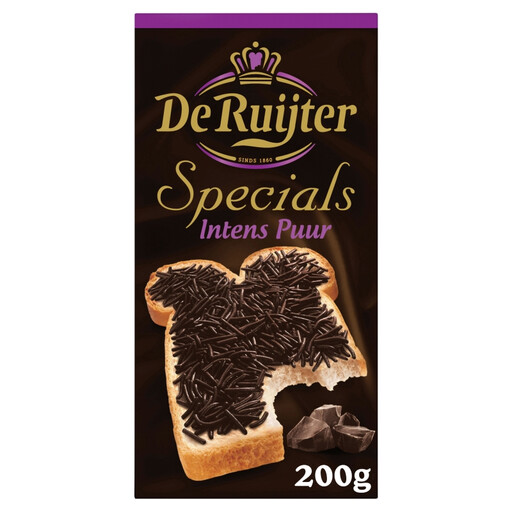 No image available
A sprinkle-style topping for anyone looking to decorate cupcakes or desserts with chocolate. The pack contains 200 g; compare the cocoa content and read the ingredients and allergen information on the latest pack.
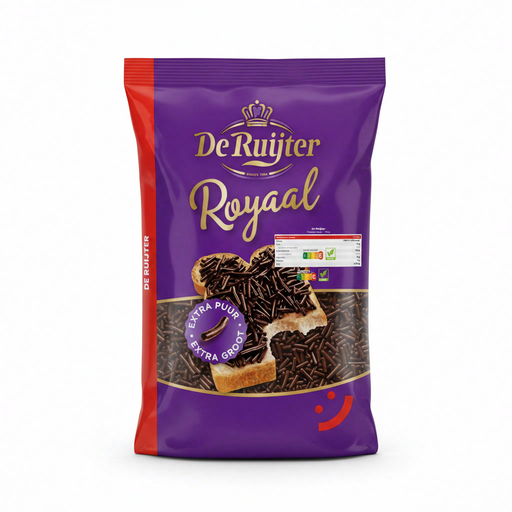 No image available
The 390 g pack could be a good choice for decorating several bakes. This product is called Chocolate Chunks, not dark chocolate sprinkles, so check that the shape suits your decoration and read the label if you have allergies.
 No image available
A 390 g dark chocolate topping for decorating cupcakes or several other bakes. If you’re choosing by cocoa content, compare the information on the pack and check the allergen information too.
Compare the stated minimum cocoa solids for the exact variant. Albert Heijn lists at least 40% for De Ruijter Royaal Extra Puur, Jumbo lists at least 35% for its dark chocolate sprinkles and PLUS lists at least 32% for its dark variant. These percentages are product specifications, not the results of a taste test.
Yes, the product descriptions discussed here mention cupcakes as one use for chocolate sprinkles. If you want to add sprinkles to warm icing, try a small amount with your recipe first; the product descriptions don’t say how the shape changes when heated.
No. The product information for the De Ruijter, Jumbo and PLUS variants discussed here includes warnings about the possible presence of milk; the De Ruijter variants also list soya. If you have an allergy, always read the label on the pack you’re using.
Start with the ingredients list and read any warnings about the possible presence of allergens too. The Netherlands Food and Consumer Product Safety Authority explains how the allergens that must be declared on pre-packed food labels should be highlighted. Always check the packaging of the product you’re actually buying.