What should you look for when buying?
Decide what matters most for your lunch: a stated cocoa content, the amount of sugars or a pack size you’ll actually use up. Then compare like for like, as ‘dark’ doesn’t mean there’s one standard recipe.
| What to consider |
What to check when buying |
Who it matters to |
| Cocoa content |
Check the stated percentage of cocoa solids and the ingredients for the exact variety. A percentage isn’t a measure of flavour. |
If I mainly want to choose my lunch topping by its cocoa profile, a specific percentage is more useful than a name that simply sounds dark. This cocoa-led choice is the top priority for around 40% of consumers. |
| Sugars |
Compare sugars per 100 g in the nutritional information, and also consider how much chocolate sprinkles you use on each sandwich. |
When sugar is my first selection criterion, I want to be able to compare the nutritional information on the packs I’m considering. This is the top priority for around 30% of consumers. |
| Pack size |
Check the net weight, best-before date and storage instructions; if you like, compare the current price per kilo too. |
If I use chocolate sprinkles regularly at home, I want to choose a pack I can finish in time. Around 30% of consumers put this decision about pack size and stocking up first. |
Dark chocolate sprinkles and flakes at Joybuy
This selection includes dark chocolate sprinkles in different pack sizes and one pack of dark flakes. Flakes aren’t the same as sprinkles: first choose which product you want for your lunch sandwich, then compare the information on the packaging.
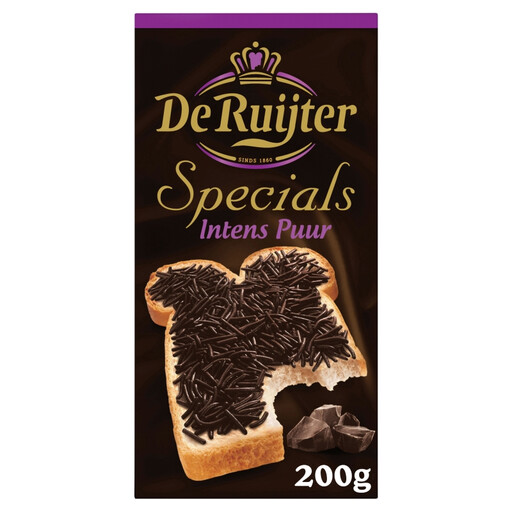 Image unavailable
De Ruijter Intense Dark Chocolate Sprinkles, 200 g
A 200 g pack of dark chocolate sprinkles to consider if you’re looking for a topping for lunch sandwiches. Before comparing this variety with other packs, check the current label for cocoa content, sugars per 100 g and allergens.
View at Joybuy
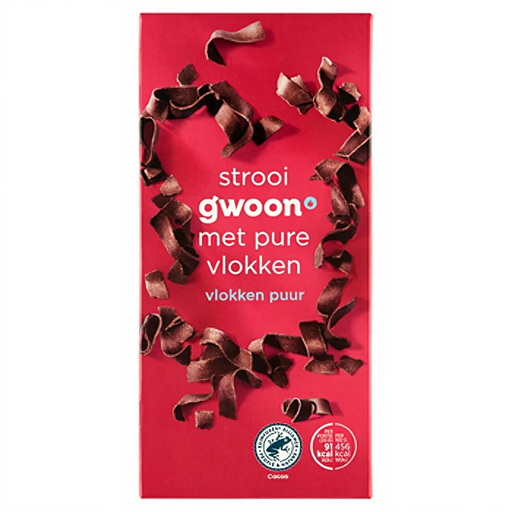 Image unavailable
g'woon Dark Flakes, 300 g
This 300 g pack is an option if you want dark flakes for your sandwich, rather than sprinkles specifically. If you’re choosing between the two product types, compare the ingredients, nutritional information and allergens on the packaging.
View at Joybuy
 Image unavailable
De Ruijter Dark Chocolate Sprinkles, 390 g
This 390 g pack of dark chocolate sprinkles is a good option if you want to keep enough at home for several lunch sandwiches. If cocoa content, sugars or allergens are important to your choice, compare the current label with those of other varieties.
View at Joybuy
Questions about dark chocolate sprinkles on the go
Does ‘dark’ automatically mean lots of cocoa and little sugar?
No, compare the figures for each variety. Jumbo states that its 200 g dark variety contains at least 50% cocoa solids and 43.1 g sugars per 100 g, compared with at least 32% and 65.8 g per 100 g for its regular 600 g dark variety.
How should I store a pack of chocolate sprinkles for lunch sandwiches?
Follow the storage instructions on the pack you’ve chosen, and check the best-before date if you’re buying a large pack. Jumbo advises storing its tested dark varieties in a cool, dry place; for the 200 g variety, it also says to keep the pack away from light.
If I have an allergy, can I rely on the word ‘dark’?
No, read the ingredients and allergens on the exact, current pack. Albert Heijn lists milk and soya among the ingredients of De Ruijter Dark Chocolate Sprinkles; the Netherlands Food and Consumer Product Safety Authority says allergens must be listed on the label.
Which label details help when comparing products?
Use the ingredients, allergens, net weight, best-before date and nutritional information to compare pre-packed chocolate sprinkles. According to the Netherlands Food and Consumer Product Safety Authority, these details must be on the label where applicable; a variety name is no substitute for this information.


