
If you’re looking for a distinct cocoa flavour
You want to add a small amount of sweet chocolate topping alongside savoury flavours. Compare the stated cocoa solids percentage rather than relying on the word ‘dark’ alone.


If you’re looking for a distinct cocoa flavour alongside a savoury breakfast, check the stated cocoa content; dark chocolate sprinkles are still a sweet topping. According to Albert Heijn, De Ruijter Specials Intens Puur contains at least 52% cocoa solids. However, a higher cocoa content doesn’t, on its own, tell you how much sugar a product contains. Compare the sugars per 100 g, and always check the current label if you have allergies.
You want to add a small amount of sweet chocolate topping alongside savoury flavours. Compare the stated cocoa solids percentage rather than relying on the word ‘dark’ alone.
You want to keep using chocolate sprinkles, but check the sugars per 100 g first. For products containing sweeteners, read the ingredients and any warnings too.
Your choice depends on the ingredients, allergens and any ‘may contain’ statements on the packaging. The dark varieties mentioned include milk, soya and possible traces of milk.
First decide whether you’re choosing mainly by cocoa content, sugars or ingredients you need to avoid. Consider each separately: ‘dark’ doesn’t give you the full picture of a product’s nutritional value or allergens.
| What to look for | What to check when buying | Who it matters to |
|---|---|---|
| Cocoa content | Compare the stated minimum percentage of cocoa solids on the packaging; don’t try to infer it from the word ‘dark’. | If I want a distinct cocoa flavour alongside savoury toppings, I’d rather choose by a stated percentage than by the product name. Around 50% of consumers say this cocoa flavour comes first. |
| Sugars and sweeteners | Compare ‘of which sugars’ per 100 g. If the product contains sweeteners, read the ingredients and warnings too. | What matters most for my breakfast is how much sugar the chocolate sprinkles contain, even if the variety is called dark. For around 30% of consumers, this is their first consideration. |
| Ingredients and allergens | Read the current label, including the allergens and any ‘may contain’ statements. | If I need to avoid an ingredient, the composition matters more than the flavour or brand. Checking the label comes first for around 20% of consumers. |
The standard dark varieties mentioned state that they contain at least 32% cocoa solids, while Albert Heijn states that De Ruijter Specials Intens Puur contains at least 52%. You can’t tell the difference from the product name alone.
If cocoa content is your main deciding factor, compare the minimum percentage on the packet.
Céréal Hagelslag Puur Minder Suikers lists maltitols and warns that excessive consumption may have a laxative effect. The Voedingscentrum points out that large amounts of polyols can cause digestive problems.
As well as comparing sugars per 100 g, read the ingredients and warnings on the packaging.
The dark varieties mentioned differ in their statements about milk, soya and possible traces of milk. If you need to avoid an ingredient, this difference will affect your choice.
Check the ingredients and allergens on the current packaging before use.
A 600 g pack doesn’t tell you the cocoa content, sugar level or allergens for that particular variety.
Before buying a larger pack, compare the labels for the details that matter to you.
The Puur, Royaal Extra Puur and Specials Intens Puur varieties mentioned have different stated cocoa contents.
Venz Puur is an option if you’re looking for dark chocolate sprinkles in a 400 g pack.
AH Hagelslag Puur is a supermarket own-brand variety in a 600 g pack.
Jumbo Chocoladehagelslag Puur is a supermarket own-brand variety in a 600 g pack.
Lidl lists Mister Choc Hagelslag Puur in a 600 g pack.
ALDI lists Kiekeboe Hagelslag Puur in a 600 g pack.
This selection includes dark chocolate sprinkles and g'woon Flakes Pure for a sweet touch at breakfast. Chocolate sprinkles and flakes are different types of product, so compare the nutritional information and allergens on each pack too.
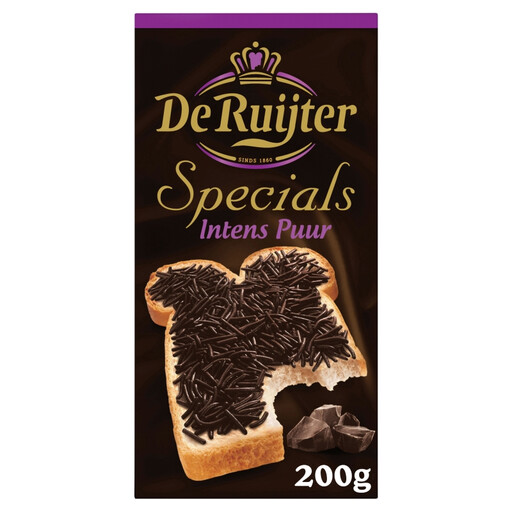 Image unavailable
An option if you want to enjoy chocolate sprinkles as a sweet touch alongside savoury toppings. Before choosing, compare the cocoa content, sugars per 100 g and allergens on the packaging.
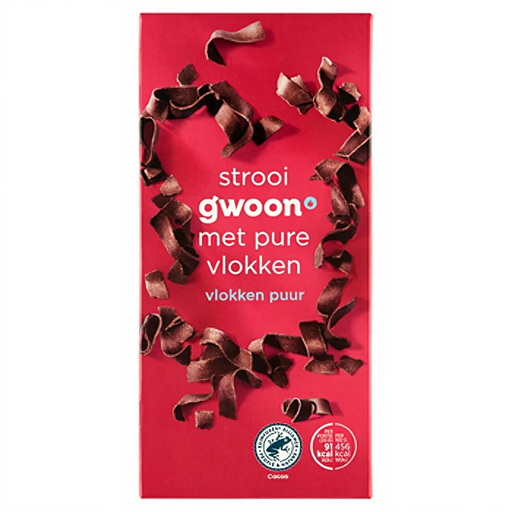 Image unavailable
If you’re considering dark chocolate flakes as a sweet touch on bread instead of chocolate sprinkles. Check the label if cocoa content, sugars or allergens are the main factors in your choice.
 Image unavailable
If you want dark chocolate sprinkles as a sweet contrast at breakfast. Don’t rely on ‘dark’ alone: check the packet for the cocoa content, sugars per 100 g and allergens.
Yes, if you’d like a sweet chocolate flavour alongside the savoury part of your breakfast. The sprinkles themselves are still sweet, so check the stated cocoa content if you want to choose based on cocoa intensity.
No. ‘Dark’ doesn’t tell you how much sugar a product contains per 100 g. Albert Heijn states that Céréal Hagelslag Puur Minder Suikers contains 7,7 g of sugars per 100 g, compared with 64 g per 100 g for AH Hagelslag Puur. Compare the other ingredients in each specific variety too.
Check the current ingredients list, allergens and any ‘may contain’ statements on the packaging. The Netherlands Food and Consumer Product Safety Authority states that allergens must be clearly listed on the labels of prepacked foods.
No. Less sugar doesn’t mean that other ingredients or warnings are irrelevant. Céréal Hagelslag Puur Minder Suikers lists maltitols and warns of a possible laxative effect if consumed in excess, so read the guidance on the packaging.
Follow the storage instructions on the specific packet and seal it well after use. Jumbo’s product information for the dark chocolate sprinkles mentioned says to store them in a cool, dry place; for AH Hagelslag Puur, Albert Heijn recommends storing it in a cool, dark and dry place.