If you’re looking for dark chocolate sprinkles for biscuits, first compare the minimum cocoa content shown on the packaging for the exact variant. The product information from Jumbo and Albert Heijn lists minimums of 32%, 35% or 40% for the examples reviewed. That percentage doesn’t tell you how the sprinkles will taste or behave in your dough. So, decide whether you want to mix them into the dough or use them as a topping, and check the current ingredients and allergen information too.
Who are these sprinkles for?
Bakers who choose by cocoa content
If the word ‘dark’ doesn’t tell you enough, you can compare the minimum cocoa content of the exact variant. Jumbo and Albert Heijn list minimums of 32%, 35% and 40% for the products reviewed; these figures aren’t the results of a taste test.
Biscuit bakers who want to mix in or scatter sprinkles
You’ll want to know whether the sprinkles suit the way you plan to use them: mixed into the dough, scattered over a biscuit or added as a finishing touch after baking. Jumbo and Albert Heijn product information mentions using them in bakes or on small cakes, but doesn’t compare how they perform in different biscuit recipes.
Shoppers who need to check for milk or soya
Allergen information varies from product to product. The Jumbo and Albert Heijn information reviewed mentions soya, milk or a warning that the product may contain milk. So, check the packaging of the exact variant you’re using.
What should you look for when choosing?
First, decide how you’ll use the chocolate in your biscuit recipe. Then check the label for the exact variant, especially if cocoa content or allergens are important to you.
| What to consider |
What to check when buying |
Who it matters to |
| Cocoa content |
Compare the stated minimum cocoa content for the exact variant; ‘dark’ on its own doesn’t indicate a specific percentage. |
I’m looking for a pronounced cocoa flavour in my biscuits and don’t want to rely on the product name alone. Around 36% of consumers prioritise cocoa content. |
| How you’ll use it in the recipe |
Decide whether you’ll mix the sprinkles into the dough, add them on top of the biscuits or use them after baking; if mixing them into the dough, try a small batch first. |
If I want the chocolate to remain visible in my biscuits, I need to know how my recipe affects the sprinkles. For around 29% of consumers, how the product is used in a recipe is the main consideration. |
| Ingredients and allergens |
Read the ingredients list and distinguish between ‘contains’ and ‘may contain’ on the current packaging. |
If I need to avoid milk or soya, the information on the pack matters more than the word ‘dark’. For around 21% of consumers, ingredients and allergens take priority. |
| Pack size |
Check how much your recipe needs and compare the sizes of the packs available. |
For a baking session, I want to make sure I have enough sprinkles without judging by the pack size alone. Pack size is the top priority for around 14% of consumers. |
Common mistakes
-
Assuming ‘dark’ means a set cocoa content
The Jumbo and Albert Heijn product information reviewed lists different minimums for each variant, ranging from 32% to 40% cocoa solids. The word ‘dark’ doesn’t replace the need to compare them.
Check the percentage on the packaging of the variant you want to buy. Don’t use that figure alone to draw conclusions about the flavour or baking results.
-
Assuming dark sprinkles don’t contain milk or soya
According to the product information reviewed, De Ruijter Chocoladevlokken Puur 200 g contains soya and may contain milk; Jumbo Chocolade Vlokken Puur may contain milk, while AH Pure chocoladevlokken contains milk and lactose.
When buying and using the product, check the ingredients and allergen information on the current packaging for the exact variant.
-
Treating sprinkles as bake-tested chocolate chips
A recommendation to use them in bakes doesn’t tell you how the sprinkles will melt or whether they’ll remain visible in a particular biscuit dough.
If you want to mix sprinkles into the dough, try a small amount in your own recipe first. If you’re using them as a topping, decide when you want to add them.
Brands to consider
De Ruijter
According to Jumbo’s product information, Chocoladevlokken Puur 200 g contains at least 32% cocoa solids, while Royaal Chocoladevlokken 240 g contains at least 40%.
- The two variants listed have different stated minimum cocoa contents for you to compare.
- The standard dark variant contains soya and may contain milk; check the pack for the exact variant.
Albert Heijn
Albert Heijn lists AH Pure chocoladevlokken in a 300 g pack, with at least 32% cocoa solids.
- The product information lists the ingredients and describes the variant as gluten-free.
- The same product information states that this variant contains milk and lactose.
Jumbo
Jumbo lists Chocolade Vlokken Puur 300 g as containing at least 35% cocoa solids.
- The minimum cocoa content and pack size are listed for this variant.
- The product information warns that these sprinkles may contain milk.
PLUS
PLUS lists Chocoladevlokken puur Fairtrade in a 300 g pack.
- The product name and pack size make the variant easy to identify.
- Before choosing this variant for your recipe, check the current pack for cocoa content, ingredients and allergens.
Lidl
Lidl lists a product called Chocoladevlokken puur.
- It’s easy to recognise as a product in the dark chocolate sprinkles category.
- Check the current product packaging for cocoa content and allergens.
Aldi
Aldi lists Kiekeboe Chocoladevlokken in milk and dark variants of 300 g.
- The dark variant and pack size can be identified from the product information.
- Check the pack for the dark variant’s cocoa content and full allergen information.
Products for decorating
These Joybuy products are options to consider if you’re planning to use chocolate to decorate biscuits. Note the difference in shape: one pack contains sprinkles, while the other contains chunks. If you want to mix either into the dough, test it in your own recipe first.
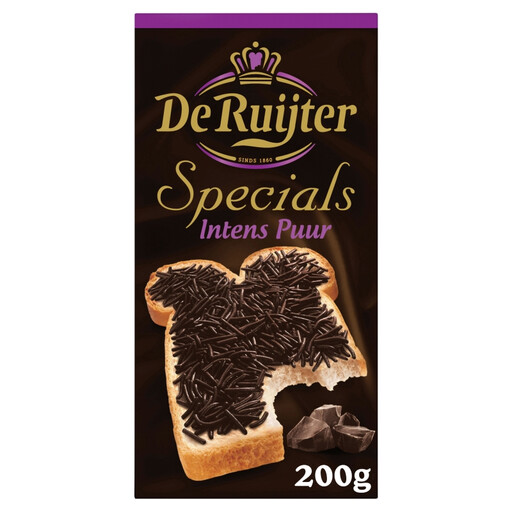 Image unavailable
De Ruijter Intense Dark chocolate sprinkles 200 g
If you want to decorate biscuits with sprinkles after baking, this is one option to consider.
200 g pack. If you need to avoid allergens, check the current information on milk and soya. If you want to mix the sprinkles into the dough, try a small amount first.
View at Joybuy
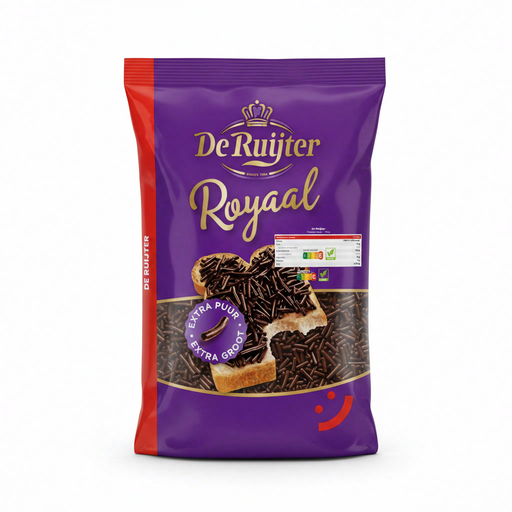 Image unavailable
De Ruijter Chocolate Chunks 390 g
If you’re considering a different shape of chocolate to decorate biscuits, these chunks are a separate option; they aren’t sprinkles.
390 g pack. Check that the shape suits your recipe and, if you need to avoid allergens, check the current packaging for milk and soya. If you want to mix them into the dough, try a small amount first.
View at Joybuy
Frequently asked questions
Does ‘dark’ mean chocolate sprinkles always have the same cocoa content?
No. According to the Jumbo and Albert Heijn product information, the variants reviewed list minimums of 32%, 35% and 40% cocoa solids. Check the percentage on the packaging for the exact variant rather than relying on the name alone.
Can you mix chocolate sprinkles into biscuit dough?
You can try them in your recipe, but a recommendation to use them in bakes doesn’t predict how a particular type of sprinkle will behave in your dough. If you’re trying a new product, bake a small test batch before making the whole recipe with it.
What should you check if you need to avoid milk or soya?
Read the ingredients and allergen information on the current packaging for the exact variant. The product information reviewed lists soya and possible milk traces for De Ruijter Chocoladevlokken Puur 200 g, possible milk traces for Jumbo Chocolade Vlokken Puur, and milk and lactose for AH Pure chocoladevlokken.
How should you store an opened pack of chocolate sprinkles?
Follow the storage instructions on the packaging. For the De Ruijter variant reviewed, Jumbo recommends storing it in a cool, dry place and gently pressing the pack closed after use; check the instructions for your exact product.


