
Anyone serving dessert after fish
You’re looking for chocolate flakes to add to yoghurt, a pudding or a bake after the savoury main course—not for the fish itself.


Choose dark chocolate flakes to serve as a separate dessert after a fish dinner, rather than automatically using them as a topping on the fish. To find the cocoa flavour you want, compare the stated minimum cocoa solids and check the ingredients and allergens on the packaging: the term ‘extra dark’ alone doesn’t tell you the minimum that applies to a particular product.
You’re looking for chocolate flakes to add to yoghurt, a pudding or a bake after the savoury main course—not for the fish itself.
You want to look beyond ‘dark’ or ‘extra dark’ and check the minimum cocoa solids and the ingredients list.
If someone at the table needs to avoid milk or soya, check the current packaging before using the flakes in dessert.
First, decide whether you’re looking for flakes to serve with a separate dessert. Then compare the cocoa information; if you have an allergy, checking the label is still essential.
| What to consider | What to check when buying | Who it matters to |
|---|---|---|
| How they fit into the meal | Choose flakes for a separate dessert. Use them on the fish only if you’re following a recipe that calls for this combination. | After a savoury fish dish, I want a sweet finish without sprinkling flakes over the main course. For around 42% of consumers, this is the top priority. |
| Cocoa flavour | Compare the stated minimum cocoa solids on the packaging, not just the name on the front. | For my dessert, I want to choose flakes with cocoa information I can compare. Around 33% of consumers give this top priority. |
| Ingredients and allergens | Read the current ingredients, allergen information and any warnings about traces of milk or soya. | If someone at the table needs to avoid milk or soya, I want to know whether the flakes are suitable before serving. This check matters most to around 25% of consumers. |
These chocolate flakes are described as a sweet spread or topping for things such as desserts and bakes. That doesn’t make them a common ingredient in a savoury fish dish.
Serve them with a separate dessert after the fish, or follow a recipe that deliberately combines chocolate with the fish dish.
The term doesn’t tell you the minimum cocoa solids stated for the specific product. A higher stated minimum also doesn’t necessarily mean you’ll prefer the flavour.
Check the percentage and ingredients on the current packaging, and choose what suits the dessert you have in mind.
Milk or soya is listed as an ingredient or may be present in the varieties described. So ‘dark’ is no substitute for checking the allergen information.
Before buying and serving, check the label on the exact pack you’re using.
The Netherlands Nutrition Centre advises that cooked food must not come into contact with raw fish. This also applies when you’re finishing a dessert after cooking.
Keep the dessert ingredients separate and use clean hands and utensils.
The dark and extra-dark chocolate flakes reviewed are intended as a sweet spread or for dessert. Albert Heijn states that De Ruijter Royaal extra dark contains at least 40% cocoa solids.
Albert Heijn describes AH Pure chocoladevlokken as suitable for uses including puddings and small cakes.
Jumbo states that its 300 g Chocolade Vlokken Puur contains at least 35% cocoa solids.
These Joybuy products are chocolate sprinkles for a separate sweet dish after the fish. If you’re specifically looking for chocolate flakes, check the product format on the packaging: chocolate sprinkles aren’t necessarily the same product.
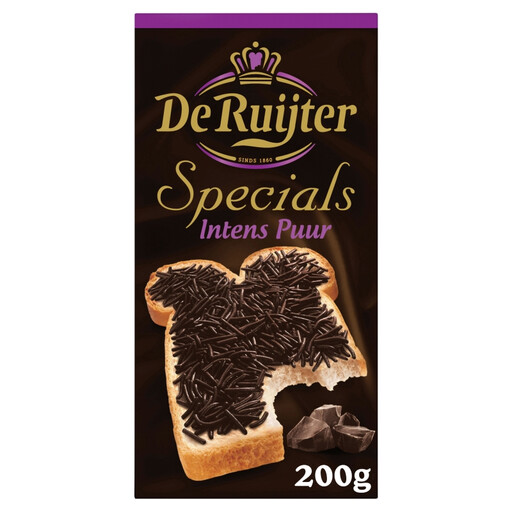 Image unavailable
An option to consider for a separate sweet dish after your fish dinner, rather than as a standard topping for fish.
The pack contains 200 g. Before serving, check the ingredients and allergens on the label, especially if someone needs to avoid milk or soya.
 Image unavailable
An option for anyone wanting to finish a separate dessert with chocolate sprinkles after the fish course.
The pack contains 390 g. If the cocoa content is important to your choice, compare the percentage stated on the current label and check the allergen information there too.
Not as a general choice for a savoury fish dish. The flakes described are intended as a sweet spread or dessert topping, so it’s better to serve them with a separate dessert unless you’re following a recipe that calls for combining them with fish.
No, the term alone doesn’t give you the percentage for the product you’re buying. If it matters for your dessert, compare the minimum cocoa solids stated on the packaging.
Seal the pack tightly and store it in a dry place, as advised by the Netherlands Nutrition Centre. Also follow the storage instructions on the packaging.
Check the label on the current packaging. The Netherlands Food and Consumer Product Safety Authority says allergen information for pre-packed products must be shown on the label; read both the ingredients and any warnings about traces.
Make sure the dessert, the flakes and the utensils you use for them don’t come into contact with raw fish. The Netherlands Nutrition Centre advises keeping prepared food separate from raw fish, so use clean utensils when finishing the dessert.