If you’re looking to serve flakes with a distinctly dark chocolate flavour around the Sinterklaas procession, De Ruijter Royaal Extra Puur is one option: PLUS describes this range as intense, although that isn’t an independent taste assessment. If you’d rather base your choice on a stated cocoa percentage, Jumbo says its dark chocolate flakes contain at least 35% cocoa solids. Compare pack sizes too, and always check the current label if you have any allergies to consider.
Who are dark chocolate flakes suited to?
Fans of a more intense dark chocolate flavour
You’re looking for flakes with a distinctly dark chocolate flavour for breakfast or brunch around the Sinterklaas procession. PLUS describes De Ruijter Royaal as an intense option; decide for yourself whether its flavour will suit your guests.
Hosts serving several people
You want enough dark chocolate flakes for several slices of bread or crispbreads. Jumbo and PLUS both list a 300 g pack, while PLUS lists De Ruijter Royaal at 240 g.
Shoppers who need to check allergens
Before serving, you need to know what the flakes contain and what warnings appear on the pack. Information about soya, milk and lactose varies by product; the word ‘dark’ doesn’t tell you either way.
What should you look for when choosing?
First decide whether a distinctly dark flavour, enough for your guests or the allergen information matters most. A cocoa percentage is a specific product detail, but it doesn’t, on its own, predict how someone will find the flakes.
| What to consider |
What should you check? |
Who should pay particular attention? |
| Dark chocolate flavour |
Check the stated minimum percentage of cocoa solids, and distinguish product positioning from a taste test. Jumbo states at least 35%; PLUS states at least 32% for its own dark chocolate flakes. |
For a breakfast for adults, I want to choose flakes with a distinctly dark flavour, rather than relying on the name alone. This flavour is the top priority for around 45% of consumers. |
| Pack size |
Compare the weight of the pack with the number of people you’re preparing breakfast or brunch for. |
If I’m laying out bread and crispbreads for several people, I want to know in advance whether one pack will be enough. Pack size is the first consideration for around 33% of consumers. |
| Allergens |
Check the current pack for both the ingredients and any ‘contains’ or ‘may contain’ statements. |
If someone at the table needs to avoid an ingredient, I want to check the packaging information before serving the flakes. This check is the top priority for around 22% of consumers. |
Common mistakes
-
Assuming ‘dark’ means free from milk or soya
According to PLUS, De Ruijter Royaal lists soya and carries a warning about possible traces of milk. Jumbo and PLUS also carry warnings about possible traces of milk; PLUS mentions lactose too.
Check the current label before buying and again before serving. If you have an allergy, don’t rely solely on the product name or a vegan claim.
-
Looking only at the front of the pack
A 240 g pack and a 300 g pack won’t provide the same amount of flakes for a shared breakfast.
Check the net weight and consider how many people will be eating before choosing a pack.
-
Choosing a supermarket product without checking the label
Lidl lists its 300 g Chocoladevlokken Puur as available in store only. So if you’re choosing based on ingredients or allergens, it’s important to check the pack itself.
Check the nutrition information and allergen details in store before buying these flakes for a specific dietary requirement.
Brands to consider
De Ruijter
PLUS describes Royaal Chocoladevlokken Extra Puur as a range for fans of an intense chocolate flavour.
- According to PLUS, the Royaal pack contains 240 g.
- The product listing mentions soya and possible traces of milk; check the current label.
Jumbo
Jumbo offers dark chocolate flakes in a 300 g pack.
- Jumbo states that this product contains at least 35% cocoa solids.
- According to the product listing, it may contain milk.
PLUS
PLUS own-brand dark chocolate flakes come in a 300 g pack.
- PLUS states that this product contains at least 32% cocoa solids and Fairtrade cocoa.
- The vegan claim doesn’t replace an allergen check: the pack warns of possible traces of milk and lactose.
Kiekeboe
ALDI lists Kiekeboe chocolate flakes in milk and dark varieties, in 300 g packs.
- ALDI states that the cocoa is Rainforest Alliance certified.
- If the cocoa percentage or allergens matter to your choice, check the pack of the dark variety in store.
Lidl
Lidl lists 300 g Chocoladevlokken Puur as an in-store product.
- The product name and pack size make it easy to identify which variety to look for in store.
- Check the ingredients, allergens and any cocoa information on the pack before choosing based on these details.
Dark chocolate flakes at Joybuy
For breakfast or brunch around the Sinterklaas procession, this selection features a De Ruijter variety described as intensely dark. Check its packaging and current label separately from the other varieties listed above for reference.
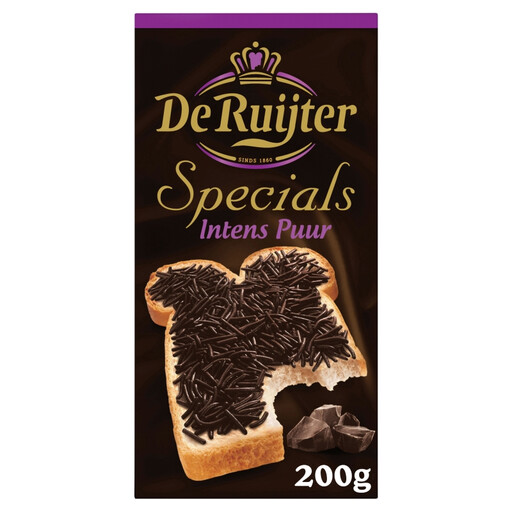 Image unavailable
De Ruijter Intense Dark Chocolate Sprinkles 200 g
An option if you’re looking for flakes described as intensely dark for your Sinterklaas breakfast.
The pack contains 200 g. Check the current label before serving, particularly if you need to consider milk or soya.
View at Joybuy
Frequently asked questions
Do all dark chocolate flakes taste equally dark?
You can’t tell from the word ‘dark’ alone. Jumbo states that its dark flakes contain at least 35% cocoa solids, while PLUS states at least 32% for its own variety. These are specific product details, not the results of a taste test. PLUS describes De Ruijter Royaal as intense.
Can I serve dark chocolate flakes to someone with a milk or soya allergy?
Make that decision for each product based on its current label, not the word ‘dark’. According to the product listings, De Ruijter Royaal contains soya and may contain milk; Jumbo may contain milk, while PLUS warns of possible traces of milk and lactose.
Where can I find allergen information on packaged flakes?
According to the Netherlands Food and Consumer Product Safety Authority, allergen information must appear on the label of prepacked foods in the Netherlands. Check the pack you’re actually going to serve, even if you’ve bought the product before.


