
Bakers looking for a richer chocolate flavour
You want to finish cupcakes, brownies or other school fair treats, and compare the stated cocoa percentage rather than relying on the word ‘dark’ alone.


When choosing dark chocolate flakes for a school fair, look at the stated minimum cocoa solids percentage rather than relying on the word ‘dark’ alone. According to product listings from Albert Heijn and PLUS, the standard dark flakes from AH, De Ruijter and PLUS each contain at least 32% cocoa solids. That percentage alone won’t tell you exactly how your baking will taste. Check the ingredients for the variety you choose and for your finished bake, too, as dark flakes aren’t automatically milk-free.
You want to finish cupcakes, brownies or other school fair treats, and compare the stated cocoa percentage rather than relying on the word ‘dark’ alone.
You’re selling homemade bakes and want to know which allergens are in the topping and other ingredients for each bake, including any relevant warnings on the packaging.
You need topping for several bakes and want to choose a pack size that suits what you’re making. Storage instructions also matter if you won’t use everything at once.
First decide what flavour you’re looking for, then check the allergens in your finished bake and choose a suitable amount of topping.
| What to consider | What to check when buying | Who it matters to |
|---|---|---|
| Rich flavour and cocoa content | Compare the minimum cocoa solids percentage on the current packaging and read the ingredients list. A name such as ‘intense’ doesn’t indicate an exact percentage. | If I want to give my bake a more pronounced chocolate flavour, I look for a variety whose cocoa content I can compare, without assuming a particular flavour from the percentage. This flavour choice comes first for around 39% of consumers. |
| Allergens in the finished bake | Check the exact packaging for allergens and warnings, and include all the other ingredients in your finished product. | When selling homemade bakes, I want to be able to answer questions about the ingredients in each one. Around 38% of consumers say allergen information is their top priority. |
| Quantity and storage | Compare the pack size with the number of bakes you’ll be decorating, and follow the storage instructions on the packaging. | When preparing several trays, I want to have enough topping without guessing how much I’ll need. Getting the quantity right is the top priority for around 23% of consumers. |
According to listings from Albert Heijn and PLUS, the standard dark flakes from AH, De Ruijter and PLUS each contain at least 32% cocoa solids. An Albert Heijn listing for De Ruijter Royaal Extra Puur states at least 40%, but the product is marked as discontinued there. The product name alone doesn’t make the varieties comparable.
Compare the specific minimum percentage on the pack you’re actually buying. Read the ingredients, too, if you’re looking for a particular flavour.
According to Albert Heijn, AH dark chocolate flakes contain milk ingredients; De Ruijter Puur contains soya and may contain milk. PLUS warns that its dark variety may contain milk and lactose.
Check the packaging for the variety you’re using, and don’t describe it as ‘dairy-free’ without checking the other ingredients and how the bake is prepared, too.
A cupcake or brownie contains more than just the chocolate flakes on top. So a list covering only the topping doesn’t describe the bake you’re offering.
Make an ingredients and allergens list for each finished product, and keep the packaging for the ingredients you’ve used to hand. Also consider whether cross-contamination could occur during preparation.
Albert Heijn states that its 200 g pack of De Ruijter Chocoladevlokken Puur contains at least 32% cocoa solids.
Albert Heijn lists its own-brand dark chocolate flakes in a 300 g pack, containing at least 32% cocoa solids.
PLUS lists 300 g packs of dark chocolate flakes containing at least 32% cocoa solids.
ALDI Netherlands lists Kiekeboe chocolate flakes in milk or dark varieties, in a 300 g pack.
These products are chocolate toppings for baking, but they’re not the same product type: Chocolate Chunks are pieces, while Hail Chocolate Pure is described as a dark chocolate topping. If you’re specifically looking for flakes for a school fair, check the product type and cocoa percentage on the pack you choose.
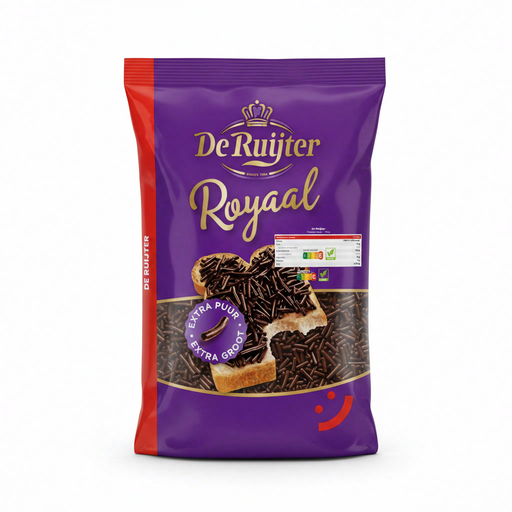 Image not available
For anyone who wants to finish bakes with chocolate pieces rather than flakes. If cocoa content is important to your flavour choice, check the percentage on the current packaging.
390 g pack. When compiling allergen information, take milk and soya into account and check the warnings on the packaging.
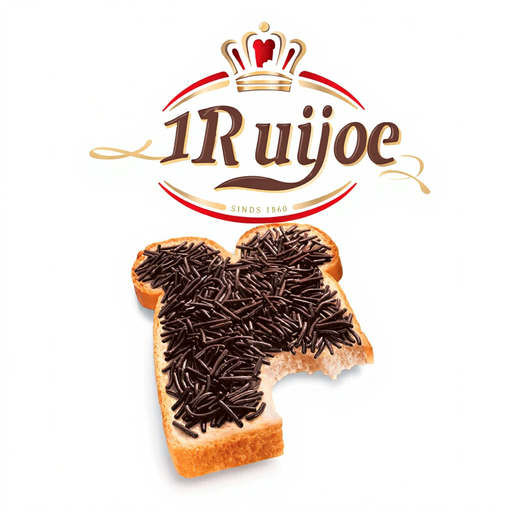 Image not available
For anyone looking to top bakes with dark chocolate sprinkles. Before comparing this variety’s cocoa content with other products, check the minimum percentage on the current packaging.
390 g pack. When compiling allergen information for your finished bake, take milk and soya into account and check the current packaging.
No. ‘Dark’ doesn’t automatically mean milk-free. Albert Heijn lists milk and lactose for AH Pure; De Ruijter Puur may contain milk, and PLUS Puur may contain milk and lactose. Always check the packaging for the variety you’re using.
Keep a list of the ingredients used and their allergens for each bake, not just the flakes. Keep the packaging so you can check warnings, and consider possible cross-contamination during preparation. The Netherlands Food and Consumer Product Safety Authority states that allergen information for prepacked products must appear on the label.
Store them in a cool, dry, dark place and seal the pack after use. Follow the storage instructions and use-by or best-before information on the packaging you bought.