Looking for dark chocolate flakes to go with your morning coffee? First compare the stated minimum cocoa content, then check the nutritional information and ingredients. Jumbo states that its dark flakes contain at least 35% cocoa solids; the De Ruijter, AH and PLUS dark varieties reviewed contain at least 32%. This difference doesn’t tell you how sweet the flakes will taste, and it’s no substitute for checking the sugars and allergens on the current packaging.
Who is this choice relevant to?
The word ‘dark’ doesn’t tell you everything about the cocoa content, ingredients or pack size. Which details matter most depends on how you use the flakes.
Coffee drinkers choosing by cocoa content
If you’re looking for a pronounced cocoa flavour to go with your morning coffee, compare the minimum cocoa content on the packaging rather than relying on the word ‘dark’ alone. The standard varieties reviewed state that they contain at least 32% or 35% cocoa solids. Even with a higher percentage, taste is a matter of personal preference.
People who eat flakes regularly
If you also use flakes on bread, yoghurt or porridge, choose a pack size that suits how often you use them. The products reviewed come in 200 g and 300 g packs.
Shoppers checking ingredients and allergens
If you prefer plant-based foods or need to avoid certain ingredients, ‘dark’ is no substitute for checking the ingredients list. The varieties reviewed differ in how they list milk, lactose and soya, including warnings that they may contain milk.
What should you look for when choosing?
Start with the cocoa content if that’s why you’re choosing dark flakes to go with your coffee. Then compare the nutritional information and ingredients, and decide which pack size suits the way you use them.
| What to consider |
What to check when buying |
Who should consider this? |
| Cocoa content |
Check the stated minimum percentage of cocoa solids. If you’re looking for a specific extra-dark variety, check the current packaging. |
I’m looking for a pronounced cocoa flavour with my coffee and don’t want to rely on the name ‘dark’ alone; around 33% of consumers put cocoa content first. |
| Sugars and nutritional information |
Compare sugars and other nutritional values per 100 g; don’t infer them from the cocoa percentage. |
If I’m considering different dark flakes, I want to know what the nutritional information actually says; around 25% of consumers prioritise this comparison. |
| Ingredients and allergens |
Read the ingredients list and any ‘contains’ or ‘may contain’ statements on the current pack. |
If I prefer plant-based foods or need to avoid an ingredient, I want to be able to check the label; around 25% of consumers make this a priority. |
| Pack size and storage |
Choose a pack size that suits how you use the flakes, and follow the storage and sealing instructions on the packaging. |
If I only use flakes occasionally, I want a pack that suits how I use them and can be sealed properly; around 17% of consumers consider this first. |
Common mistakes
-
Treating ‘dark’ and ‘extra dark’ as the same thing
The word ‘dark’ doesn’t indicate a fixed cocoa percentage. The standard varieties reviewed state that they contain at least 32% or 35% cocoa solids. Albert Heijn states that De Ruijter Royaal extra dark contains at least 40%, but also marks this variety as discontinued.
Check the minimum cocoa content on the pack you actually want to buy, and check availability if you’re specifically looking for extra-dark flakes.
-
Assuming more cocoa automatically means less sugar
Jumbo states that its dark flakes contain at least 35% cocoa solids and 63,7 g of sugars per 100 g. The De Ruijter flakes reviewed, which contain at least 32%, state that they contain 63 g of sugars per 100 g. The cocoa percentage alone therefore doesn’t tell you how much sugar the product contains.
Compare the nutritional information per 100 g for the specific products you’re considering.
-
Skipping the allergen information because the product is labelled ‘dark’
According to Albert Heijn, AH Dark Chocolate Flakes contain milk and lactose. The De Ruijter variety reviewed contains soya and may contain milk; Jumbo and PLUS also state that their dark varieties may contain milk.
Check the current label every time you buy, even if a product is labelled vegan.
Brands compared
These brand examples cover the specific dark varieties mentioned, not a brand’s full range. Always check the details on the pack you choose.
De Ruijter
The standard Chocoladevlokken Puur variety reviewed comes in a 200 g pack and contains at least 32% cocoa solids.
- A smaller pack than the AH, Jumbo and PLUS packs reviewed.
- According to Albert Heijn, this standard variety contains soya and may contain milk. Don’t assume the same cocoa content applies to other De Ruijter varieties.
AH
AH Dark Chocolate Flakes come in a 300 g pack and contain at least 32% cocoa solids.
- The pack size and minimum cocoa content are listed on Albert Heijn’s product page.
- According to Albert Heijn, this variety contains milk and lactose; ‘dark’ doesn’t mean dairy-free here.
Jumbo
Jumbo Chocolade Vlokken Puur comes in a 300 g pack and, according to Jumbo, contains at least 35% cocoa solids.
- Its stated minimum cocoa content is higher than the 32% in the standard De Ruijter, AH and PLUS varieties reviewed here.
- Jumbo states that it contains 63,7 g of sugars per 100 g and may contain milk. The higher cocoa content doesn’t replace these checks.
PLUS
PLUS Chocoladevlokken puur Fairtrade come in a 300 g pack and contain at least 32% cocoa solids.
- PLUS labels this variety vegan.
- The same product information states that it may contain milk and lactose. So the vegan label doesn’t answer every question about allergens.
Kiekeboe
ALDI Nederland lists Kiekeboe chocolate flakes in milk and dark varieties, in a 300 g pack.
- The dark variety is listed separately from the milk variety.
- Check the pack you choose for the ingredients, allergens and cocoa content of the dark variety.
Dark chocolate sprinkles on Joybuy
These two De Ruijter products are labelled as dark chocolate sprinkles and come in different pack sizes. If you’re specifically looking for chocolate flakes to go with your morning coffee, also check the product format and cocoa content on the current label; the details for the supermarket varieties above don’t necessarily apply to these products.
 No image available
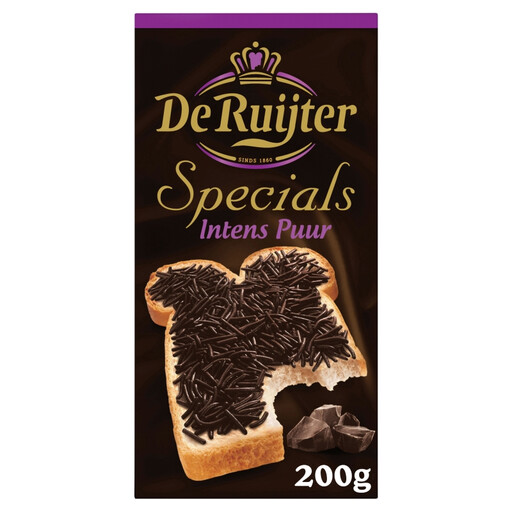
De Ruijter Intense Pure Chocolate Sprinkles – 200 g
An option if you’re looking for dark chocolate sprinkles in a 200 g pack to enjoy with your coffee. Before choosing this variety as chocolate flakes, check the stated cocoa content, ingredients and allergens on the current packaging.
View on Joybuy
 No image available
De Ruijter Hail Chocolate Pure – 390 g
An option if you’d like dark chocolate sprinkles in a 390 g pack. Check that the product format suits your preference for flakes, and read the cocoa content and allergen information on the current packaging.
View on Joybuy
Frequently asked questions
Does a higher cocoa percentage automatically mean less sugar?
No. Jumbo states that its dark flakes contain at least 35% cocoa solids and 63,7 g of sugars per 100 g; the De Ruijter variety reviewed, with at least 32%, states that it contains 63 g of sugars per 100 g. So compare the cocoa content and nutritional information separately.
Are dark chocolate flakes always vegan or dairy-free?
No. According to Albert Heijn, AH Dark Chocolate Flakes contain milk and lactose. PLUS labels its dark flakes vegan, but also states that they may contain milk and lactose. Always check the ingredients and allergen information on the current pack before choosing.
Where can I find allergen information for packaged flakes?
Check the ingredients list and allergen information on the packaging. The Netherlands Food and Consumer Product Safety Authority states that allergens must be clearly listed on the labels of prepacked foods; the product name ‘dark’ is no substitute for this information.
How should I store an opened pack of chocolate flakes?
Follow the storage instructions on the pack and seal it properly after use. When choosing a pack size, consider how often you use the flakes.


