
Fans of a pronounced chocolate flavour
You’re looking for a cookie to enjoy with coffee, yoghurt or fruit, and want to know whether ‘dark’ is just a flavour description or whether the amount of chocolate or its cocoa percentage is also stated.


If you’re looking for a dark chocolate flavour to enjoy with a sweet breakfast, first choose a cookie that tells you what kind of chocolate it contains. The percentage of dark chocolate pieces refers to the proportion of the cookie they make up, not the cocoa percentage of the chocolate itself. Then compare the nutritional information per serving and check the latest allergen information on the packaging.
You’re looking for a cookie to enjoy with coffee, yoghurt or fruit, and want to know whether ‘dark’ is just a flavour description or whether the amount of chocolate or its cocoa percentage is also stated.
You have a cookie as a sweet part of your breakfast, so you compare the serving size, sugars and saturated fat in the nutritional information.
You need the latest ingredients and allergen information before choosing a chocolate cookie; a flavour name or plant-based positioning isn’t enough.
Start by distinguishing between chocolate flavour, the amount of chocolate in the cookie and the cocoa percentage of that chocolate. Then decide which of the points below matters most for your breakfast.
| What to consider | What to check | Who it matters to |
|---|---|---|
| Dark chocolate flavour | Check whether the amount of dark chocolate is stated. If a minimum cocoa percentage matters to you, look for that separately. | I’m looking for a clear dark chocolate component, not just a flavour name. For around 29% of consumers, checking the chocolate comes first. |
| Serving size and nutritional information | Compare sugars, fat, fibre and energy per serving and per 100 g. | If I have a cookie with breakfast, I want to know what my usual serving adds. Around 29% of consumers put serving size and nutritional information first. |
| Ingredients and allergens | Read the ingredients and allergen information on the latest packaging, including any warnings about traces. | I need to check which ingredients and allergens are relevant to me before choosing a flavour. For around 24% of consumers, checking the label comes first. |
| Availability | Check whether you can order your chosen cookie online or whether it’s only available in store. | I want to be able to find a suitable cookie through a shopping option I can use. Availability matters most to around 18% of consumers. |
Jumbo states that its Chocolate Cookies contain 40% dark chocolate pieces. This describes the proportion of pieces in the cookie, not how much cocoa the chocolate itself contains.
If a particular cocoa percentage matters to you, look for it separately on the packaging.
A dark chocolate flavour tells you nothing about the nutritional profile. The Netherlands Nutrition Centre points out that biscuits are generally high in calories and low in nutrients such as vitamins, minerals and fibre.
Think about how many cookies you actually eat, then compare the nutritional information for that serving with the rest of your breakfast.
‘Dark’ or a plant-based product description doesn’t tell you which allergens are present or which traces may be present. The Koeckebackers cookie reviewed lists wheat and soya, along with warnings about other possible allergens.
Check the latest ingredients and allergen information on the packaging before buying.
Jumbo’s product page stated that the Koeckebackers cookie reviewed was no longer part of its online range. Lidl described its Double chocolate cookie as an in-store product.
Check shortly before buying whether the cookie is available through your chosen shopping option.
Worth considering if you want to compare cookies that explicitly state the proportion of dark chocolate pieces.
A dark chocolate cookie to consider if you’re also looking for a plant-based product description.
A useful comparison if you’re also considering cookies that combine milk and dark chocolate.
An in-store option if you’d like to try a cookie with different types of chocolate.
Worth considering if you’re looking for a multipack with a mix of chocolate types.
A different flavour option if you’d rather have a caramelised biscuit with breakfast.
These cookies are described as having a dark chocolate flavour. Use the name as a starting point, and check the packaging if the amount of dark chocolate, nutritional information or allergens will influence your choice.
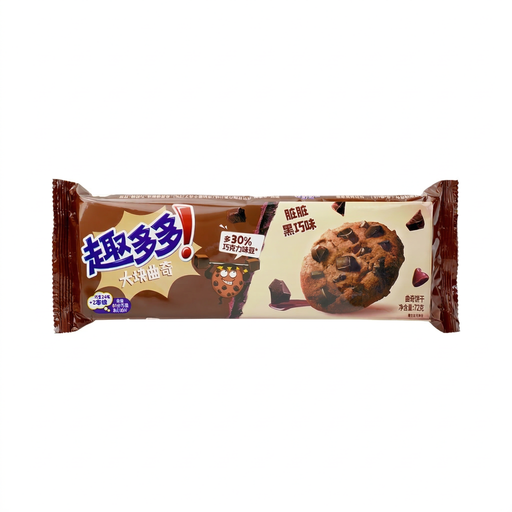 No image available
An option if you’re looking for a cookie described as having a dark chocolate flavour to enjoy with a sweet breakfast.
The flavour name doesn’t confirm the proportion of dark chocolate or the cocoa percentage. Check the packaging for allergen and nutritional information too, based on the serving you plan to eat.
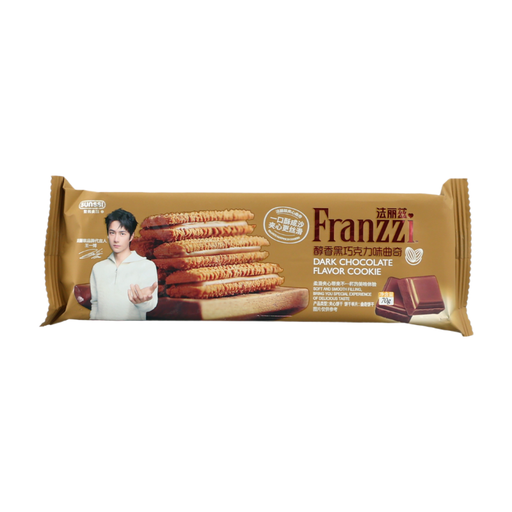 No image available
An option if you’d like a cookie described as having a dark chocolate flavour with breakfast.
Check the packaging if you want to compare the amount of chocolate or its cocoa percentage. Also check the sugars, fat and allergens that matter to you.
Look on the packaging for an explicit percentage of dark chocolate or dark chocolate pieces. For example, Jumbo states that its Chocolate Cookies contain 40% dark chocolate pieces; this isn’t the same as the cocoa percentage of that chocolate. If the cocoa percentage is what matters most to you, look for it separately.
Yes, you can choose a cookie as a sweet part of your breakfast, but its dark flavour doesn’t tell you anything about its nutritional value. The Netherlands Nutrition Centre points out that biscuits are generally high in calories and low in nutrients such as vitamins, minerals and fibre. So consider your portion and what else you’re eating.
Check the allergen information and any warnings about traces on the latest packaging. The Koeckebackers cookie reviewed lists wheat and soya and warns about other possible allergens; don’t assume the same applies to a different cookie or pack.
Follow the storage instructions on the packaging of your cookies. For the Chocolate Cookies reviewed, Jumbo recommends storing them in a cool, dry place and sealing the packaging well after opening; instructions may vary by product.
Check the label on the latest packaging. The Netherlands Food and Consumer Product Safety Authority states that allergen information must be shown on the label of pre-packed food, and that the ingredients list and nutritional information are also required label details.