What should you look for when choosing?
If you need to avoid an allergen, start with the label on the pack you’re planning to buy. Then compare the stated cocoa content and pack size with what you’re looking for in your weekly shop.
| What to look for |
What to check when buying |
Who is this most important for? |
| Cocoa and chocolate coating |
Look for an explicitly stated cocoa percentage for the chocolate. Distinguish this from the proportion of chocolate in the biscuit as a whole. |
I want to be able to assess the cocoa content of a biscuit, even if that means choosing a smaller pack. This is the top priority for around 42% of consumers. |
| Pack size and servings |
Check the net weight, any stated serving information and the storage advice after opening. |
My pack should suit several coffee or tea breaks, without me opening more than I’d usually finish. This is the main consideration for around 33% of consumers. |
| Ingredients and nutritional information |
Read the latest allergen information and, if you wish, compare sugars and saturated fat per 100 g and per serving. |
Before choosing a biscuit, I need to be able to check which ingredients and allergens it contains. This label check is the top priority for around 25% of consumers. |
Brands to compare
Compare specific biscuit varieties: pack weight, chocolate coating and biscuit type can vary within the same brand.
Albert Heijn
The own-label range includes both a smaller biscuit with a high proportion of dark chocolate and a larger pack of sugar-coated biscuits.
- Albert Heijn lists AH Zaans huisje pure chocolade in a 125 g pack with 63% dark chocolate. According to Albert Heijn, AH Gesuikerde biscuits pure chocolade contains 400 g of biscuits with a 27% dark chocolate coating.
- These percentages describe the proportion of chocolate in the biscuit, not the cocoa percentage of the chocolate. Also check the label of the specific variety before choosing.
Jumbo
The own-label range includes several types of dark chocolate biscuits, including digestives.
- Jumbo lists its Digestive Biscuit Pure Chocolade in a 300 g pack and states that the product contains 30% dark chocolate.
- Here too, the proportion of chocolate is not the same as the cocoa content of that chocolate. Check the ingredients and allergens on the pack you choose.
Lotus Biscoff
A speculoos biscuit with a dark chocolate coating offers a different flavour from a biscuit chosen mainly for its cocoa content.
- Jumbo’s product description lists Lotus Biscoff speculoos koek pure chocolade in a 162 g pack, with a dark chocolate coating.
- Jumbo says on this product page that the product is no longer part of its online range. Check availability at the shop where you do your shopping.
Verkade
A brand worth comparing with own-label biscuits, as long as you check the exact variety.
- Verkade includes Chocolate Chip Melk & Puur in its biscuit range.
- You can’t apply the cocoa percentage of a Verkade chocolate bar to its biscuits. Check the information on the pack of the biscuit you choose.
Dark chocolate biscuits at Joybuy
This pack of dark chocolate digestives is an option if you want to have biscuits at home for several occasions during the week. Use the pack weight and the latest label to decide whether this variety suits how you’ll enjoy it and your ingredient preferences.
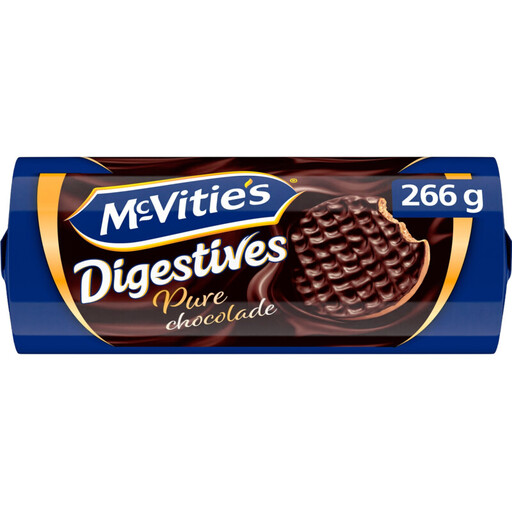 Image unavailable
McVitie's Digestives with dark chocolate, 266 g
For anyone looking to add dark chocolate digestives to their weekly shop. The pack contains 266 g; check the pack for ingredients, allergens and any cocoa information that may affect your choice.
View at Joybuy
Frequently asked questions
Does ‘dark chocolate’ on a biscuit mean it contains a lot of cocoa?
No, that description doesn’t tell you how much cocoa the chocolate in the biscuit contains. The Netherlands Nutrition Centre defines dark chocolate as chocolate containing at least 35% cocoa; a statement such as ‘63% dark chocolate’ may instead refer to the proportion of chocolate in the biscuit as a whole. Look for a separate cocoa percentage to check the cocoa content.
How should I store an opened pack of chocolate biscuits during the week?
Follow the storage advice on the packaging and seal the pack securely after opening. The Albert Heijn and Jumbo product examples described recommend storing the biscuits in a cool, dark and dry place; check the instructions on your pack.
Can a dark chocolate biscuit contain milk, wheat or soya?
Yes, these ingredients may be found in dark chocolate biscuits. Check the ingredients and allergen information on the latest pack, including any ‘may contain’ warnings. According to the Netherlands Food and Consumer Product Safety Authority, allergens must be clearly stated on the labels of prepacked foods.
Does ‘dark’ tell you anything about the sugar and fat in a biscuit?
No, the word ‘dark’ doesn’t indicate these nutritional values. Compare the stated sugars and saturated fat per 100 g; use the per-serving information if you want to see what the stated serving size contains.


