
Parents keeping school policies and allergies in mind
You want to know what the school allows and which allergens are listed on the chosen pack before putting a biscuit in the treat bags.


A small biscuit with pieces of dark chocolate or a chocolate coating could work as a children’s treat if the group is familiar with that flavour and the school’s policy and the current label support your choice. Don’t make a particularly bitter variety the default for a group you don’t know. Also check the size and how allergen information will be available when you hand the treats out.
You want to know what the school allows and which allergens are listed on the chosen pack before putting a biscuit in the treat bags.
You’re looking for a familiar biscuit with dark chocolate pieces or a chocolate coating, without assuming every child will enjoy a particularly bitter flavour.
You want a suitable size and enough portions. You’ll also need to check whether individual wrapping is necessary and how to keep the information on the pack available when handing the treats out.
Start with the rules for handing out treats and the group’s allergens. Then compare the chocolate flavour, size and type of biscuit you want to include.
| What to consider | What should you check? | Who is it important for? |
|---|---|---|
| School policy and allergens | Ask what you’re allowed to hand out and check the ingredients and allergens on the current pack. | If a child in the group has an allergy or the school restricts treats, I want to avoid having a treat bag that can’t be handed out. Around 33% of consumers would put this check at the top of their list of buying concerns. |
| Dark chocolate flavour | Check whether ‘dark’ describes the pieces or the coating. Look for a specific cocoa percentage on the pack if that matters to your choice. | If I don’t know the group’s taste preferences well, I don’t want to choose an especially bitter biscuit by mistake. This flavour consideration comes first for roughly 27% of consumers. |
| Portion size and handing out | Compare the size, number of biscuits and whether they’re individually wrapped. | I want to fill each treat bag easily without choosing a biscuit that’s too large. This is the main consideration for around 20% of consumers. |
| Type of biscuit | Compare a mini cookie, biscuit or another type of biscuit based on the pack, not just the brand name or the word ‘dark’. | If I’m choosing between different biscuits, I want to know which type will suit the treat bag. The type of biscuit is the deciding factor for around 20% of consumers. |
Voedingscentrum explains that bitter and extra bitter chocolate often contain a lot of cocoa, but there’s no legally defined cocoa percentage for these descriptions. With biscuits, ‘dark’ may also describe only the chocolate pieces or coating.
If you’re specifically looking for a high cocoa percentage, check which percentage is stated on the chosen pack. Otherwise, assess the flavour and size without assuming that the word ‘dark’ indicates a particular percentage.
According to Voedingscentrum, a school can set rules about what may and may not be handed out. The allergens on the pack also matter for the children you plan to give the biscuits to.
Ask about the school’s policy in advance, then check the label on the specific pack you’re planning to take in.
If you’re not allowed to hand out the biscuits you’ve chosen, you may have to put the filled treat bags together again.
Albert Heijn points out that ingredients and allergen information can change. The number of biscuits and the way they’re packaged also need to suit how you plan to hand them out.
Use online range information to compare biscuit types, then check the information on the pack you’ll actually be using before you fill the bags.
These brands offer a range of biscuit types. For a children’s treat, always compare the specific variety you’ve chosen and the current pack, not just the brand name.
Jumbo offers, among other things, mini chocolate chip biscuits with dark chocolate pieces, cookies and biscuits with dark chocolate.
The range includes biscuits and pretzels with dark chocolate, as well as LU Scholiertje Puur.
Jumbo lists LU Scholiertje Chocolade Koekjes Puur in a 2 × 75 g pack.
Lotus describes The Original Speculoos as a crisp biscuit with a caramelised aroma: a different flavour from a biscuit with dark chocolate.
This biscuit has a dark chocolate flavour and is one option to consider for a treat bag. Before dividing up the biscuits, check how many are in the pack, how they’re wrapped and whether the label is suitable for the group.
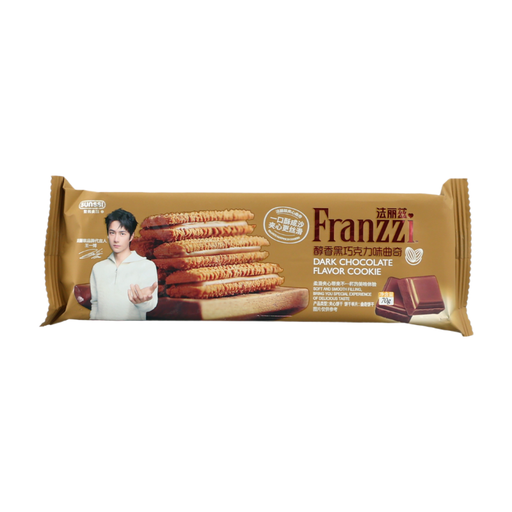 Image unavailable
A biscuit to consider if you’d like a dark chocolate flavour in a treat bag. Check the cocoa percentage on the pack if you’re specifically looking for a high-cocoa variety, and see how many individual portions you can make from it.
The product description lists wheat (gluten), milk and egg, and may also include soya. Check the current label and make sure your choice fits the school or childcare setting’s policy and the group’s allergies.
No. The word ‘dark’ alone doesn’t tell you the cocoa percentage of the whole biscuit. Voedingscentrum explains that even the descriptions ‘bitter’ and ‘extra bitter’ have no legally defined cocoa percentage; on a biscuit, ‘dark’ may also refer to the chocolate pieces. If the percentage matters to your choice, check the pack.
Yes, ask about the group’s treat policy first. According to Voedingscentrum, the school can set rules about how birthdays are celebrated and what may or may not be handed out. Then check that the label on your chosen biscuits is suitable for the group.
No, use the label on the pack you’re actually buying. Albert Heijn warns that ingredients and allergen information can change, so an older product page is no substitute for checking the pack itself.
No, Lidl says it doesn’t have an online list of ingredients, allergens and nutritional values for its food products. So check the pack of the specific biscuit before choosing it for a group.