Choose a biscuit that suits your drink and how you want to serve it: a biscuit with a dark chocolate coating for a crisp bite, a digestive if you want to compare nutritional information, or a speculaas or butter biscuit for a different flavour combination. If you’re specifically looking for a high cocoa content, don’t rely on the word ‘dark’ or the proportion of chocolate in the biscuit alone. Check whether a cocoa percentage is given for the chocolate itself.
Who might find this choice relevant?
Fans of a pronounced dark chocolate flavour
You’re looking for a distinct chocolate flavour to enjoy with coffee, tea or another drink. Check whether the packaging gives a cocoa percentage for the chocolate; ‘dark’ on its own doesn’t tell you how high that percentage is.
Terrace-goers who want to share biscuits
You want biscuits that are easy to serve individually or take with you. In that case, the number of biscuits, portion size and any individual wrapping are all worth considering.
Shoppers who check ingredients and allergens
You want to read the information for the exact variant you’ve chosen before serving or eating it. A biscuit with dark chocolate isn’t automatically free from milk, wheat or soya.
What should you look for when choosing?
First decide which combination of chocolate and biscuit you’d like. Then compare the packaging, nutritional information and ingredients of the options you’ve shortlisted.
| What to consider |
What to check when buying |
Who is this important to? |
| Chocolate flavour |
Look for an explicit cocoa percentage for the chocolate. Don’t confuse this with the proportion of chocolate or chocolate coating in the whole biscuit. |
If you’re looking for a pronounced dark chocolate flavour, you’ll want to know what the packaging says about the chocolate itself. For around 36% of consumers, flavour is the main priority. |
| Type of biscuit |
Compare biscuits, digestives, speculaas and butter biscuits by their ingredients and nutritional information per 100 g. Also consider the texture and spices you prefer. |
You’ll want a biscuit with a texture and flavour you enjoy alongside your coffee or tea. Around 29% of consumers give this combination top priority. |
| Sharing and storage |
Check the number of biscuits, portion size and storage instructions after opening. |
You may want to share the biscuits without leaving a large pack open. This is the main consideration for around 21% of consumers. |
| Ingredients and allergens |
Read the current ingredients, allergen information and any warnings about cross-contamination on the packaging. |
If you need to avoid an allergen, you’ll want to check the exact variant before choosing it. Around 14% of consumers make checking the label their top priority. |
Common mistakes
-
Confusing the proportion of chocolate with its cocoa percentage
Jumbo lists 63% chocolate for its dark chocolate biscuits, while Albert Heijn lists a 27% dark chocolate coating for its sugar-topped biscuits. These percentages describe the proportion of the biscuit made up by chocolate, not the amount of cocoa in the chocolate.
Is a particular cocoa content a deciding factor for you? Look for a separate cocoa percentage for the chocolate on the packaging or in the product information.
-
Assuming ‘dark’ tells you anything about allergens
The variants described by Jumbo, Albert Heijn, Lotus Biscoff and LU list ingredients including milk, wheat or soya. Some variants also carry a warning that other allergens may be present.
Each time you buy, check the allergen information and any ‘may contain’ statement on the packaging you’re actually using.
-
Relying on an online product page alone
Ingredients and nutritional information can change. Albert Heijn notes in its product information that dietary and allergy details may also change.
Use the product page to compare variants, then check the label on the pack you’ve bought before serving or eating.
-
Opening a large pack without a storage plan
For its sugar-topped biscuits with dark chocolate, Albert Heijn recommends storing them in a sealed tin after opening. Jumbo advises resealing its dark chocolate biscuits properly.
If you’re serving just a few biscuits, check in advance how to store the rest according to the packaging.
Brands to compare
Jumbo
Jumbo describes both dark chocolate biscuits and a digestive with dark chocolate.
- The chocolate biscuits list 63% chocolate; the digestive lists 30% dark chocolate, 4,1 g of fibre and 27,4 g of sugars per 100 g.
- The proportion of chocolate isn’t a cocoa percentage. Check the allergen information on the packaging for both variants too.
Albert Heijn
The sugar-topped biscuits with dark chocolate combine a biscuit with a chocolate coating and decorative sugar.
- Albert Heijn lists a 27% dark chocolate coating and a 400 g pack.
- The stated proportion of chocolate coating doesn’t give a separate cocoa percentage. Check the latest information, including details of milk, wheat and soya.
Lotus Biscoff
A speculaas option for anyone who’d like a spiced biscuit alongside their chocolate.
- Lotus Bakeries Nederland lists a dark chocolate variant in a pack of 7 × 3 biscuits; the ingredients include cinnamon.
- The stated 22% chocolate isn’t a separate cocoa percentage. The variant described contains ingredients including wheat, milk and soya.
LU
LU Scholiertje puur is a butter biscuit topped with a separate piece of dark chocolate.
- The variant described by Albert Heijn lists 52% butter biscuit and 48% dark chocolate, and is wrapped in pairs.
- If nutritional information and allergens matter to your choice, compare the details for this exact variant.
ALDI / Biscotto
According to ALDI Nederland, Biscotto Sprenkeltjes biscuits are available with dark or milk chocolate.
- For the pack described, ALDI lists a weight of 400 g and around 30 biscuits.
- Check which chocolate variant you’re choosing and read the ingredients and allergen information on the current packaging.
Lidl / Sondey
Sondey is a broad range of Lidl biscuits, not the name of one specific dark chocolate biscuit.
- The range includes different types of biscuits and cookies to explore individually.
- Assess any dark chocolate variant by its own packaging; a feature of the range won’t necessarily apply to every biscuit.
Verkade
Verkade includes Chocolate Chip Melk & Puur in its biscuit range.
- This is a variant worth comparing by ingredients and type of chocolate if you’re looking for chocolate biscuits.
- The name Melk & Puur doesn’t, on its own, confirm a high cocoa content or that the biscuits contain only dark chocolate.
A product on Joybuy
If you’re considering a Scholiertje to enjoy with coffee or tea, check the product format and type of chocolate for this Joybuy variant. The name alone doesn’t confirm that it’s the same dark chocolate variant as the one in the brand comparison.
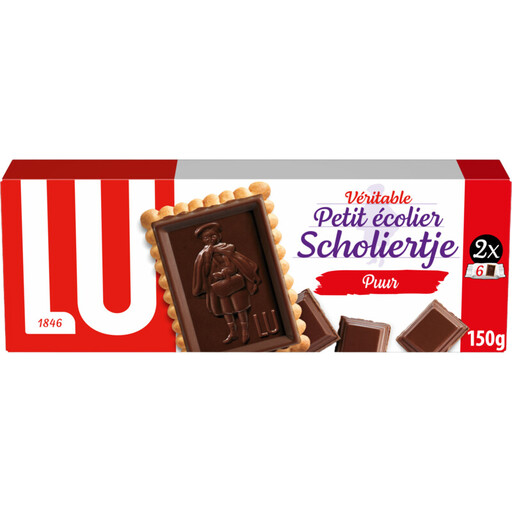 Image unavailable
LU Scholiertje Chocolate 150 g
An option to consider if you’d like to serve a Scholiertje with coffee or tea. Before buying, check whether this Chocolate variant has the biscuit format and dark chocolate you’re looking for. If you have specific requirements for cocoa content or allergens, check the packaging.
View on Joybuy
Frequently asked questions
Does ‘dark’ on a chocolate biscuit automatically mean it has a high cocoa content?
No. The percentage of chocolate in a biscuit isn’t the same as the cocoa percentage of that chocolate. For example, Jumbo lists 63% chocolate for its dark chocolate biscuits. If the cocoa percentage is important to your choice, look for a separate cocoa declaration.
Which chocolate biscuits are handy for sharing on the terrace?
Check how many biscuits come in each portion. For the Biscoff dark chocolate variant described, Lotus Bakeries Nederland lists 7 × 3 biscuits. The LU Scholiertje puur variant described by Albert Heijn is wrapped in pairs. Check whether the pack you’re buying has the same format.
How should I store opened chocolate biscuits?
Follow the advice on the packaging you’ve chosen. For its sugar-topped biscuits with dark chocolate, Albert Heijn recommends storing them in a cool, dark and dry place and using a sealed tin after opening. Jumbo advises resealing its dark chocolate biscuits properly after opening.
Is an online allergen filter enough to choose a biscuit?
No. Also check the label on the pack you’re buying. The Netherlands Food and Consumer Product Safety Authority explains that allergen information must be shown on food labels. Ingredients and product information can also change, so check for any warnings about possible cross-contamination too.


