What should you look for when choosing?
First decide whether you’d prefer a chocolate-coated biscuit, a digestive or a cookie with chocolate chunks. Then compare the labels, especially if serving size or ingredients are important to you.
| What to consider | What to look for | Who it matters to |
|---|
| Chocolate flavour and content |
Check whether it contains dark chocolate, dark chocolate chunks or simply has a chocolate flavour. Don’t mistake a stated chocolate content for a cocoa percentage. |
When I have coffee or tea, I mainly want to know whether I’ll get a chocolate coating or chunks. Chocolate flavour is the most important factor for around 42% of consumers. |
| Nutritional information and portion |
Compare sugars, saturated fat, fibre and energy per 100 g, then consider how many grams you actually want to have. |
If I have a biscuit regularly, I want to compare nutritional information without different serving sizes influencing the comparison. Around 33% of consumers put this first. |
| Ingredients and allergens |
Read the label for the current variety, including the allergen information and any ‘may contain’ warning. |
If I need to avoid certain ingredients, I want to know what’s in the biscuit before I buy it. For around 25% of consumers, checking this is the top priority. |
Brands compared
This brand information relates to the products mentioned, not to every biscuit made by the same brand or to the range on Joybuy.
Jumbo
Among the products discussed, Jumbo offers a digestive, a cookie with chocolate chunks and a small chocolate biscuit.
- According to Jumbo, its digestive contains 30% dark chocolate, its cookie contains 40% dark chocolate chunks and Chocolade Biscuits Puur contains 63% chocolate. This gives you a choice of different biscuit styles.
- These chocolate contents aren’t cocoa percentages. Also compare the nutritional information and allergens for each individual variety.
Albert Heijn
AH Zaans huisje pure chocolade is a small butter biscuit topped with dark chocolate.
- Albert Heijn lists 63% dark chocolate and nine 14 g portions for this product.
- The nutritional information lists 37 g of sugars and 16 g of saturated fat per 100 g. According to Albert Heijn, the product also contains wheat, milk and soya.
Lotus Biscoff
The variety discussed combines Biscoff speculoos biscuits with chocolate and, according to Albert Heijn, comes in six packs of three biscuits.
- The individual packs can be handy if convenient packaging matters more to you than a particular kind of chocolate coating.
- The chocolate listed contains milk ingredients. Don’t choose this product on the assumption that it’s a dark chocolate biscuit or has a high cocoa percentage; check the packaging to be sure.
ALDI / Biscotto
According to ALDI, the Biscotto pack discussed contains a selection of butter biscuits with dark, white and milk chocolate.
- ALDI describes the pack as containing 20 biscuits with a total weight of 250 g.
- It’s a mixed selection, not a pack containing only biscuits with dark chocolate.
Lidl
The Lidl product mentioned here is a 90% dark chocolate bar, not a biscuit.
- The product description makes the type of product and the bar’s cocoa percentage clear.
- Don’t use the percentage for the bar to judge a chocolate biscuit.
Biscuits on Joybuy
These three biscuits are options if you’re looking for a dark chocolate-flavoured snack for your late-morning break. A flavour description doesn’t confirm that the chocolate used is dark chocolate or that it has a particular cocoa percentage.
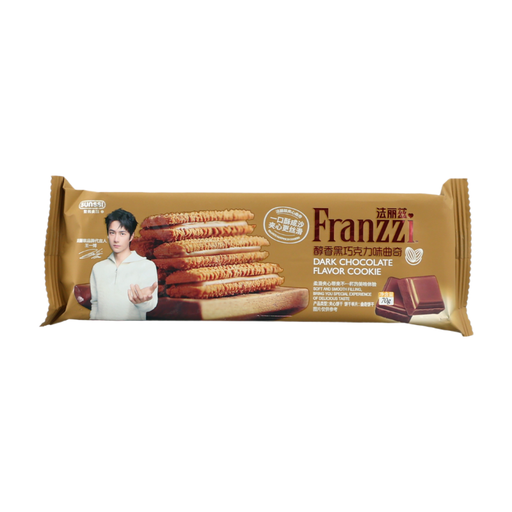 Image unavailable
Franzzi Premium Dark Chocolate Flavour Cookies 70 g
An option for a break when you fancy a chocolate-flavoured biscuit. If the intensity of the chocolate is important to you, check the chocolate or cocoa percentage on the packaging. Also compare the sugars and saturated fat listed on the current label; if you have allergies, check the ingredients and allergen information.
View on Joybuy
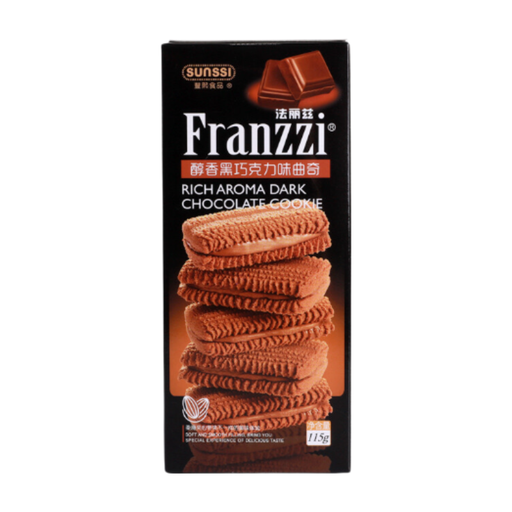 Image unavailable
Franzzi Mellow Dark Chocolate Flavoured Cookies 115 g
A chocolate-flavoured biscuit for anyone who wants to compare ingredients and nutritional information with other options. Check the sugar value on the current packaging before comparing: the stated value of 0 g of sugars doesn’t match the listed ingredients, sugar and glucose-fructose syrup. If you have an allergy, also check the information about wheat, soya and milk.
View on Joybuy
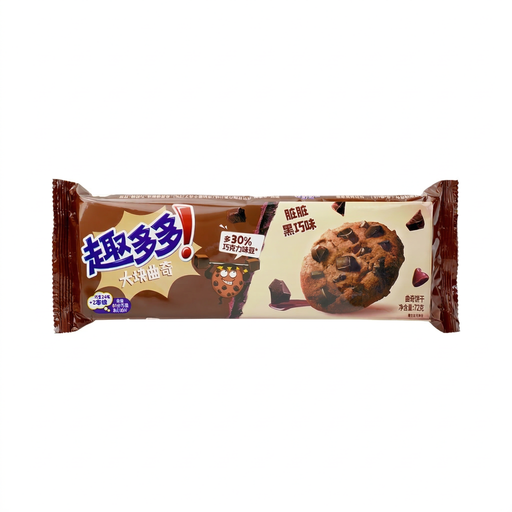 Image unavailable
quduoduo Chunky Cookies (Dark Chocolate Flavour) 72 g
An option if you’d prefer a chunky cookie to a thin biscuit. The product description states that it contains at least 9% chocolate, but that doesn’t confirm the chocolate is dark. Before comparing biscuits by fat content, also check the saturated fat value on the current packaging. If you have allergies, read the information about wheat, soya and milk.
View on Joybuy
Frequently asked questions
Does ‘dark’ mean a biscuit contains a lot of cocoa?
No. The word ‘dark’ alone doesn’t tell you the cocoa percentage. A stated chocolate content tells you how much chocolate is in the biscuit; check separately whether the packaging gives the cocoa percentage of that chocolate.
How do I compare biscuits with different serving sizes?
First compare the nutritional values per 100 g, then consider how much you want to eat. Voedingscentrum points out that manufacturers decide for themselves what serving size to state, so values per portion aren’t always directly comparable.
Is dark chocolate on a biscuit a nutritional benefit in itself?
No. The name of the chocolate alone doesn’t tell you about the nutritional make-up of the whole biscuit. Check the sugars, saturated fat, fibre and energy on the label; Voedingscentrum advises you not to rely only on information on the front of the packaging.
What should I check if I have an allergy?
Read the allergen information on the current packaging, including any ‘may contain’ warnings. Wheat, milk and soya are relevant to several of the biscuits discussed here, but ingredients vary from product to product.
How should I store an opened pack of biscuits?
Follow the storage instructions on the specific packaging and seal opened biscuits well. Jumbo recommends this for the digestive and cookie discussed here; for AH Zaans huisje, Albert Heijn recommends storing it in a sealed tin.


