
Dark chocolate fans
You’re looking for a biscuit or cookie made with dark chocolate to enjoy with your tea. If the precise intensity matters to you, check whether the pack gives a cocoa percentage: the word ‘dark’ alone doesn’t tell you this.


If you’re looking for a particular type of chocolate to enjoy with your tea, choose a biscuit labelled ‘dark chocolate’. Then decide between a chocolate-coated biscuit, a digestive or a cookie, depending on the texture you prefer. ‘Dark’ alone doesn’t tell you the cocoa percentage or the nutritional value of the whole biscuit. Check the label on the specific pack, especially if chocolate intensity, portion size or allergens will influence your choice.
You’re looking for a biscuit or cookie made with dark chocolate to enjoy with your tea. If the precise intensity matters to you, check whether the pack gives a cocoa percentage: the word ‘dark’ alone doesn’t tell you this.
You want a biscuit with your tea and take portion size, sugars and saturated fat into account. The nutrition table tells you more than the colour or name of the chocolate alone.
You’re catering for different preferences for dark, milk and white chocolate. If you’re putting out a sharing platter, check the ingredients and allergens in the biscuits you serve, too.
First decide whether you want a chocolate-coated biscuit, a digestive or a cookie. Then check the pack for the type of chocolate, nutritional information and details that matter for what you plan to serve.
| What to consider | What to check when buying | Who it matters to |
|---|---|---|
| Dark chocolate flavour | Look for ‘dark chocolate’ and check whether a cocoa percentage is given. Distinguish a chocolate coating from chocolate pieces or chocolate flavouring. | I mainly want the taste of dark chocolate with my tea, rather than just a product name that sounds dark. For around 40% of consumers, flavour comes first when choosing. |
| Nutritional information and portion size | Compare sugars and saturated fat per 100 g, then check the stated portion size. | When I have a biscuit with my tea, I want to know what a typical portion contains. For around 30% of consumers, the label and portion size together are the main considerations. |
| Serving guests | Check the number of biscuits, the packaging and whether an assortment also contains milk or white chocolate. | I like having different flavours for my guests, as long as it’s clear which biscuit suits each preference. Around 20% of consumers prioritise serving a group. |
| Choice within the range | Check which specific dark chocolate option is available; a general brand or category page doesn’t tell you which product you can choose. | I want to be able to find a suitable dark chocolate option without relying on a broad range name. For around 10% of consumers, finding the right product is the main concern. |
The proportion of a biscuit covered in dark chocolate isn’t the same as the cocoa percentage in that chocolate coating or in the whole biscuit. Albert Heijn states that AH Sugared Biscuits with Dark Chocolate have a coating made with 27% dark chocolate; that figure describes the proportion of the biscuit covered.
If a particular cocoa percentage is essential, check whether it’s stated on the pack for the specific product.
A biscuit with dark chocolate isn’t necessarily low in sugars or saturated fat. Albert Heijn states that its sugared biscuits with dark chocolate contain 35 g of sugars and 8,8 g of saturated fat per 100 g.
Compare similar biscuits per 100 g, then look at the portion you plan to serve.
The Biscotto pack described by ALDI Nederland contains butter biscuits with dark, white and milk chocolate. That means not every guest will get the same type of chocolate biscuit.
Choose a mixed pack if you want that variety; otherwise, look for a pack that specifies the type of chocolate in the biscuits.
A flavour or product name doesn’t tell you which allergens are in the ingredients. The Netherlands Food and Consumer Product Safety Authority says allergens must be clearly distinguishable in the ingredients list on the label.
Always read the current ingredients and allergen information when choosing biscuits for someone with an allergy.
AH Sugared Biscuits with Dark Chocolate from Albert Heijn are a specific example of a chocolate-coated biscuit to enjoy with tea.
Jumbo’s own-brand range includes several types of biscuit with dark chocolate, including cookies, digestive biscuits and spritz biscuits.
ALDI Nederland describes a Biscotto assortment for anyone who wants to serve several chocolate flavours.
Lidl describes Sondey as a varied range that includes biscuits and cookies.
Lotus Biscoff is a good option if you’re looking for a caramelised biscuit to enjoy with a hot drink.
These biscuits offer different ways to enjoy a dark chocolate flavour with your tea: a digestive with dark chocolate or cookies labelled ‘dark chocolate flavour’. That flavour description isn’t the same as a stated cocoa percentage. If the distinction matters to you, check the label on the pack you choose.
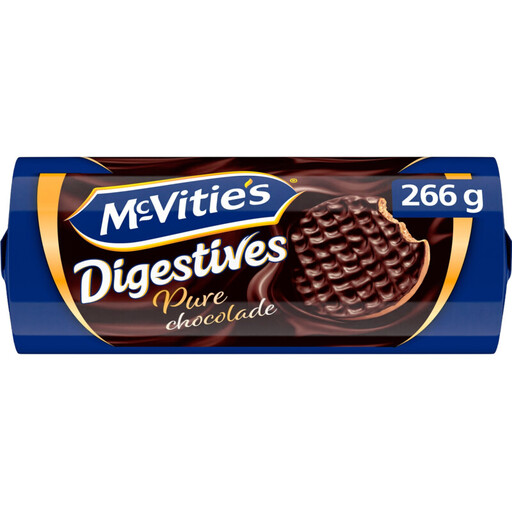 Image unavailable
An option if you’re looking for a digestive with dark chocolate to enjoy with tea. If you’re choosing based on a particular level of cocoa intensity, check the cocoa percentage on the pack and read the current allergen information.
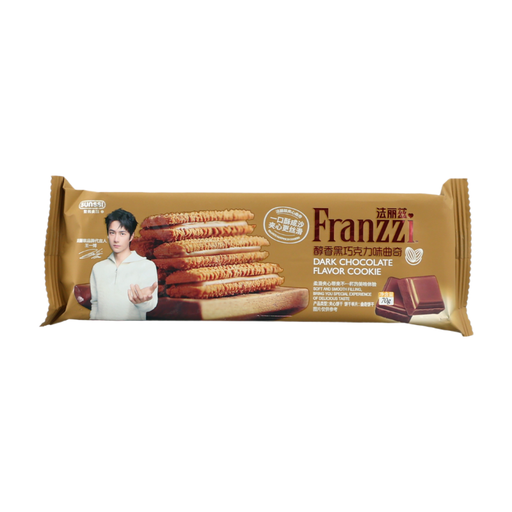 Image unavailable
A cookie for anyone who fancies a dark chocolate flavour with their tea. ‘Dark Chocolate Flavour’ doesn’t specify a cocoa percentage. Compare the nutritional information and check the allergen details on the current pack if these will influence your choice.
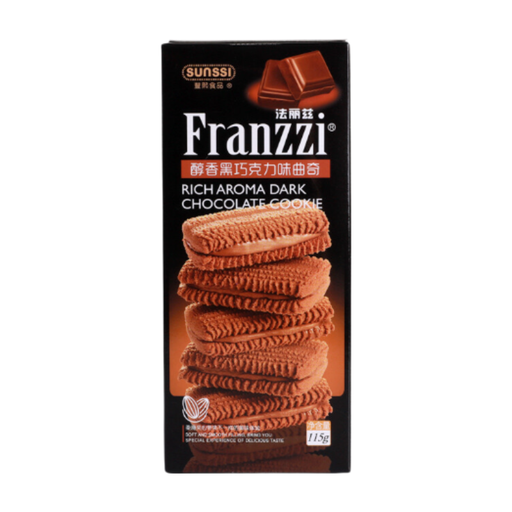 Image unavailable
Another Franzzi cookie with a dark chocolate flavour for teatime. To compare sugars and saturated fat, use the nutrition table on the current pack as your reference. Check the ingredients and allergen information there, too.
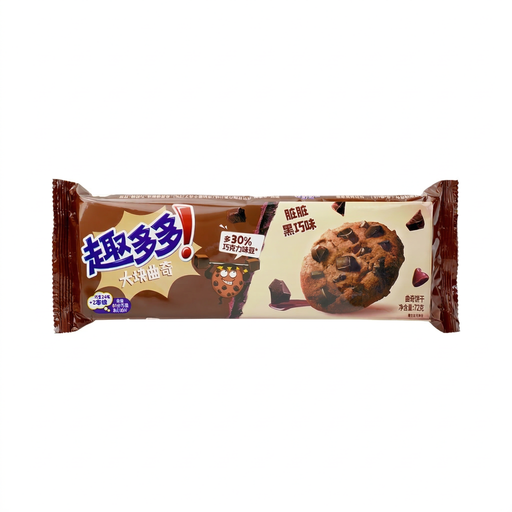 Image unavailable
A chunky cookie if you’d rather serve a cookie than a chocolate-coated biscuit. The ‘Dark Chocolate Flavour’ description doesn’t confirm a particular cocoa percentage. Check the current pack before comparing nutritional information, too.
No, the description alone doesn’t give an exact cocoa percentage for the chocolate or the whole biscuit. If you’re choosing based on a particular percentage, check the information for the specific product. A stated proportion of chocolate coating describes something different from its cocoa content.
Where possible, compare similar types of biscuit per 100 g, then check the portion you plan to serve. The Netherlands Nutrition Centre recommends using the nutrition table per 100 g to compare products; portion sizes can vary between products.
Read the ingredients list on the current pack, where allergens must be clearly distinguishable. The Netherlands Food and Consumer Product Safety Authority says that mandatory labelling applies to 14 allergens; also check for any warnings on the product you choose.
Follow the storage advice on the specific pack. Albert Heijn recommends storing its sugared biscuits with dark chocolate in a cool, dark and dry place and keeping them in a sealed tin after opening. Don’t assume the same advice applies to other biscuits.