When choosing a dark chocolate biscuit, don’t rely on the word ‘dark’. Start with the allergens you need to avoid: check the ingredients and any cross-contamination warnings on the current packaging. Standard dark chocolate biscuits may contain wheat, milk and soya. Even with a gluten-free or lactose-free biscuit, you’ll still need to check for other allergens. Only then compare the chocolate and texture to find what suits your taste.
Who are these options relevant to?
People avoiding a specific allergen
Start with the substances that must not be in a biscuit for you. Check both intentionally added ingredients and any warnings relevant to your circumstances; a flavour description won’t tell you anything about these.
People looking for gluten-free options
A gluten-free label helps you narrow down your search if you need to avoid gluten. Still, read the full label: a gluten-free chocolate biscuit may contain milk, egg, nuts or soya, for example.
People looking for a rich chocolate flavour
Compare the type and amount of chocolate only after checking that the label fits your list of ingredients to avoid. ‘Dark’ describes the chocolate, but doesn’t guarantee that the biscuit is free from milk or other allergens.
What should you look for when choosing?
If you have a food allergy or intolerance, checking the label comes before choosing a particular chocolate flavour. Each of the following product options calls for a different additional check.
Standard dark chocolate biscuits
When: This option may suit you if the allergens listed on the packaging aren’t on your list of ingredients to avoid and you’re looking for a standard chocolate biscuit.
Bear in mind: The dark chocolate biscuits described by Jumbo contain wheat, milk and soya; some also carry a nut warning.
Gluten-free chocolate biscuits
When: Look specifically for a gluten-free label if you need to avoid gluten.
Bear in mind: Albert Heijn also lists hazelnut, milk, lactose and egg in its gluten-free Chocolate chip cookies. Nairn’s Mini choc chip bakes list oats and soya, with milk and nuts as possible allergens.
Gluten-free and lactose-free chocolate biscuits
When: This combination is relevant if you want to avoid both gluten and lactose.
Bear in mind: Soya is listed in the Céréal biscuits described by Jumbo, and they may contain milk proteins. So lactose-free doesn’t mean milk-protein-free.
| What to consider |
What to check when buying |
Who it matters to |
| Added allergens |
Compare the ingredients and allergen information on the current packaging with your list of ingredients to avoid. |
If milk, wheat or another ingredient isn’t suitable for me, I want to rule it out before choosing by flavour. An estimated 36% of consumers put avoiding an added allergen first. |
| Cross-contamination |
Also read warnings such as ‘may contain nuts’ and assess the substance named according to the advice that applies to you. |
A biscuit that doesn’t list my allergen as an ingredient isn’t automatically suitable for me if the label warns that it may be present. For an estimated 29% of consumers, this warning is the deciding factor. |
| Gluten-free options |
Check for a gluten-free label, then read which other allergens may be present. |
If I need to avoid gluten, I first look for a clearly labelled gluten-free biscuit, without overlooking the other allergens. This is the main priority for an estimated 21% of consumers. |
| Chocolate flavour |
After checking the allergens, compare the stated type and amount of chocolate. Don’t confuse the amount of chocolate in a biscuit with the cocoa percentage of that chocolate. |
If the label fits my list of ingredients to avoid, I choose based on the chocolate flavour and texture. An estimated 14% of consumers consider this flavour preference their main priority. |
Common mistakes
-
Assuming ‘dark’ means ‘dairy-free’
The dark chocolate biscuits described by Jumbo list milk, wheat and soya, among other ingredients. The name of the chocolate doesn’t tell you which allergens are in the whole biscuit.
Start by checking the ingredients and allergen information on the packaging; only then consider ‘dark’ as a flavour description.
-
Looking only for ‘gluten-free’ or ‘lactose-free’
A gluten-free biscuit may contain other allergens. Lactose-free and free from milk proteins aren’t the same thing either: the lactose-free Céréal biscuits described by Jumbo may contain milk proteins.
After checking the label on the front, look for all allergens that are present or may be present and are relevant to you.
-
Overlooking a ‘may contain’ warning
According to the Netherlands Food and Consumer Product Safety Authority, this type of warning refers to the possible unintended presence of an allergen, not an ingredient that has been deliberately added. That doesn’t make the warning unimportant if you have a relevant allergy.
If you see a warning like this, follow the personal advice you’ve received for your allergy. Don’t let the biscuit’s flavour determine how you assess the risk.
-
Relying on a product page you checked before
Ingredients and allergen information can change. Albert Heijn therefore advises checking the packaging before eating a product, even when shopping online.
Check the label again, even if you’ve bought the same biscuit before.
Brands to consider
Jumbo
For various standard biscuits and cookies with dark chocolate, Jumbo lists the ingredients and allergens for each product.
- You can compare the allergens listed for individual biscuits.
- The varieties described contain wheat, milk or soya, among other ingredients; some carry a warning about other allergens.
AH Glutenvrij
A range from Albert Heijn that includes gluten-free Chocolate chip cookies.
- According to Albert Heijn, these Chocolate chip cookies are made in a completely gluten-free environment.
- This product also lists hazelnut, milk, lactose and egg.
Céréal
The Céréal chocolate biscuits described by Jumbo are labelled gluten-free and lactose-free.
- With both labels, this product is easy to compare if you avoid gluten and lactose.
- The product information lists soya and possible traces of milk proteins, egg, nuts, sesame and lupin, among other allergens.
Nairn’s
Nairn’s Mini choc chip bakes are gluten-free biscuits made with oats and dark chocolate pieces.
- Albert Heijn’s product information lists gluten-free wholegrain oats as an ingredient.
- Oats and soya are listed as allergens present; milk and nuts are listed as possible allergens.
Lotus Biscoff
Lotus Bakeries describes Biscoff as a crunchy biscuit with a caramelised flavour, rather than a dark chocolate biscuit.
- An alternative flavour to consider if dark chocolate isn’t a must.
- Check the current packaging when assessing allergens; the flavour description doesn’t tell you whether the product is suitable for your allergy.
Dark chocolate-flavoured biscuits at Joybuy
These Franzzi biscuits are described as having a dark chocolate flavour. This description doesn’t confirm a particular cocoa percentage or indicate whether they’re suitable for someone with an allergy. Before buying, compare the current packaging with your list of ingredients to avoid.
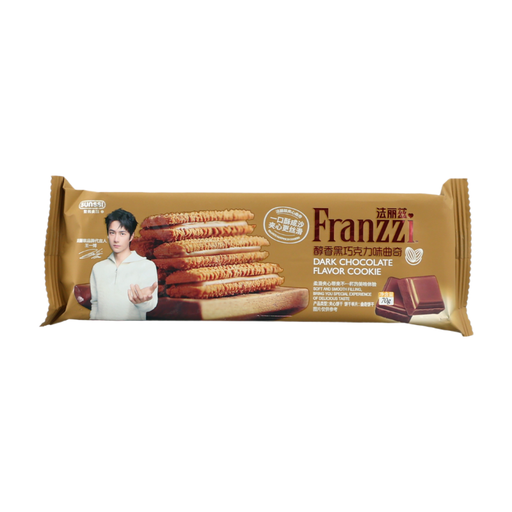 Image unavailable
Franzzi Premium Dark Chocolate Flavour Cookies 70 g
An option if you’re looking for a dark chocolate-flavoured biscuit and want to check first whether its allergens fit your list of ingredients to avoid.
70 g pack. Check the packaging for wheat, milk, egg and soya, as well as any cross-contamination warnings. The flavour name doesn’t confirm a cocoa percentage.
View at Joybuy
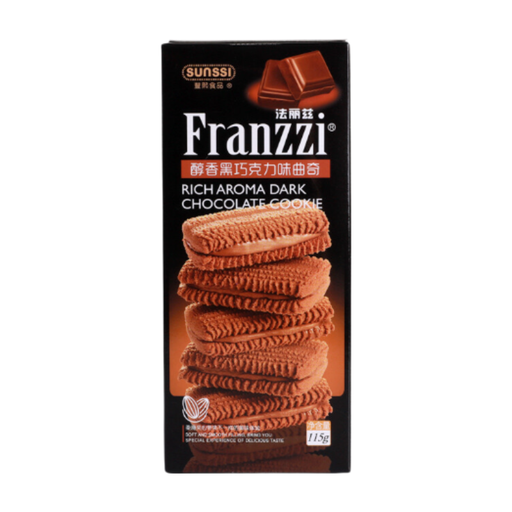 Image unavailable
Franzzi Mellow Dark Chocolate Flavoured Cookies 115 g
A different pack size for anyone looking for a dark chocolate flavour; assess the allergens in this product separately.
115 g pack. Check the current allergen information for wheat, milk, lactose and soya, as well as any cross-contamination warnings. The flavour name doesn’t confirm a cocoa percentage.
View at Joybuy
Frequently asked questions
Does dark chocolate mean a biscuit is dairy-free?
No. Milk is also listed in the dark chocolate biscuits described by Jumbo. Check the allergen information for the whole biscuit rather than just the name of the chocolate.
Is a lactose-free chocolate biscuit suitable for someone with a cow’s milk allergy?
Not automatically: lactose-free doesn’t mean free from milk proteins. The lactose-free Céréal biscuits described by Jumbo may contain milk proteins. So check the packaging specifically for milk and milk proteins.
What does ‘may contain nuts’ mean on a biscuit packet?
It warns that nuts may be present unintentionally, rather than being deliberately added as an ingredient. Assess the warning according to the advice that applies to your allergy.
Is a biscuit with no wheat in the ingredients list enough if I have coeliac disease?
No. Also check that the product is clearly labelled gluten-free. The Netherlands Nutrition Centre explains that a gluten-free diet is necessary for people with coeliac disease; also read any warnings and check the other allergens on the label.
Do I still need to read the packaging when shopping online?
Yes. Ingredients and allergen information can change. Albert Heijn advises checking the packaging before eating a product, even if you’ve looked at the product information online before.


