
Fans of a visible chocolate coating
You’re looking for a biscuit with a layer of dark chocolate, rather than just chocolate chunks inside. Compare the proportion of chocolate in the product, and check separately whether a cocoa percentage is stated.


Choose a biscuit with a dark chocolate coating if you want chocolate on top of the biscuit, or a cookie with chocolate chunks if you want chocolate throughout. For a sharing bowl on a film night, pack size matters; for snacks portioned in advance, check the inner packaging. ‘Dark’ and the proportion of chocolate in a biscuit don’t tell you how much cocoa the chocolate contains: check the cocoa percentage separately on the label, if one is given.
You’re looking for a biscuit with a layer of dark chocolate, rather than just chocolate chunks inside. Compare the proportion of chocolate in the product, and check separately whether a cocoa percentage is stated.
You’re choosing snacks for a group and want to know how many biscuits you can put out. Compare the pack weight and the number of biscuits or portions, and seal any leftovers well afterwards.
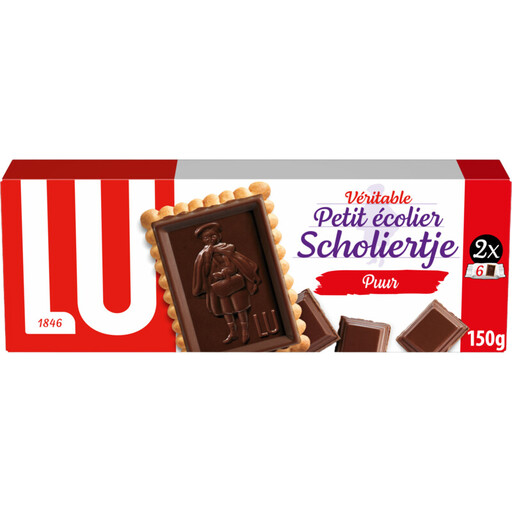
You want to get portions ready for a small film night. A pack containing two biscuits per inner wrapper, as Albert Heijn describes LU Scholiertje Puur, could be a good fit.
First decide whether you want a chocolate coating, chunks in a cookie or individually wrapped biscuits. Then compare the quantity per pack, and always read the current label if you need to avoid certain ingredients.
| What to consider | What to check when buying | Who is this important for? |
|---|---|---|
| Chocolate flavour | Compare the form and proportion of chocolate; look separately for a stated cocoa percentage. | If I’m looking for a strong dark chocolate flavour, I don’t want to rely on the word ‘dark’ alone. For around 36% of consumers, flavour would be the first consideration. |
| Pack size | Check the weight and the number of biscuits or portions; think about what will be left after the film. | For a sharing bowl, I want to put out enough biscuits without being left with an awkward amount. An ample pack size would be a priority for around 29% of consumers. |
| Portion packaging | Check how many biscuits are in each inner wrapper. | For a small film night, I’d rather prepare a portion for each viewer than fill one bowl. Around 21% of consumers would choose mainly for this convenience. |
| Ingredients and allergens | Read the ingredients list and any warnings such as ‘may contain’ on the pack you’re buying. | If I need to consider an allergy, the biscuit must be suitable for everyone in my group. For around 14% of consumers, checking the ingredients would be the main factor in their choice. |
The proportion of chocolate in a biscuit is different from the cocoa percentage within that chocolate. A thick coating or lots of chunks therefore doesn’t tell you the cocoa content.
Look for a clearly stated cocoa percentage if it matters to your choice. If there isn’t one, compare the product type and the ingredients that are listed, without assuming it has a high cocoa content.
Biscuits can go soft or stale once opened, so a large pack isn’t necessarily right for a small film night.
Choose a pack size that suits your group. The Voedingscentrum advises storing biscuits in a cool, dry, dark place in a tightly sealed container; follow the instructions on the packaging too.
The chocolate biscuits described here include ingredients such as wheat, milk and soya; some products also carry warnings about the possible presence of other allergens.
Before serving, check the ingredients list and allergen warnings on the packaging of the product you’re actually using.
Lotus Bakeries describes Biscoff as a crisp, caramelised biscuit. It’s therefore a different flavour choice from a biscuit with dark chocolate.
Put Biscoff on the table if you also fancy a caramelised biscuit; don’t use it as a substitute when dark chocolate is what you’re after.
Albert Heijn describes a 400 g pack of sugared biscuits with a coating of 27% dark chocolate.
Jumbo describes both biscuits with a chocolate coating and cookies with dark chocolate chunks.
Albert Heijn describes LU Scholiertje Puur as a butter biscuit topped with a bar of dark chocolate, with two biscuits in each inner wrapper.
Albert Heijn describes Galler Puur koekjes as chocolate with a biscuit filling and states a minimum cocoa content of 60%.
ALDI describes Biscotto Chocoladekoekjes as butter biscuits with dark, white and milk chocolate, individually wrapped in pairs.
Lotus Bakeries describes Biscoff as a crisp biscuit with a caramelised flavour.
These options cover two types of film-night snack: a Scholiertje variety and cookies labelled Dark Chocolate Flavour. If a high cocoa content is essential, check the cocoa percentage on the packaging.
 No image available
An option to compare if you want to portion out snacks in advance for your film night; check the inner packaging for this variety.
Pack size: 150 g. Check the label for the cocoa percentage and allergens if these will affect your choice.
 No image available
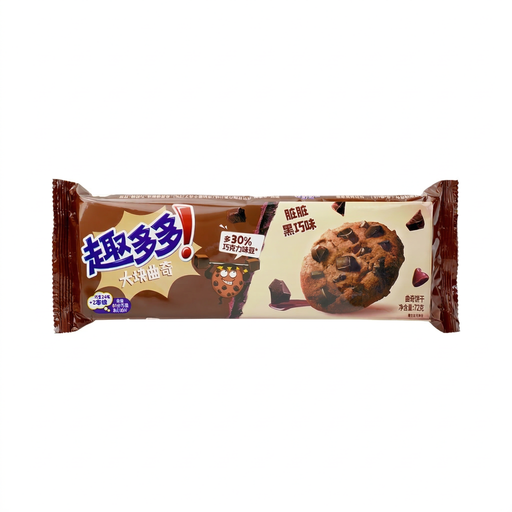
A cookie option if you’re after a dark chocolate flavour rather than a biscuit with a chocolate coating.
Pack size: 72 g. The flavour description doesn’t prove a high cocoa content; check the chocolate ingredients and allergens on the packaging.
No, the name alone doesn’t tell you the cocoa percentage. For example, Jumbo states that two different biscuits contain 63% chocolate in one biscuit and 40% dark chocolate chunks in one cookie; both figures refer to the proportion in the biscuit or cookie, not the cocoa content of the chocolate itself. For that, look for a separate figure on the label.
Read the ingredients list and warnings on the packaging of each product you choose. The biscuits described here include ingredients such as wheat, milk and soya, while some varieties also mention the possible presence of nuts or other allergens. The Netherlands Food and Consumer Product Safety Authority highlights the allergen information required on labels for prepacked foods.
Seal any opened biscuits well and store them in a cool, dry, dark place, as advised by the Voedingscentrum. Also check the storage instructions on the packaging of your chosen product.
Use online information to compare products, but also read the packaging you have in front of you before buying and serving. This is particularly important when ingredients or allergens affect your choice.