When choosing biscuits for a film night, don’t just go by the word ‘dark’: compare the proportion of chocolate, the packaging and the label. For example, Jumbo lists 63% chocolate for Chocolade Biscuits Puur, while Lotus Biscoff with dark chocolate comes in small packs of three. The proportion of chocolate doesn’t tell you its cocoa percentage, so check the current packaging if a high cocoa content is important to you.
Who are these biscuits for?
For fans of a generous chocolate layer
You want to taste plenty of chocolate while watching the film, so you compare how much chocolate each biscuit contains. A high proportion of chocolate doesn’t, by itself, mean that it has a high cocoa percentage.
For anyone who wants easy-to-share portions
You’re looking for biscuits that are easy to hand round. Smaller packs, the number of biscuits and any stated portion sizes can all help you choose.
For label-conscious snack buyers
You compare sugars, saturated fat and allergens before choosing a pack. Check the nutrition information per 100 g as well as the portion you plan to serve.
What should you look for when choosing?
First decide what matters most for your film night: chocolate flavour, allergens, ease of sharing or nutritional value. Then compare the information on the pack. ‘Dark’ alone won’t tell you how much cocoa the chocolate layer contains.
| What to consider |
What to check when buying |
Who it matters to |
| Chocolate layer |
Compare the proportion of chocolate in the biscuit. If it matters to you, look separately for the cocoa percentage of the chocolate. |
If I mainly want to taste chocolate during the film, I want to know how much of the biscuit is chocolate. For around 33% of consumers, chocolate flavour comes first. |
| Allergens and ingredients |
Read the ingredients and allergen information on the current packaging, especially if wheat, milk, soya or nuts are relevant. |
If someone in my group needs to avoid an ingredient, I want to be able to check the pack itself. For around 27% of consumers, this is the top priority. |
| Portions and sharing |
Check the number of biscuits, the pack weight and whether there are individual portion packs. |
If I’m handing biscuits round to several people, I want to know how the pack is divided. For around 20% of consumers, ease of sharing comes first. |
| Nutritional value |
Compare sugars, saturated fat and fibre per 100 g, then check the nutrition information per portion too. |
I want to compare the nutritional value of my snack before deciding how many biscuits to serve. For around 20% of consumers, this is the most important consideration. |
Common mistakes when buying dark chocolate biscuits
-
Confusing the proportion of chocolate with its cocoa percentage
The 63% chocolate in Jumbo Chocolade Biscuits Puur refers to the proportion of chocolate in the whole biscuit, not the cocoa content of that chocolate. The same distinction applies to LU Scholiertje Puur, which lists 48% dark chocolate.
Use the proportion of chocolate to compare products on that basis. If a high cocoa content is a must, look for a separate cocoa percentage on the current packaging.
-
Assuming ‘dark’ means a better nutritional profile
The type of chocolate layer doesn’t tell you how much sugar, saturated fat or fibre a biscuit contains. Voedingscentrum also points out that chocolate is high in saturated fat and calories.
Compare the nutrition information per 100 g, then consider what the figures per portion mean for the number of biscuits you plan to serve.
-
Relying only on a product page when checking for allergens
The biscuits described here include ingredients such as wheat, milk and soya; some packs also warn that they may contain traces of nuts. The ingredients on the pack you buy are what you should check.
Before eating, read the ingredients and allergen information on that pack.
Brands compared
Jumbo
Jumbo lists 63% chocolate for Chocolade Biscuits Puur and 30% dark chocolate for Digestive Biscuit Pure Chocolade.
- The product information gives you ingredients, allergens, nutritional values and packaging details to compare these biscuits.
- The percentages refer to the chocolate in the biscuit, not the cocoa percentage of the chocolate.
Albert Heijn
AH Gesuikerde biscuits pure chocolade combine a stated 27% dark chocolate layer with decorative sugar.
- The product information lists a 400 g pack, ingredients and nutritional values.
- Albert Heijn lists 35 g of sugars per 100 g for this product. Check the current packaging when comparing nutritional values.
Lotus Biscoff
Lotus Biscoff with dark chocolate combines speculoos biscuits with chocolate in a pack of 7 × 3 biscuits.
- The small individual packs make it easy to see how many biscuits you can hand round.
- Chocolate makes up 22% of the product; this isn’t a statement of its cocoa percentage.
LU
LU Scholiertje Puur is a biscuit topped with a separate piece of dark chocolate.
- Albert Heijn lists 48% dark chocolate for this product and packs it in pairs of biscuits.
- The product contains wheat, milk and soya, and may contain nuts. If you have an allergy, check the pack’s label.
Verkade
Verkade includes Chocolate Chip Melk & Puur in its range of biscuits.
- The range is a useful starting point if you’re looking for biscuits with dark chocolate.
- For the variety you choose, compare the ingredients, nutritional values and any cocoa information on the pack. The range name doesn’t provide these details.
Dark chocolate digestives at Joybuy
These dark chocolate digestives are a good option if you’re looking for a 266 g pack for a film night. If the number of biscuits affects your choice, check the pack to see how many it contains.
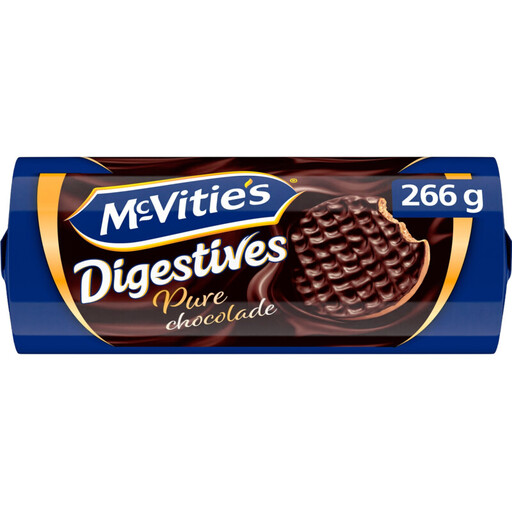 Image unavailable
McVitie's Digestives with Dark Chocolate, 266 g
Dark chocolate digestives for serving during a film night. The pack contains 266 g. Check the pack for the number of biscuits, allergens and cocoa percentage if these details matter to you.
View at Joybuy
Frequently asked questions
Does ‘dark’ on a biscuit mean the chocolate has a high cocoa content?
No. ‘Dark’ or the proportion of chocolate in a biscuit doesn’t tell you a specific cocoa percentage. For example, a statement of 63% chocolate describes how much of the whole biscuit is chocolate. Check the packaging if the cocoa content is important to you.
Which allergens should I check in these biscuits?
The products discussed here contain wheat, milk and soya; some also warn that they may contain traces of nuts. If you have an allergy, always read the ingredients and allergen information on the pack you’re actually using.
How should I store chocolate biscuits once opened?
Seal the pack well after opening and follow the storage instructions on the packaging. Jumbo advises eating any leftover Chocolade Biscuits Puur within a few days.
Does dark chocolate automatically make a biscuit more nutritious?
No. The term ‘dark’ doesn’t, by itself, tell you how much sugar, saturated fat or fibre a biscuit contains. Compare the nutrition information per 100 g and per portion for the products you’re considering.
What information on the label can help me compare products?
The ingredients list, allergen information and nutrition information can help you compare prepacked biscuits. Your Europe describes these details as part of EU labelling rules for prepacked foods. Also check the weight and any portion information on the pack.


