
Families who pay attention to pack size
If several people share a pack, you’ll want to know how many biscuits or portions it contains, and whether you can finish it after opening.


For a large household, start by comparing pack size and number of portions: Albert Heijn lists 400 g for AH Sugared Biscuits with Dark Chocolate, while Jumbo lists 300 g for its Digestive Biscuit with Dark Chocolate. Then choose between a chocolate coating, chocolate chunks or a chocolate bar biscuit. If a high cocoa content is what you’re looking for, check the cocoa solids percentage separately on the packaging; the stated proportion of chocolate in a biscuit does not tell you the same thing.
If several people share a pack, you’ll want to know how many biscuits or portions it contains, and whether you can finish it after opening.
You’ll want to distinguish between how much chocolate is in the biscuit and how much cocoa that chocolate contains. A percentage on the front of the pack may refer only to the first.
If someone needs to avoid certain ingredients, check the allergen information for the exact variant. The word ‘dark’ doesn’t tell you whether a biscuit contains milk, wheat or soya, for example.
First, work out how many biscuits your household gets through and which type appeals to you. Then check the cocoa percentage if that’s a deciding factor, and always read the label on your chosen variant if food allergies are a concern.
| What to consider | What to check when buying | Who it matters to |
|---|---|---|
| Pack size and portions | Compare the net weight and, where stated, the number of portions. Albert Heijn lists 400 g and 30 portions for its sugared biscuits; Jumbo lists 300 g and around 18 portions for its Digestive Biscuit with Dark Chocolate. | If several family members share a pack, I want to know whether the amount suits our usual snacking occasions. Around 42% of consumers prioritise pack size. |
| Type of chocolate and cocoa | Check whether the biscuit has a chocolate coating, chocolate chunks or a chocolate bar. If you have a specific cocoa-content requirement, look for a separate cocoa solids percentage. | If you’re after a rich dark chocolate flavour, don’t rely solely on the word ‘dark’ or the proportion of chocolate in the biscuit. This flavour preference matters most to around 33% of consumers. |
| Ingredients and allergens | Read the ingredients list, highlighted allergens and any warnings on the current packaging of the exact variant. | If someone in my family needs to avoid an allergen, the label determines which variant is suitable. Around 25% of consumers prioritise checking allergens. |
The 30% dark chocolate listed by Jumbo for its digestive biscuits describes the proportion of chocolate in the biscuit. It doesn’t mean that the chocolate contains 30% cocoa solids. The same distinction applies to chocolate chunks and a chocolate bar.
If a specific cocoa content is important to your choice, look for an explicit statement of the cocoa solids percentage in the chocolate used in the product.
A larger pack contains more, but may not suit you as well if you can’t finish the biscuits soon after opening or would rather split smaller packs between people.
Alongside the net weight, compare the number of portions, packaging and storage advice. This will help you work out which quantity suits your household.
The dark chocolate biscuits reviewed may contain wheat, milk and soya, among other ingredients. Warnings about the possible presence of other allergens vary between variants.
Check the ingredients and allergen information on the current packaging every time you buy; don’t rely solely on the product name or a pack you bought previously.
AH Sugared Biscuits with Dark Chocolate are an option if you’re looking for a 400 g pack with a dark chocolate coating.
Jumbo lists both digestives with a dark chocolate coating and cookies with dark chocolate chunks.
McVitie's Digestives with Dark Chocolate are digestive biscuits with a dark chocolate coating, in a 266 g pack.
LU Scholiertje Dark combines a butter biscuit with a bar of dark chocolate, in two 75 g bags.
This product selection is suited to anyone looking for a digestive biscuit with a dark chocolate coating and considering a 266 g pack for their household. If a high cocoa content is a deciding factor for you, check for a separate cocoa percentage.
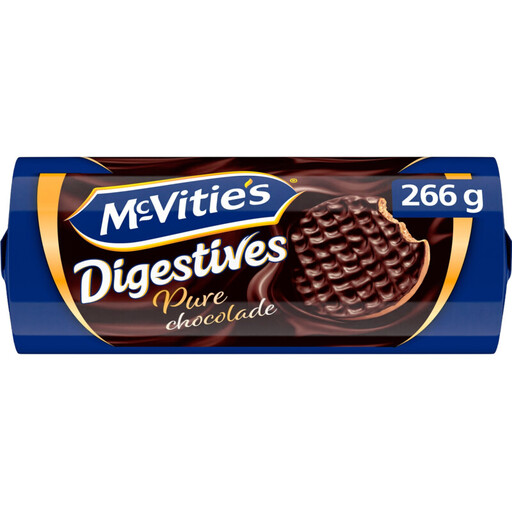 No image available
An option if you’re looking for a wheat biscuit with a dark chocolate coating to share.
The pack contains 266 g. This variant is listed as containing 30% dark chocolate by biscuit weight, not as a cocoa percentage for the chocolate.
The product information lists wheat, milk and soya. If you have allergies, check the current packaging.
No. The word ‘dark’ alone doesn’t tell you the specific cocoa percentage of the chocolate in a biscuit. The percentages Albert Heijn and Jumbo list for the products mentioned describe the proportion of chocolate in the product; if the cocoa percentage determines your choice, look for a separate statement of the cocoa solids content.
No. The variants mentioned may contain wheat or other gluten-containing cereals and milk; soya and warnings about other allergens may also be listed. Check the current allergen information for the exact product you’re buying.
Follow the storage advice for your chosen variant. For the biscuits mentioned, Albert Heijn recommends storing them in a sealed tin after opening; Jumbo recommends resealing its digestive biscuits tightly and storing them in a dark place.
At a minimum, check the net quantity, ingredients, allergens and best-before date. The Netherlands Food and Consumer Product Safety Authority lists these as part of the information on food labels; the number of portions and storage advice may also be relevant to your choice.