Don’t choose a dark chocolate biscuit based on the word ‘dark’ alone. First compare the carbohydrates per 100 g, then calculate the amount in the portion you actually eat. The examples listed by Jumbo contain 57.0 to 62.0 g of carbohydrates per 100 g; a lower sugar figure does not always mean fewer total carbohydrates. Individually wrapped portions can help you manage how much you eat, but they don’t change the nutritional value of the biscuit.
Who might find this choice relevant?
Counting carbs with your coffee
You want to fit a dark chocolate biscuit into your own carbohydrate plan. The weight of your portion and the carbohydrates it contains both matter. Diabetes.nl emphasises that carbohydrate needs vary from person to person.
Comparing nutritional values and ingredients
You want to look at total carbohydrates, fibre, saturated fat and ingredients as well as sugars. The Netherlands Nutrition Centre advises comparing the nutritional values of products on the same basis: per 100 g.
Fans of a rich, dark chocolate flavour
You’re looking for a dark chocolate biscuit, but don’t want to mistake the flavour description for information about its carbohydrate content. If the cocoa percentage matters to you, check the packaging for the exact product variant.
What should you look for when choosing?
First compare biscuits per 100 g using the label, then work out how much you actually want to eat.
| What to consider |
What to check before buying |
Who it matters to |
| Carbohydrates per portion |
Compare carbohydrates per 100 g and work out the weight of the portion you’ll eat. |
When I have a biscuit with my coffee, I want to know how many carbohydrates are in my portion. For around 50% of consumers, planning carbohydrate intake would be the main reason for their purchase. |
| Nutritional values and ingredients |
Compare carbohydrates, of which sugars, fibre and saturated fat per 100 g; also read the ingredients list. |
When comparing two biscuits, I don’t want to base my choice on the sugar figure alone. A broader comparison would be the priority for around 30% of consumers. |
| Flavour and portion size |
If it matters to your choice, check the cocoa percentage for the exact product variant, and consider how many biscuits you eat at a time. |
I’m looking for a dark chocolate flavour and want to decide in advance how many biscuits to have. For around 20% of consumers, this combination would be the main reason for their choice. |
Common mistakes
-
Assuming ‘dark’ means ‘low in carbohydrates’
The dark chocolate biscuits listed by Jumbo contain 57.0 to 62.0 g of carbohydrates per 100 g. So the type of chocolate doesn’t tell you how many carbohydrates are in your portion.
Check the nutritional values per 100 g and calculate them for the amount you actually eat.
-
Comparing only ‘of which sugars’
According to Jumbo’s product information, Jumbo Chocolate Cookies with dark chocolate pieces contain fewer total carbohydrates per 100 g than the McVitie’s and Jumbo Digestives mentioned here, but more sugars. These two figures answer different questions.
Compare products on the same basis, and look at both carbohydrates and sugars.
-
Assuming the stated portion is the amount you’ll eat
A nutritional value per portion is only useful if you eat that amount. For example, Jumbo states that a portion of LU Scholiertje Puur, consisting of two biscuits weighing 25 g in total, contains 15.0 g of carbohydrates.
Decide how many biscuits you’ll have and use their weight to calculate the nutritional values for your portion.
Brands compared
The examples below relate to specific biscuits or product ranges, not every product from each brand. Always check the label for the exact product variant.
McVitie’s
Digestive biscuits coated with dark chocolate.
- For McVitie’s Digestives Pure Chocolade, Jumbo lists 61.1 g of carbohydrates, 26.6 g of sugars and 4.3 g of fibre per 100 g.
- If you’re keeping an eye on carbohydrates per portion, you’ll also need to know the weight of the biscuits you eat; the sugar figure alone isn’t enough.
LU
Scholiertje Puur combines biscuits with dark chocolate in individually wrapped portions.
- According to Jumbo, a stated portion of two biscuits weighing 25 g in total contains 15.0 g of carbohydrates and 8.9 g of sugars.
- An individually wrapped portion won’t limit how much you eat if you have several; work out how much you’re actually eating.
Jumbo
The own-brand range includes chocolate cookies with dark chocolate pieces, as well as digestive biscuits with dark chocolate.
- For its Chocolate Cookies, Jumbo lists 57.0 g of carbohydrates and 32.0 g of sugars per 100 g; for its Digestive Biscuit Pure Chocolade, the figures are 62.0 g and 27.4 g.
- The biscuit with fewer carbohydrates in this comparison contains more sugars. Don’t draw conclusions about the entire range from these two variants.
Lotus Biscoff
Lotus Bakeries describes Biscoff as a caramelised biscuit.
- Its caramelised flavour is another option to consider.
- If you’re specifically looking for a dark chocolate biscuit with a particular cocoa percentage, check the exact product variant and its packaging.
Biscotto
ALDI Netherlands includes Biscotto Digestive biscuits in its biscuit range.
- Digestive biscuits are a familiar type to compare with other varieties.
- Check the packaging of your chosen product variant to see whether it contains dark chocolate and what its nutritional values are per 100 g.
Dark chocolate biscuits on Joybuy
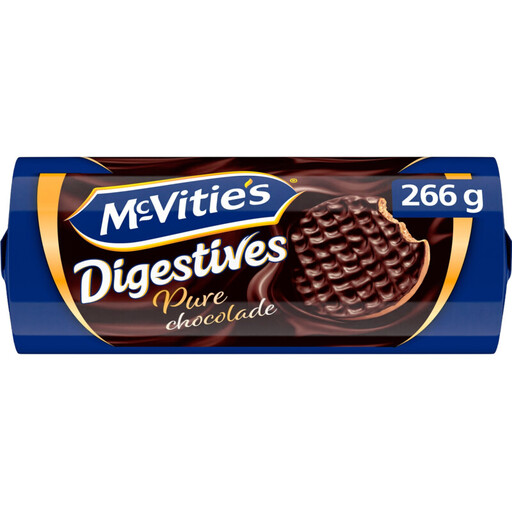
This Joybuy product is a dark chocolate digestive biscuit. Use the current packaging to work out the nutritional values for your portion and, if you’re looking for a more intense dark chocolate flavour, check the cocoa percentage.
 No image available
McVitie’s Digestives with Dark Chocolate, 266 g
A dark chocolate digestive biscuit for anyone who wants to decide for themselves how much to enjoy at each snack time.
Pack weight: 266 g. Check the current packaging for the cocoa percentage and the carbohydrates in the portion you eat.
View on Joybuy
Frequently asked questions
Are dark chocolate biscuits automatically suitable if you have diabetes?
No. ‘Dark’ on its own doesn’t tell you how many carbohydrates you’ll eat. The examples listed by Jumbo contain 57.0 to 62.0 g of carbohydrates per 100 g, so check the label and calculate your own portion.
Should I compare sugars or total carbohydrates first?
For carbohydrate planning, start with total carbohydrates per 100 g, then calculate your portion. Also look at ‘of which sugars’ and other nutritional values: a lower sugar figure doesn’t automatically mean fewer total carbohydrates.
What should I consider if I want to reduce my carbohydrate intake over time?
According to diabetes.nl, there isn’t one amount of carbohydrates that’s right for everyone with diabetes. If you take diabetes medication and want to reduce your carbohydrate intake over time, discuss the change with your healthcare professional or dietitian.
How can I check that the nutritional values are still correct for the biscuit I’m buying?
Read the packaging for the exact product variant you’re buying. The Diabetes Fonds points out that recipes can change, so check the current nutritional values per 100 g and the ingredients list again.


