If you’re looking for a biscuit with a high cocoa content for your Easter table, only choose one on that basis if the chocolate’s cocoa percentage is clearly stated on the label. ‘Dark’ and the proportion of chocolate in a biscuit don’t tell you that percentage. If you’re serving guests, also compare pack weight and portions, and check the ingredients and allergens on the pack you buy.
Who is this choice relevant to?
Fans of a pronounced cocoa flavour
If you want to choose biscuits based on cocoa content for adult guests, look for a stated cocoa percentage in the chocolate. A product name containing ‘dark’ or a percentage showing how much chocolate is in the whole biscuit isn’t enough.
Anyone serving biscuits to guests
For coffee or tea at the Easter table, pack weight and the number of portions matter. This information helps you work out how many packs you’ll need for the planned occasions.
Anyone catering for allergies
Check the ingredients and allergens on the pack you’ve chosen for your guests. The examples described by Jumbo and Albert Heijn include wheat, milk and soya; the risk of cross-contamination varies by product.
What should you look for when choosing?
First, distinguish between the cocoa percentage in the chocolate and the amount of chocolate in the biscuit. Then compare what matters most for your Easter table: allergens, how much you need for your guests or the style of biscuit.
| What to consider |
What to check when buying |
Who is it important for? |
| Cocoa content |
Look for the cocoa percentage in the chocolate itself; don’t confuse it with the proportion of chocolate in the biscuit. |
If you’re looking for a pronounced cocoa flavour for adult guests, don’t rely on the word ‘dark’ alone. Around 36% of consumers prioritise a stated cocoa percentage. |
| Allergens |
Read the ingredients list and check the allergen and possible cross-contamination information on the current packaging. |
If guests need to avoid certain ingredients, suitability comes before taste or presentation; around 29% of consumers make allergen checks their first priority. |
| Quantity |
Compare the pack weight and stated number of portions with the number of guests and occasions. |
If you’re hosting several coffee breaks, you’ll want enough biscuits to serve without judging by pack size alone. Quantity comes first for around 21% of consumers. |
| Biscuit style |
Look at the biscuit base, chocolate coating and any decorative sugar. |
For a coffee table, the choice between a digestive, a biscuit with a chocolate coating and a sugared finish can make all the difference; around 14% of consumers choose primarily for style and presentation. |
Common mistakes
-
Assuming ‘dark’ means a confirmed high cocoa content
Jumbo states that its Chocolade Biscuits Puur contains 63% chocolate and its Digestive Biscuit Pure Chocolade contains 30% dark chocolate. Albert Heijn states that its sugared biscuits have a 27% dark chocolate coating. None of these proportions tells you how much cocoa the chocolate contains.
If cocoa content is a deciding factor, look for an explicit cocoa percentage on the packaging of the biscuit you want to buy.
-
Assuming biscuits with dark chocolate are allergen-free
The term ‘dark chocolate’ doesn’t rule out milk ingredients, wheat or soya in the biscuit. Information about possible cross-contamination may also be important for your guests.
Check the ingredients list and allergen information on each pack; don’t base your choice solely on the product name or a previous purchase.
-
Choosing a pack without checking the portions
A biscuit with a generous amount of chocolate per biscuit might not come in a pack that’s suitable for several guests. For example, Jumbo lists nine biscuits in its 125 g Chocolade Biscuits Puur, while Albert Heijn lists 30 portions for its 400 g sugared biscuits.
Decide how many you want to serve, then compare the number of biscuits or portions and the pack weight.
A pack that’s too small could mean you need another one for the same coffee break.
Brands to consider
Verkade
Verkade makes biscuits with dark chocolate, including the Crisp & choco puur variety.
- According to the product description, this variety combines a biscuit with dark chocolate and is individually wrapped in pairs.
- Albert Heijn marks Crisp & choco puur as discontinued. If you choose another Verkade variety, check its cocoa percentage and allergens separately.
Lotus Biscoff
Lotus Biscoff offers speculoos biscuits with chocolate; Lotus Bakeries also lists a pack with dark chocolate.
- The speculoos base offers a different biscuit style from a standard biscuit with a chocolate coating.
- The general information about speculoos with chocolate doesn’t state the cocoa percentage of the dark chocolate variety. Check that variety’s own label and ingredients.
AH
AH Gesuikerde biscuits pure chocolade is an own-brand option sold in a 400 g pack.
- Albert Heijn lists 30 portions, a 27% dark chocolate coating and 6% decorative sugar.
- The decorative sugar may not suit a less-sweet presentation. The proportion of chocolate coating doesn’t confirm a particular cocoa percentage.
Jumbo
Jumbo describes both a compact chocolate biscuit and a larger digestive with dark chocolate.
- According to Jumbo, Chocolade Biscuits Puur contains 63% chocolate and comes in a 125 g pack; Digestive Biscuit Pure Chocolade contains 30% dark chocolate and comes in a 300 g pack.
- These figures show the proportion of chocolate in the biscuits, not the cocoa percentages of the chocolate. Check the current allergen information for both varieties too.
Sondey
Sondey is the biscuit brand Lidl uses for products including biscuits and other snacks.
- The range includes a variety of biscuits and other baked snacks.
- Check the ingredients, allergens and stated cocoa percentage for the specific dark chocolate biscuit you’re considering; information about the wider range doesn’t automatically apply to every product.
Chocolate biscuits on Joybuy
This digestive with dark chocolate is one option to consider alongside other biscuits for a coffee break with guests. If a high cocoa content is your main criterion, the cocoa percentage on the label is still what matters.
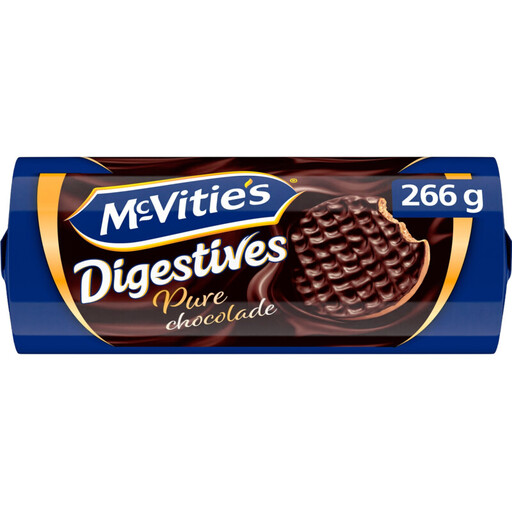 Image unavailable
McVitie's Digestives with Dark Chocolate 266 g
For anyone who wants to serve a digestive with dark chocolate alongside coffee or tea; the pack contains 266 g.
If you’re specifically looking for a high cocoa content, check the cocoa percentage in the chocolate on the current label. Also read the ingredients and allergen information before buying the biscuits for your guests.
View on Joybuy
Frequently asked questions
Does ‘dark chocolate’ on a biscuit mean it has a high cocoa content?
No, that description alone doesn’t confirm a particular cocoa percentage. The chocolate percentages Jumbo and Albert Heijn give for the biscuits mentioned describe the proportion in the whole product or the chocolate coating. If that will determine your choice, look for a separately stated cocoa percentage in the chocolate.
Which allergens should I check when serving chocolate biscuits to guests?
Check the ingredients and allergens on every current pack. The examples discussed include wheat, milk and soya; information about other possible allergens varies by product. The Netherlands Food and Consumer Product Safety Authority states that allergens must be clearly listed in the ingredients list.
How should I store biscuits left over after the Easter meal?
Follow the storage instructions on the pack you’ve chosen. Jumbo advises sealing the chocolate biscuits discussed here well after opening; for the digestive, Jumbo also recommends storing it in a dark place. Albert Heijn advises keeping its sugared biscuits in a sealed tin after opening.
Can I rely on a range I saw previously when doing my Easter shopping?
No, check which biscuits are available shortly before you buy and read the label again. Ingredients and allergens can vary by product, and a product you’ve seen before may not be in the range when you do your shopping.


