
Bakers looking for a rich dark chocolate flavour
You want cocoa and dark chocolate to come through in your cake, rather than mainly speculoos or caramel. Compare the ingredients and the stated chocolate content, if it is listed on the pack.


Choose a biscuit that explicitly contains dark chocolate if a rich chocolate flavour matters more to you than a caramelised biscuit base. Then decide whether you want chocolate pieces in the crumb or a chocolate coating on a biscuit, and check the stated chocolate content and allergens for your chosen variety. Lotus Biscoff has a different, speculoos-style flavour and is not a dark chocolate biscuit.
You want cocoa and dark chocolate to come through in your cake, rather than mainly speculoos or caramel. Compare the ingredients and the stated chocolate content, if it is listed on the pack.
You’re choosing a biscuit for a base, crumb layer or decoration, and want to know whether the chocolate is in pieces in a cookie or forms a coating on a biscuit.
Check the exact variety before using it in a cake. The Jumbo biscuits examined contain allergens such as wheat, milk and soya; the Netherlands Food and Consumer Product Safety Authority stresses that allergens must be clearly listed on the labels of prepacked foods.
First choose the flavour and biscuit texture you want in your cake, then always check the label of the specific variety.
| What to consider | What to check when buying | Who it matters to |
|---|---|---|
| Rich dark chocolate flavour | Check the ingredients and the stated dark chocolate content. A chocolate percentage is not the same as the cocoa content of the whole biscuit. | I want the chocolate flavour to stand out in my cake without relying solely on the word ‘dark’; around 40% of consumers put this flavour consideration first. |
| Biscuit texture | Choose between chocolate pieces in a cookie and a chocolate coating on a biscuit, depending on the crumb or finish you want. | For my cake base or decoration, I want to know in advance where the chocolate is in the biscuit; around 30% of consumers put this choice of texture first. |
| Allergens | Check the current ingredients and allergen information on the pack you choose, paying particular attention to wheat, milk and soya. | When I’m baking for others, I need to be able to check which allergens the biscuit contains; for around 30% of consumers, this check is their top priority. |
According to the Netherlands Nutrition Centre, dark chocolate contains at least 35% cocoa. That doesn’t tell you how much of that chocolate is in a biscuit made with several ingredients.
Compare the ingredients and the stated chocolate content of the biscuit. Check the cocoa content of the chocolate separately if it’s a deciding factor for your recipe.
Jumbo describes a crunchy cookie with dark chocolate pieces and a digestive biscuit coated in dark chocolate. The chocolate is therefore in different places in each biscuit.
Choose chocolate pieces if you want them to show in the crumb; assess a coated biscuit separately if you’re making a biscuit base or decoration.
The Jumbo dark chocolate biscuits examined contain wheat, milk and soya, among other ingredients. ‘Dark’ doesn’t mean a biscuit is free from these ingredients.
Before buying, read the current ingredients and allergen information for the exact variety you want to use.
Lotus Biscoff is a caramelised speculoos biscuit. It gives a cake base a different flavour from a dark chocolate biscuit.
Choose Biscoff when you’re after a speculoos flavour; for a pronounced dark chocolate taste, look for a biscuit with suitable chocolate ingredients.
Jumbo offers both a chocolate cookie with dark chocolate pieces and a digestive biscuit coated in dark chocolate. These two product types make it easier to choose between chocolate pieces and a coating.
Albert Heijn’s chocolate biscuit category features a range of product types, including AH biscuits, McVitie's Digestives dark chocolate and LU Scholiertje dark chocolate.
Lotus Bakeries describes Biscoff as a caramelised speculoos biscuit that can also be used as an ingredient in cooking.
Lidl describes a Double chocolate cookie with pieces of dark and white chocolate.
ALDI describes Biscotto biscuits with dark, white and milk chocolate. CHOCEUR dark chocolate is a separate chocolate product, not a biscuit.
These biscuits are suitable for a cake made with sponge or biscuit crumbs and a rich dark chocolate flavour. Check each product’s ingredients, texture and packaging to make sure they suit your recipe; a dark flavour description alone doesn’t confirm a high cocoa content.
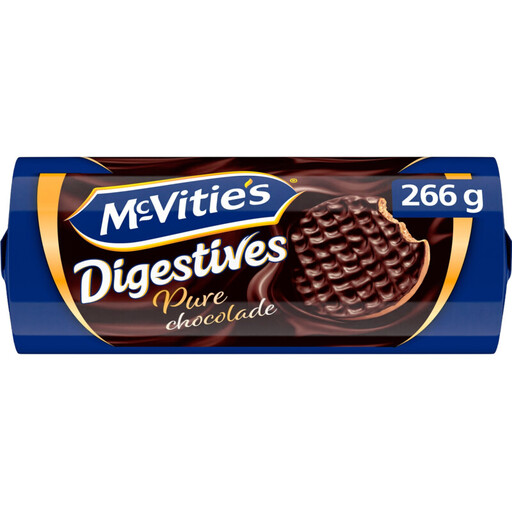 Image unavailable
Consider these digestive biscuits if you’re looking for a biscuit with dark chocolate for crumbs or a cake base; decide for yourself how well they suit your recipe.
Pack size: 266 g. Check the label for the chocolate content and allergens in this variety.
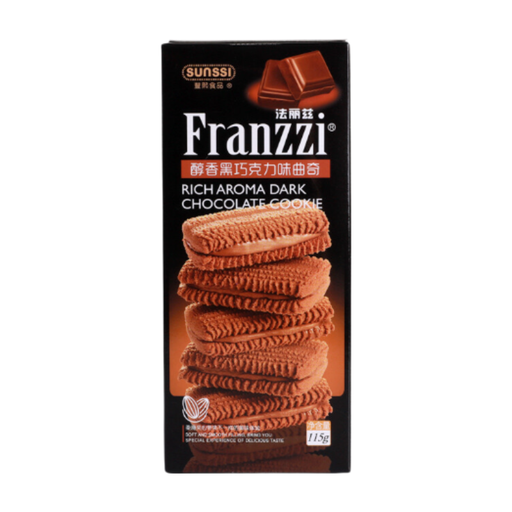 Image unavailable
Consider these dark chocolate-flavoured cookies if you want to use biscuit crumbs in a cake and their flavour and texture suit your recipe.
Pack size: 115 g. The flavour description doesn’t indicate the cocoa content; check the ingredients and allergens on the pack.
No: the cocoa content of dark chocolate isn’t the same as that of the whole biscuit. The Netherlands Nutrition Centre says dark chocolate contains at least 35% cocoa; also check how much chocolate is in the biscuit you choose. For example, Jumbo lists 30% dark chocolate in its digestive biscuit and 40% dark chocolate pieces in its chocolate cookie.
Check the full allergen information on the pack you choose. The Jumbo examples examined contain wheat, milk and soya, among other ingredients. According to the Netherlands Food and Consumer Product Safety Authority, allergens must be clearly listed on the labels of prepacked foods; the word ‘dark’ doesn’t replace this check.
Not if you want the base to have a rich dark chocolate flavour. Lotus Bakeries describes Biscoff as caramelised speculoos that can also be used as an ingredient in cooking. Choose it for that speculoos flavour, or consider a separate dark chocolate biscuit if cocoa is your priority.
Store cocoa powder in a cool, dry, dark place in a tightly sealed container, as recommended by the Netherlands Nutrition Centre. For a finished cake, follow the storage instructions for its filling and decoration; storage guidance for chocolate cake won’t necessarily apply to every cake.