
Fans of a pronounced cocoa flavour
You’re looking for a less milky chocolate flavour to enjoy with a sweet breakfast. In that case, it’s worth checking the proportion of dark chocolate coating and the cocoa percentage stated on the packaging.


First, decide which biscuit you’d like with a sweet breakfast: a thin biscuit with a dark chocolate coating, a sturdier digestive or a spiced speculoos biscuit. Then check the exact packaging to see how much chocolate it contains and whether a cocoa percentage is stated. The word ‘dark’ doesn’t prove that the whole biscuit has a high cocoa content. Compare the ingredients, nutritional information per 100 g and allergen information too, as dark chocolate doesn’t automatically make a biscuit dairy-free.
You’re looking for a less milky chocolate flavour to enjoy with a sweet breakfast. In that case, it’s worth checking the proportion of dark chocolate coating and the cocoa percentage stated on the packaging.
You enjoy a sweet biscuit but also keep an eye on sugars, saturated fat, fibre and portion size. The word ‘dark’ doesn’t replace that comparison.
You need to know whether a biscuit contains ingredients such as milk, wheat or soya. A dark chocolate coating doesn’t tell you this by itself; the ingredients and allergen information on the packaging you choose are what matter.
First, decide what flavour and biscuit texture you’re looking for. Then read the label on the variant you choose: the proportion of chocolate coating, any stated cocoa percentage and the nutritional information each answer different questions.
| What to look for | What to check before buying | Who it matters to |
|---|---|---|
| Cocoa flavour | Look for an explicit cocoa percentage on the exact packaging. Don’t confuse the proportion of dark chocolate coating with the cocoa percentage of the whole biscuit. | If I’m mainly looking for a pronounced chocolate flavour, I want to know what the label says about the cocoa. For around 42% of consumers, this flavour is the top priority. |
| Ingredients and nutritional information | Check the allergens and compare sugars, saturated fat and fibre per 100 g; also check the stated portion size. | If I have an allergy or am comparing nutritional information, it needs to match the exact packaging I’ve chosen. Around 33% of consumers give these label checks top priority. |
| Texture and portion | Consider whether you’d prefer a thin biscuit, a digestive or a speculoos biscuit, and check how many biscuits the packaging lists per portion. | For my breakfast, what matters most is whether I like the texture and whether the pack is easy to portion out. That’s the biggest consideration for around 25% of consumers. |
A chocolate coating makes up only part of a biscuit. For example, Albert Heijn lists a 27% dark chocolate coating for its sugar-topped biscuits; that figure isn’t the cocoa percentage of the whole biscuit.
If you’re choosing based on cocoa content, look for an explicit percentage on the exact packaging. Otherwise, use the proportion of chocolate coating only to compare the ingredients.
According to Lotus Bakeries, Lotus Biscoff speculoos with dark chocolate contains ingredients including skimmed milk powder and butter oil. Wheat and soya are also listed among the ingredients.
If you have an allergy or dietary requirement, check the current ingredients, allergen information and any cross-contamination warning on the specific pack.
The name doesn’t tell you how much sugar, saturated fat or fibre a biscuit contains. With a sweet breakfast, your choice also depends on how much you eat and what else is on your breakfast menu.
Compare the nutritional information per 100 g and check the portion size on the label, without drawing conclusions about nutrition from the type of chocolate.
Pack sizes can vary, even when the brand and type of biscuit look very similar. Albert Heijn describes a 400 g pack of McVitie’s, while the Joybuy variant shown here is listed as 266 g.
Before buying, check the pack size and ingredients of the exact variant you’ve chosen.
For anyone looking for a spiced speculoos base with a dark chocolate coating. Lotus Bakeries lists a pack containing 7 packs of 3 biscuits.
The sugar-topped biscuits with dark chocolate are an option if you’re looking for a crisp biscuit with a chocolate coating.
A digestive with dark chocolate for anyone who’d prefer a wheat biscuit to a thin, sugar-topped biscuit.
Lidl Netherlands lists Sondey Dark Chocolate Digestives in a 300 g pack.
ALDI Netherlands describes a 250 g pack containing 20 chocolate biscuits.
Verkade’s biscuit range includes products such as Chocolate Chip Milk & Dark.
This selection features a digestive with dark chocolate for a sweet breakfast. Check the packaging if an explicit cocoa percentage or allergen information is essential to your decision.
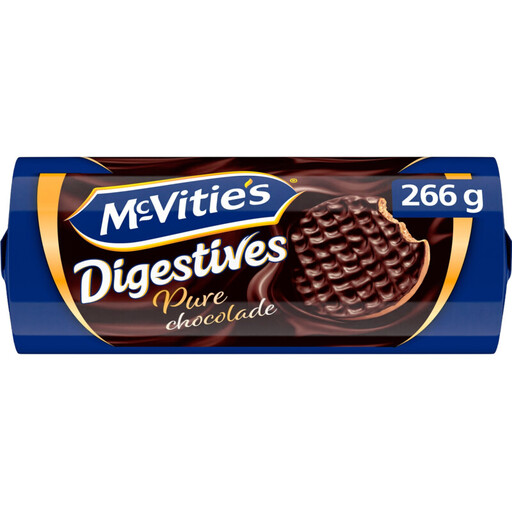 Image unavailable
For anyone who’d like a digestive with dark chocolate for a sweet breakfast. The pack contains 266 g; check the label if the cocoa percentage or allergens will influence your choice.
No. The stated proportion of dark chocolate refers to the amount of chocolate coating, not directly to the cocoa percentage of the whole biscuit. If that’s your main criterion, look for an explicit cocoa percentage on the exact packaging.
No. Lotus Bakeries lists ingredients including skimmed milk powder and butter oil in its speculoos with dark chocolate. Check the current ingredients and allergen information for the variant you want to buy.
You can’t tell from the name alone. Compare the sugars, saturated fat and fibre per 100 g, consider how much you eat and assess the biscuit as part of your overall breakfast.
Read the allergen information and ingredients on the packaging of the specific product. If you have an allergy, also check for any cross-contamination warnings; don’t infer the ingredients from the colour or name of the chocolate.
Follow the storage advice on the pack you’ve chosen. For its sugar-topped biscuits with dark chocolate, Albert Heijn recommends storing them in a cool, dark, dry place and keeping them in a sealed tin after opening.