
People planning what to eat after training
You want to know whether a biscuit can fit alongside your usual meal, rather than replacing it. The Netherlands Nutrition Centre suggests having a regular meal after exercise.


Choose a dark chocolate biscuit after exercise as a treat, not as a meal replacement. The Netherlands Nutrition Centre suggests having a regular meal or something containing protein and carbohydrates after exercise. So compare the portion size and the label, and look for a separately stated cocoa percentage if the dark chocolate flavour is particularly important to you.
You want to know whether a biscuit can fit alongside your usual meal, rather than replacing it. The Netherlands Nutrition Centre suggests having a regular meal after exercise.
You’re looking for a dark chocolate biscuit and want to compare how much you eat per biscuit and what the nutritional information says per serving.
Before buying, you need to check whether your chosen variety contains ingredients such as wheat, milk or soya, and whether the packaging carries warnings about other allergens.
When choosing a dark chocolate biscuit for after exercise, it comes down to what matters most to you: when you’ll eat it, the portion size, the chocolate flavour or the ingredients.
| What to consider | What to check before buying | Who it matters to |
|---|---|---|
| When you eat after exercise | Check the protein and carbohydrates per portion eaten; decide whether the biscuit works alongside a meal or other food. | After training, I don’t want to use a biscuit as a replacement for my meal. This is the main consideration for around 39% of consumers. |
| Portion size and nutritional value | Compare the number of biscuits per serving and the sugars and saturated fats per 100 g. | If I have more than one biscuit, I want to know what my total portion contains. Portion control is the biggest consideration for around 31% of consumers. |
| Dark chocolate flavour | Look for a stated percentage of cocoa solids; don’t confuse this with the proportion of chocolate in the whole biscuit. | If I want a pronounced dark chocolate flavour, I want to see what the packaging says about the chocolate. Around 15% of consumers give this the highest priority. |
| Ingredients and allergens | Read the ingredients list and allergen information on the exact packaging, including warnings about allergens that may be present. | If I need to avoid certain ingredients, the label matters more than the flavour or portion size. This is the first consideration for around 15% of consumers. |
The proportion of chocolate in a biscuit is not the same as the percentage of cocoa in that chocolate. For example, Jumbo states that its Chocolade Biscuits Puur contain 63% chocolate; this figure refers to the proportion of chocolate in the product.
If it affects your choice, look for a separate statement of the cocoa solids percentage.
According to Jumbo, the biscuits reviewed contain around 0.9 to 1.0 g of protein per biscuit. The Netherlands Nutrition Centre also suggests having a regular meal or something containing protein and carbohydrates after exercise.
Decide how the biscuit fits into what you eat, rather than automatically replacing your meal with it.
You may actually eat several biscuits in one sitting. Products labelled ‘dark chocolate’ also vary in their sugar and saturated fat content.
Compare the nutritional information per 100 g and per serving, and consider how many biscuits you plan to have.
The dark chocolate biscuits reviewed list ingredients including wheat, milk or soya; some packaging also carries additional warnings. The word ‘dark’ does not replace this information.
Check the current ingredients list and allergen information on the packaging of every variety you choose.
Verkade is a good option to consider if you’re looking for a digestive biscuit with dark chocolate.
Lotus Biscoff offers a speculoos variety with dark chocolate for anyone looking for this type of biscuit.
Albert Heijn’s AH Gesuikerde biscuits pure chocolade is a supermarket own-brand option to compare by checking the label.
Jumbo lists both a digestive biscuit with dark chocolate and a biscuit with a thicker chocolate coating.
Sondey Digestives pure chocolade is a supermarket own-brand option to compare if you’re looking for a digestive biscuit.
Biscotto chocolate biscuits are worth considering if a mixed pack is an option for you.
This digestive biscuit is a good fit if you want a biscuit as a treat after exercise, alongside your usual meal.
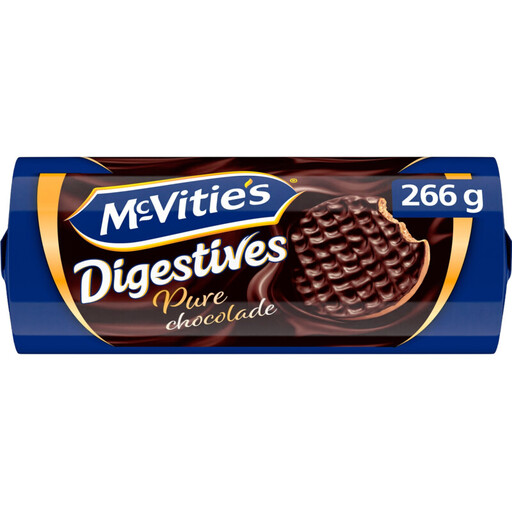 Image unavailable
A digestive biscuit with dark chocolate for anyone looking to enjoy a biscuit as a treat after exercise.
266 g pack. Check the portion size, nutritional information and allergens on the packaging; look separately for a cocoa percentage if that matters to you.
Don’t automatically use a biscuit as a replacement for your meal after exercise. The Netherlands Nutrition Centre suggests having a regular meal or something containing protein and carbohydrates; consider how the biscuit fits into what you eat.
No, the label alone doesn’t give a specific cocoa percentage. A stated proportion of chocolate in the whole biscuit describes something different; to find out the cocoa content, look for information about the cocoa solids in the chocolate.
Read the allergen information on the exact packaging. The varieties reviewed contain wheat, milk and soya, and some may mention nuts or other cereals that could be present; the information varies by product.
Use the product page to narrow down your options, but check the packaging of the product you buy too. Albert Heijn states that ingredients, nutritional values and allergy information can change.
Not necessarily. According to the Netherlands Nutrition Centre, most people who exercise don’t need special protein shakes or bars if they eat a varied diet; a regular meal can also be a suitable choice after exercise.