What should you look for when choosing?
First decide whether cocoa flavour, sharing, allergens or portion size matters most to you. A biscuit with a dark chocolate coating, one with mixed chocolate pieces and a filled chocolate snack with biscuit pieces offer different combinations of biscuit and chocolate.
| What to consider |
What to check when buying |
Who it matters to |
| Cocoa flavour |
Look for an explicitly stated cocoa percentage and distinguish it from the proportion of chocolate in the whole biscuit. If flavour is your priority, compare the ingredients too. |
I’m looking for a strong cocoa flavour and don’t want to rely on the word ‘dark’. This is the top priority for around 31% of consumers. |
| Taking them along and sharing |
Check how many biscuits are in each inner pack and the storage instructions, especially if you want to hand them out while you’re out and about. |
If I’m handing out biscuits, I want to be able to open small portions without opening the whole pack straight away. Around 31% of consumers give this convenience the highest priority. |
| Allergens |
Read the ingredients, highlighted allergens and any ‘may contain’ warnings on the latest packaging. |
I’m buying for someone who needs to avoid certain ingredients; a dark chocolate coating doesn’t tell me anything about that. For around 23% of consumers, whether a product suits their dietary restrictions is the first consideration. |
| Nutrition and portion size |
Compare the nutritional information per 100 g and work out how it relates to the portion you want to take with you, including sugars and saturated fat. |
If I’m taking several small packs, I want to know how many biscuits make up a portion. That’s why around 15% of consumers look first at portion size and nutritional value. |
If you prefer a high cocoa content, check what the percentage refers to. Jumbo lists 30% chocolate in the product for Lotus Biscoff with dark chocolate, and 48% dark chocolate for LU Scholiertje Puur. These are not cocoa percentages for the chocolate. Albert Heijn lists a minimum of 60% cocoa for Galler Puur biscuits, but describes the product as filled chocolate with biscuit and biscuit pieces, rather than a comparable traditional biscuit.
Brands to consider
These examples show the kinds of products you may come across. The features mentioned apply to the varieties described, not to every product from each brand.
Lotus Biscoff
Speculoos with a chocolate coating for anyone who wants a familiar biscuit to take along.
- For the dark chocolate variety described, Jumbo lists 30% chocolate in the product; the version reviewed is packed in pairs.
- That 30% is not a cocoa percentage. Check the latest packaging for allergens, including wheat, milk and soya.
LU
Scholiertje Puur combines butter biscuits with a bar of dark chocolate.
- Jumbo describes the variety as 52% butter biscuit and 48% dark chocolate, packed in pairs.
- The proportion of chocolate doesn’t tell you how much cocoa it contains. The variety described contains milk, cereals containing gluten and soya, and may contain nuts.
Galler
An alternative if you’re looking for chocolate filled with biscuit and biscuit pieces, rather than a traditional biscuit.
- Albert Heijn lists a minimum of 60% cocoa for Galler Puur biscuits.
- This is a filled chocolate snack, not a comparable biscuit. Check the packaging for ingredients including hazelnuts, milk, wheat, barley and soya.
Biscuits to take with you from Joybuy
These biscuits with a dark chocolate flavour are suitable for taking along to a street festival. If you’re specifically looking for a proven high cocoa content, check whether the latest packaging states a cocoa percentage.
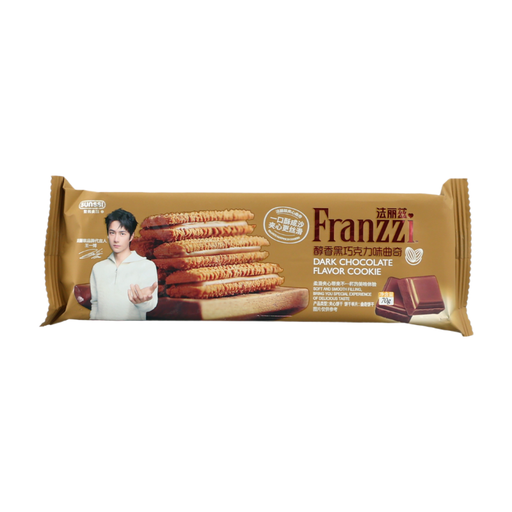 Image unavailable
Franzzi Premium biscuits with dark chocolate flavour, 70 g
An option if you want to take small portions of biscuits with a dark chocolate flavour: the product information says they’re individually wrapped.
If cocoa percentage is important to you, check the packaging. If you have allergies, check the latest label for wheat, milk, egg and possible traces of soya. Also check the figures for sugars and saturated fat.
View at Joybuy
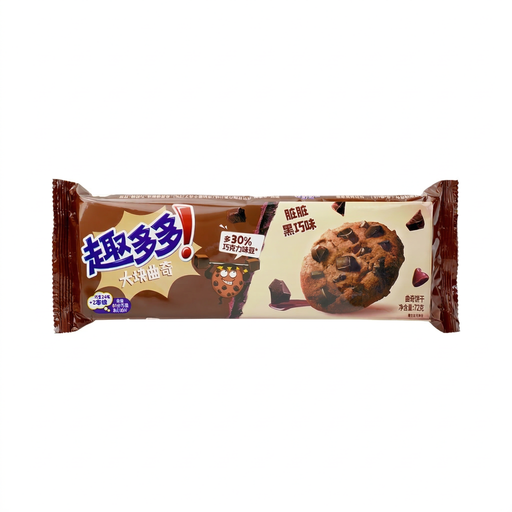 Image unavailable
quduoduo Chunky Cookies with dark chocolate flavour, 72 g
A pack of biscuits with a dark chocolate flavour for anyone who wants a ready-to-go snack.
The stated minimum of 9% chocolate ingredients is not a cocoa percentage. Check the inner packaging if you want to hand out individual biscuits, and if you have allergies, read the latest label for wheat, soya and milk.
View at Joybuy
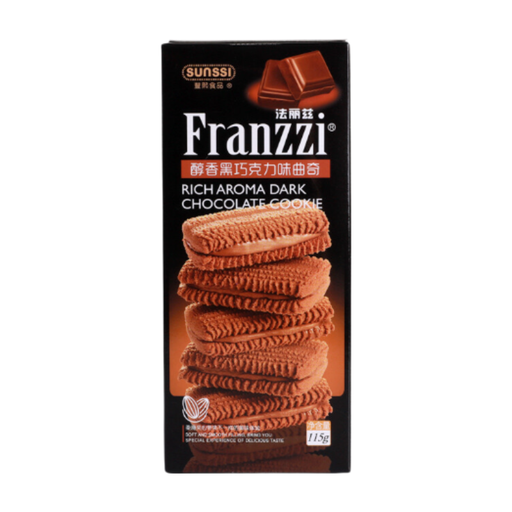 Image unavailable
Franzzi Mellow biscuits with dark chocolate flavour, 115 g
An option for taking along and sharing when individually wrapped biscuits are useful.
If you want to choose by cocoa percentage, check the packaging. Also read the latest nutritional information: the ingredients described include sugar, while the nutritional information states 0.0 g sugars. If you have allergies, check the label for wheat, soya and milk.
View at Joybuy
Frequently asked questions
Does ‘dark’ on a biscuit mean it contains a lot of cocoa?
No. The word alone doesn’t tell you that the whole biscuit has a high cocoa percentage. Check whether the packaging states the cocoa percentage of the chocolate, and don’t confuse it with the proportion of chocolate in the product. The Netherlands Nutrition Centre also points out that ‘bittersweet’ and ‘extra bittersweet’ do not have a separate legally defined cocoa percentage.
Is a vegan dark biscuit automatically suitable for someone with a gluten or soya allergy?
No. A vegan label doesn’t rule out gluten or soya. For the specific variety, check the latest ingredients, highlighted allergens and any warnings on the packaging.
Where can I find allergen information on pre-packed biscuits?
Check the ingredients list on the packaging, where relevant allergens must be clearly stated. The Netherlands Food and Consumer Product Safety Authority describes a mandatory declaration for 14 allergens; if you have an allergy, also read any warnings about their possible presence.
How should I take chocolate biscuits to a street festival?
Follow the storage instructions on the packaging and check whether the inner packs suit the number of people you want to share with. The Lotus and LU varieties described by Jumbo should be stored in a dry place and protected from heat.
Does a dark chocolate flavour tell you anything about nutritional value?
No. The flavour description doesn’t tell you how much sugar or fat a biscuit contains. Compare the nutritional information per 100 g with the amount you’ll actually eat as a portion, and don’t judge the whole product from a single figure.


